




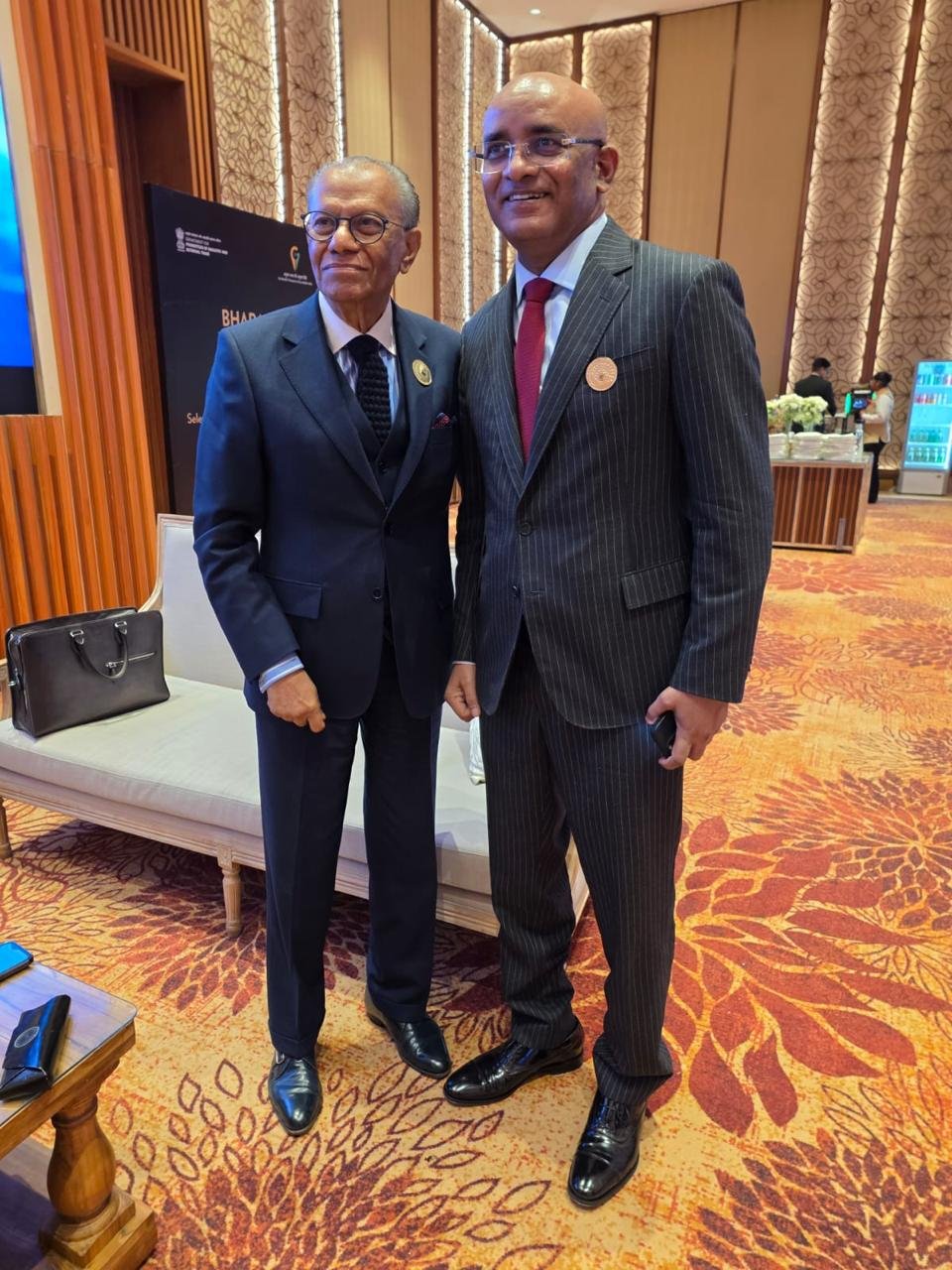
The economic and trade relationship between India and Guyana is entering a promising new phase. This week’s visit by Dr Bharrat Jagdeo to attend the AI event in New Delhi has further strengthened the rapport between the two countries. Following Prime Minister Narendra Modi’s visit to Guyana last year, bilateral ties have gained renewed momentum. With Guyana’s rapidly expanding oil economy and India’s position as one of the world’s fastest-growing major economies, now the fourth-largest economy on earth and set to rank as the third largest in a few months, both nations would benefit significantly from deeper economic cooperation, trade, and strategic investment.
It is now vital for the Government of Guyana to clearly articulate its priorities for trade, investment, and economic collaboration with India. As with other Western leaders, Mr Modi would welcome a visit from Guyana’s leadership to discuss bilateral trade with the Indian government in New Delhi.
In this context, Guyana is uniquely positioned to advance its trade, investment, and economic cooperation agenda directly with Prime Minister Narendra Modi, who is widely recognised for his strategic understanding of global commerce and his ability to identify mutually beneficial partnerships.
By approaching India with a clear, well-structured proposal, Guyana can unlock opportunities in energy security, agriculture, infrastructure, and industrial development, ensuring that both nations benefit from a forward-looking, balanced economic partnership.
In today’s shifting global economic landscape, India has become one of the most important destinations for trade negotiations and strategic partnerships, with major powers such as the European Union, the United Kingdom, France, and Germany actively deepening engagement with New Delhi to secure major economic agreements. India is increasingly seen as the voice of the Global South across trade, technology, energy, and manufacturing, reflecting its rise as one of the world’s leading economies.
India has further cemented its position as a leading global technology power by hosting a major AI Impact Summit in New Delhi this week, bringing together representatives from more than 75 countries. The event underscores India’s recognition, alongside that of the United States and China, as one of the three nations shaping the future of artificial intelligence. Dr Bharrat Jagdeo, Vice-President of Guyana, is attending the AI summit in New Delhi.
Guyana would benefit greatly if a trade delegation led by the leadership visited India to discuss a mutually beneficial trade deal. Our research indicates that Mr Modi would be eager for such an encounter. However, it is up to Guyana’s leadership to decide the timing and venue of the visit, which would benefit both countries.
Guyanese Rum and Alcoholic Beverages are among the many products for which Guyana can secure reduced tariffs from Mr Modi in Delhi. Learning from countries that secured preferential treatment with India through disciplined negotiation offers a practical roadmap.
One of Guyana’s flagship exports is Eldorado Rum. However, India’s standard import duty on alcoholic beverages can reach 150%, making market entry difficult.
Guyana can learn from countries such as Mauritius, which secured preferential access under the India–Mauritius Comprehensive Economic Cooperation and Partnership Agreement (CECPA). Under this agreement:
Mauritius successfully negotiated reduced tariffs and quota systems under its bilateral agreement with India. Guyana can pursue similar structured concessions. A well-prepared proposal—supported by production data, export capacity, and reciprocal trade incentives—could secure preferential access for products such as El Dorado Rum. Mauritius enjoys these benefits.
- 2 million litres of beer enter India at 25% duty (instead of 150%)
- 1 million litres of rum enter at 50% duty
Other selected spirits are subject to reduced tariffs under quota systems.
This model shows that tariff concessions are negotiable when embedded within comprehensive trade agreements. Guyana should explore a similar preferential framework or a quota-based system for rum and beverage exports.
Guyana must now clearly define what it seeks from India and what it can competitively offer. One major opportunity lies in Guyanese rum and beverage exports. India’s import duties on alcoholic beverages can reach up to 150 per cent, creating a major barrier to entry. However, as one of Guyana’s most experienced businessmen, Dr Komal Samaroo, who is the chairman of four of the most prominent companies in Guyana (Demerara Bank, Diamond Insurance, Demerara Distillers Limited (DDL), and Trust Company (Guyana) Limited), holds key leadership roles in other companies. He has emphasised the importance of disciplined negotiation frameworks modelled on successful bilateral agreements.
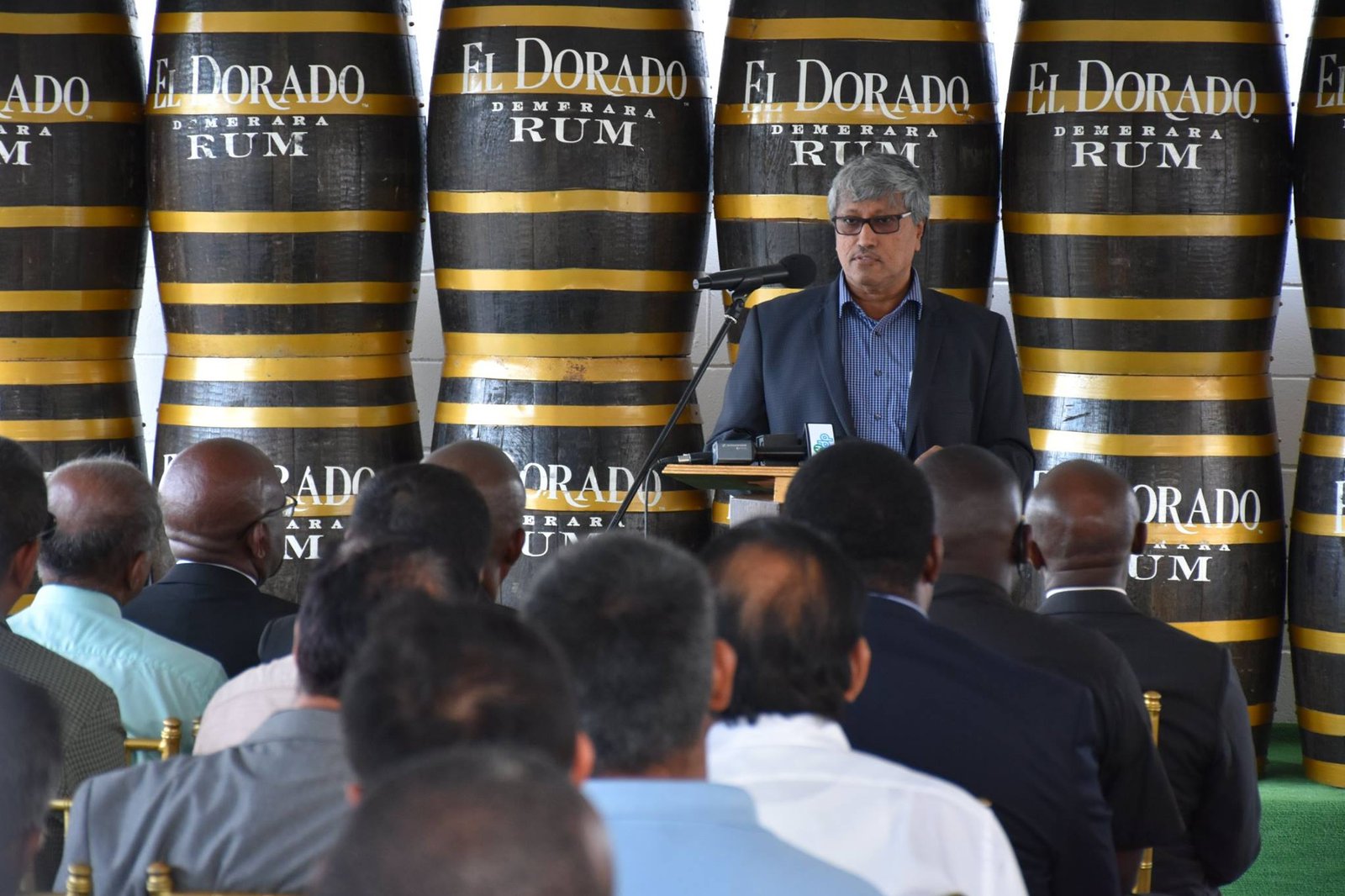
Dr Samaroo is the foremost expert on the Guyana Rum and Beverages industry. Given his extensive knowledge of the global beverages sector, he strongly supports a similar deal to the one the Mauritian government reached with Mr Modi for Guyana.
Guyana must assemble technical trade teams capable of drafting comprehensive proposals that align with India’s global economic strategy.
The Oil and Gas Sector in Guyana
Energy cooperation is even more strategic. Guyana’s expanding oil sector aligns directly with India’s need for diversified, stable energy supplies. India is one of the world’s largest energy importers, and long-term petroleum agreements could provide Guyana with guaranteed buyers while strengthening India’s energy security. In addition, India’s expertise in refining, petrochemicals, infrastructure, and downstream energy could support Guyana’s industrial expansion beyond oil, agriculture, and manufacturing, presenting further opportunities. India has deep experience in rice and sugar processing, agro-industrial parks, fertiliser production, pharmaceuticals, and small-scale manufacturing. Targeted Indian investment in these sectors could help Guyana diversify its economy beyond hydrocarbons.
India’s experience with African nations under the Duty-Free Tariff Preference (DFTP) scheme demonstrates how structured trade incentives can expand exports and foster industrial development. Guyana could seek tailored arrangements within existing WTO frameworks or bilateral agreements.
India is also expanding its economic footprint across Latin America. Trade between India and Chile reached new heights in 2024–25 under their 2007 preferential trade agreement. Chilean exports to India surged by 72 per cent to approximately $2.60 billion, driven largely by copper and lithium, critical minerals for electric vehicles, renewable energy, and advanced manufacturing. By contrast, India’s exports, including automobiles and pharmaceuticals, reached about $1.15 billion. Indian investment in Chile is estimated at roughly $620 million, particularly in mining and strategic sectors.
Diaspora Diplomacy and Historical Bonds
Guyana’s large Indian-origin population—descendants of migrants from Uttar Pradesh, Bihar, and Tamil Nadu—forms a unique diplomatic bridge. Prime Minister Modi has consistently emphasised the importance of the Indian diaspora worldwide and personally engages with diaspora communities during foreign visits. This historical, cultural, and religious connection between the two nations strengthens trust and mutual understanding. However, while diaspora ties foster goodwill, economic outcomes require structured negotiation and policy clarity.
Guyanese leadership has a responsibility to leverage this unique connection with Mr Modi in a respectful and strategic way.
A Strategic Moment for Guyana
India’s global rise under Modi has reshaped international trade. His engagement with major Western powers, Middle Eastern economies, and emerging markets has positioned India as a central node in global commerce. Even major global leaders increasingly recognise India’s economic influence and strategic weight. In sectors such as artificial intelligence, digital infrastructure, manufacturing, and pharmaceuticals, India is shaping the next wave of global growth.
For Guyana, this is not merely a diplomatic opportunity—it is an economic turning point. By approaching India with professionalism, legal expertise, and long-term strategic planning, Guyana can secure market access, investment partnerships, and technological collaboration that strengthen its development trajectory. International business experts have emphasised that structured negotiation—modelled on successful bilateral agreements—is the key to unlocking sustainable gains.
Learning from International Models and Expert Insight
Guyana can study how countries such as the UK, the EU, France, Chile, the UAE, Australia, Oman, and Mauritius, among others, negotiated structured trade agreements with India. Strategic negotiation requires careful preparation and experienced Guyanese economic advisers—international business leaders and Guyanese trade experts—who can present well-documented proposals to the Indian government. However, Guyana has a limited supply of international business professionals familiar with Indian business culture.
Conclusion
The India–Guyana relationship is built on shared history, cultural bonds, and mutual respect. Under Prime Minister Narendra Modi’s global leadership, India has demonstrated its readiness to engage seriously with partners who present clear, structured proposals. Guyana could now position itself within India’s expanding global economic network.
The path forward requires preparation, discipline, and strategic clarity. With smart tariff diplomacy, targeted investment strategies, and professional negotiation, both India and Guyana can build a partnership that delivers lasting economic benefits. The opportunity is real—and with visionary leadership on both sides, this new era of cooperation can become a model for twenty-first-century Global South collaboration.