






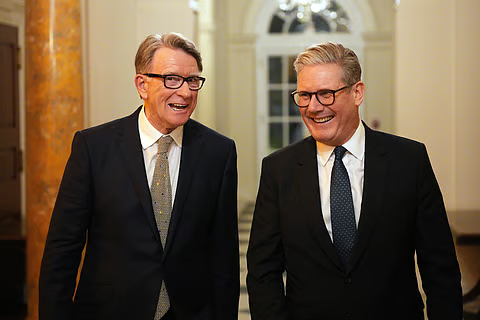
British Prime Minister Keir Starmer is facing mounting political pressure after a major controversy surrounding the appointment of Peter Mandelson as the United Kingdom’s ambassador to the United States. The crisis has intensified following the dismissal of senior civil servant Olly Robbins, a move that has sparked anger within government circles and raised serious questions about decision-making at the highest levels.
At the centre of the controversy is the revelation that Mandelson had failed key security vetting checks before his appointment. Despite these concerns, he was still pushed forward for the influential diplomatic role. According to testimony and reports, officials inside government were under sustained pressure from Downing Street to fast-track his appointment, even as standard procedures raised red flags.
The situation worsened when it emerged that Robbins, one of the UK’s most senior civil servants, had been dismissed after the issue came to light. He was accused of failing to properly inform the Prime Minister about the failed vetting process. However, many within the civil service argue that Robbins was unfairly treated and effectively made a scapegoat for a decision driven by political pressure from the top.
Robbins later told a parliamentary committee that there had been “constant pressure” from Number 10 to approve Mandelson’s position, even before full security clearance was granted. He also indicated that normal safeguards were bypassed and that Mandelson was given access to sensitive government materials ahead of approval—raising serious concerns about national security protocols.
The controversy is further complicated by Mandelson’s broader political baggage. His past links and controversies had already drawn criticism, and his eventual removal from the ambassadorial role only deepened the political fallout. The scandal has triggered cross-party criticism, with opposition figures and even some within Labour questioning Starmer’s judgment and leadership.
Inside Westminster, the fallout has been severe. Senior politicians have accused the government of ignoring due process and potentially misleading Parliament. Calls for greater transparency have grown louder, with demands for the release of documents and a full explanation of how the appointment was approved despite clear warnings.
The crisis has also exposed deeper tensions between the political leadership and the civil service. Many officials fear that the dismissal of Robbins could damage trust and morale within government institutions, particularly if civil servants believe they are being punished for decisions influenced by political leaders.
For Starmer, the controversy represents one of the most serious challenges of his premiership. While he has defended his actions and insisted he was not fully informed of the vetting failure, critics argue that the episode reflects a breakdown in oversight and accountability at the highest level of government.
As investigations continue and political pressure builds, the Mandelson affair is likely to remain a dominant issue in British politics. It not only raises questions about one appointment but also highlights broader concerns about transparency, governance, and the balance of power between elected officials and the civil service.