






Guyana is moving towards a major transformation of its electricity sector, with President Dr Irfaan Ali reaffirming the Government’s commitment to halving electricity costs for consumers by expanding renewable energy and other strategic power projects.
The President said the 50 per cent reduction remains a central commitment of his administration, with the process already underway in communities where renewable energy facilities and battery storage systems have been deployed.
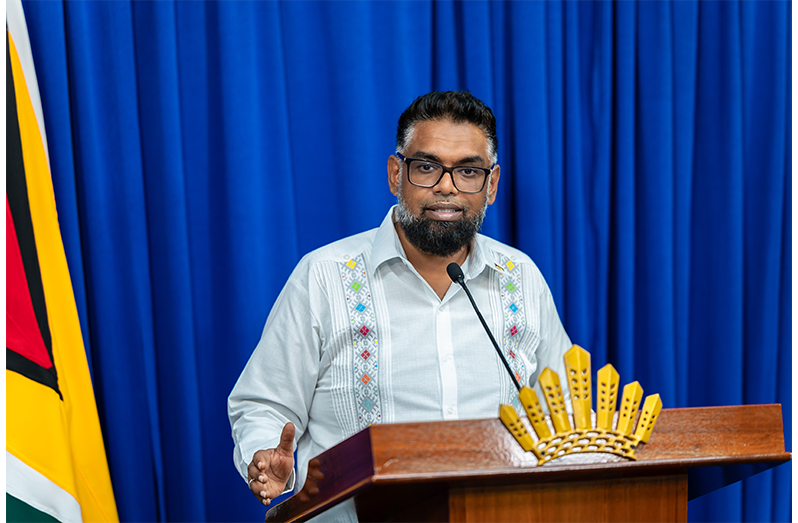
During a recent press conference, Dr Ali explained that the Government has begun implementing phased tariff reductions in areas where new energy infrastructure has reduced electricity generation costs.
Bartica is among the communities already seeing the benefits. A 1.5-megawatt solar photovoltaic facility has been commissioned in Region Seven, helping to reduce the community’s dependence on diesel-generated electricity. The more than $703 million investment has delivered significant fuel savings, with the project estimated to replace thousands of drums of diesel and support a 25 per cent reduction in electricity costs.
The President said the Government is now examining whether similar reductions can be introduced in other areas where renewable energy systems are operating.
Among the communities under review are locations in Region Two, including Leguan and Wakenaam, where solar installations have been installed. Lethem is also under assessment due to its hydroelectric power system.
Dr Ali said the Government wants consumers in these communities to benefit directly from savings from cleaner, more efficient energy production. Technical and financial assessments are underway to determine the appropriate level and timing of further tariff adjustments.
The broader strategy forms part of Guyana’s transition towards a more diversified and resilient energy system. Through its Low Carbon Development Strategy, the country is pursuing greater use of renewable energy, reducing its dependence on imported fossil fuels, and expanding access to reliable, affordable electricity.
Solar power is expected to play an increasingly important role alongside hydropower, wind, biomass and natural gas. Together, these energy sources are intended to meet rising electricity demand, improve energy security and maintain the country’s emissions profile at a comparatively low level.
A major component of this transformation is the 300-megawatt Wales Gas-to-Energy project, which is expected to strengthen Guyana’s electricity supply significantly. The project is designed to reduce power generation costs, with the Government targeting an overall 50 per cent reduction in electricity costs.
The Gas-to-Energy initiative is also expected to support the development of natural-gas-related industries, including domestic production of liquefied petroleum gas for household use. Beyond reducing electricity costs, the project is being positioned as a catalyst for industrial growth by providing businesses with a more reliable and competitive energy supply.
With renewable projects already delivering savings in several communities and larger energy initiatives under development nationally, the Government’s approach aims to reshape Guyana’s electricity landscape.
For consumers, the objective is straightforward: lower electricity bills, greater reliability and a more sustainable energy system. As more solar, hydro, and other power projects come online, the Government expects these investments to benefit households and businesses across the country increasingly.