






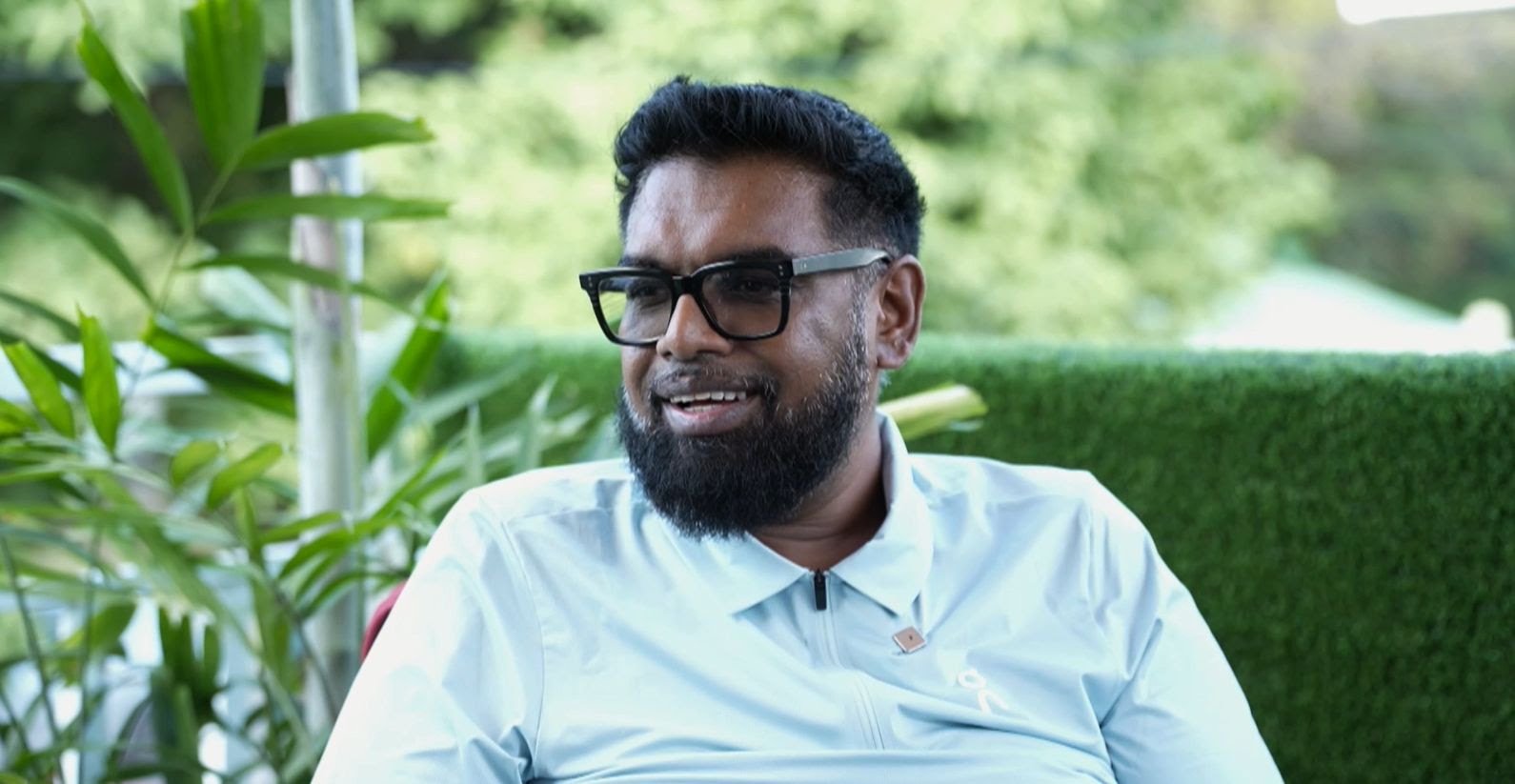
President Dr Mohamed Irfaan Ali says the first six years of his presidency have established the foundation for what he described as a more transformative period of development over the next four years.
During a special interview with journalist Fareeza Haniff on Sunday, President Ali reflected on his administration’s record, pointing to the implementation of its 2020 and 2025 election manifestos, major infrastructure projects, expanded housing programmes and the development of new economic centres as key areas of progress.
“We went to the elections with a manifesto, both in 2020 and 2025. We’ve been able to fulfil those manifestos completely,” President Ali stated.
Looking ahead, he said the next phase will focus on building on the investments already made while strengthening unity among citizens, families and communities.
The President said Guyana’s transformation must go beyond the construction of roads, bridges, ports, schools, health centres and hospitals. He emphasised the need for major economic investments capable of producing benefits well into the future.
“Those transformative investment projects, those economic projects that would last for generations, that would position Guyana as a food hub and food capital for the world, that would advance our biodiversity and climate services, that will position us as an energy hub, that will deliver the highest skilled human resource potential and capacity,” he said.
Among the infrastructure developments highlighted by President Ali was the new Bharrat Jagdeo Demerara River Bridge, which he identified as one of the major visible investments made during his tenure.
He also pointed to the Model Village Initiative as part of the administration’s broader effort to improve living conditions and expand opportunities within communities.
President Ali said his experiences growing up in rural Guyana influenced his understanding of the disparities in access to facilities and opportunities between rural communities and Georgetown.
He recalled having limited access to sporting facilities and other opportunities while growing up, experiences that he said contributed to his appreciation of the importance of bringing development opportunities to communities across the country.
His perspective, he added, was further shaped during his early career as a planner involved in community development projects. According to the President, strategic investment in infrastructure can help transform communities into new centres of economic activity.
He cited Diamond as an example, recalling how investment in the community helped attract financial institutions and major industries, subsequently expanding its economic potential.
President Ali said the Model Village Initiative seeks to build on this concept by creating communities that can serve as examples for other villages across Guyana.
“A model village being what we want every village to be like in Guyana,” he said.
Human-resource development, the President added, will be another major pillar of the country’s next phase of transformation. He highlighted plans for a specialised STEM school involving Exxon as part of efforts to strengthen skills and prepare young Guyanese for emerging opportunities.
President Ali said national development must ultimately combine physical infrastructure with a society built around care, support and shared values, including peace, understanding, dignity and honour.
Reflecting on his time in office, he acknowledged the considerable workload, challenges and setbacks associated with leading the country over the past six years.
He maintained, however, that the investments made during that period have created a platform for the next stage of development.
The President said the focus ahead will increasingly be on long-term economic transformation, human-capital development, stronger communities and the creation of opportunities capable of benefiting future generations.