






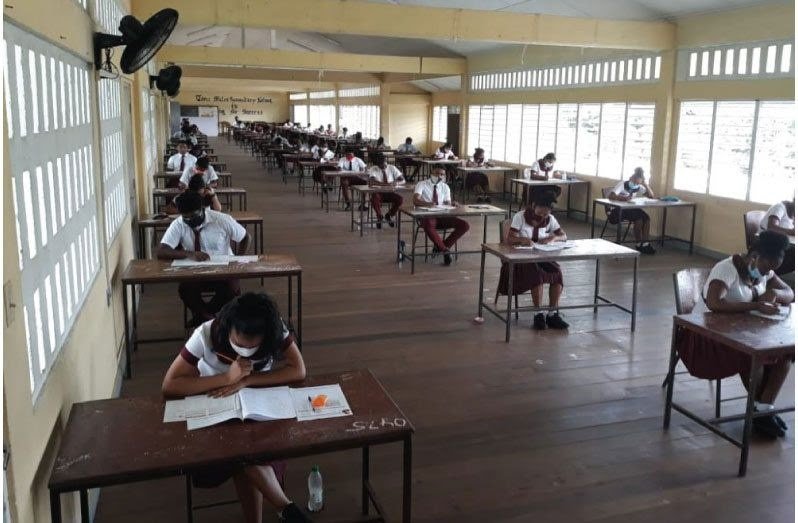
Guyana has recorded a 97.96 per cent secondary school retention rate among a cohort of students whose education was significantly disrupted by the COVID-19 pandemic.
Chief Education Officer Saddam Hussain made this comment during the release of the 2026 Caribbean Secondary Education Certificate (CSEC), Caribbean Advanced Proficiency Examination (CAPE), Caribbean Vocational Qualification (CVQ) and Caribbean Certificate of Secondary Level Competence (CCSLC) results on Tuesday.
The cohort entered secondary education during one of the most challenging periods, with students writing the National Grade Six Assessment in 2021 and subsequently experiencing disruptions to the normal transition into secondary school.
The cohort’s physical return to school only occurred on April 25, 2022, meaning many of the students who sat CSEC this year had not experienced a conventional Form One year.

According to the retention report, 13,821 students wrote the 2021 examination used for secondary-school placement. Five years later, 13,052 students went on to write CSEC in 2026.
That represents a difference of 769 students.

However, the ministry said the figure should not be interpreted simply as students being lost from the education system.
Of those 769 students, 488 opted to pursue technical education at the end of Grade 10 or Grade 11 instead of sitting CSEC, choosing a vocational pathway through Guyana’s technical institutes.
This means that a significant portion of students who did not proceed to CSEC remained within the wider education and skills-development system.
The chief education officer said the figures demonstrate the importance of maintaining multiple pathways for students as they progress through secondary education.
“I want to commend the government…for this, for their foresight. When everybody said we were crazy to go back to school during COVID, this is the result of it that we can see today,” he noted.

For students who may not pursue CSEC, technical and vocational education provides an opportunity to acquire practical skills that can lead directly into employment or further training.
This is reflected in the wider 2026 results, with an 8.9 per cent increase in the number of students writing at least one TVET subject at CSEC level, bringing participation close to half of the student population sitting the examinations.
The government remains committed to providing skills to stay within the education system through technical and vocational pathways that equip them with recognised qualifications, practical skills and meaningful opportunities.