






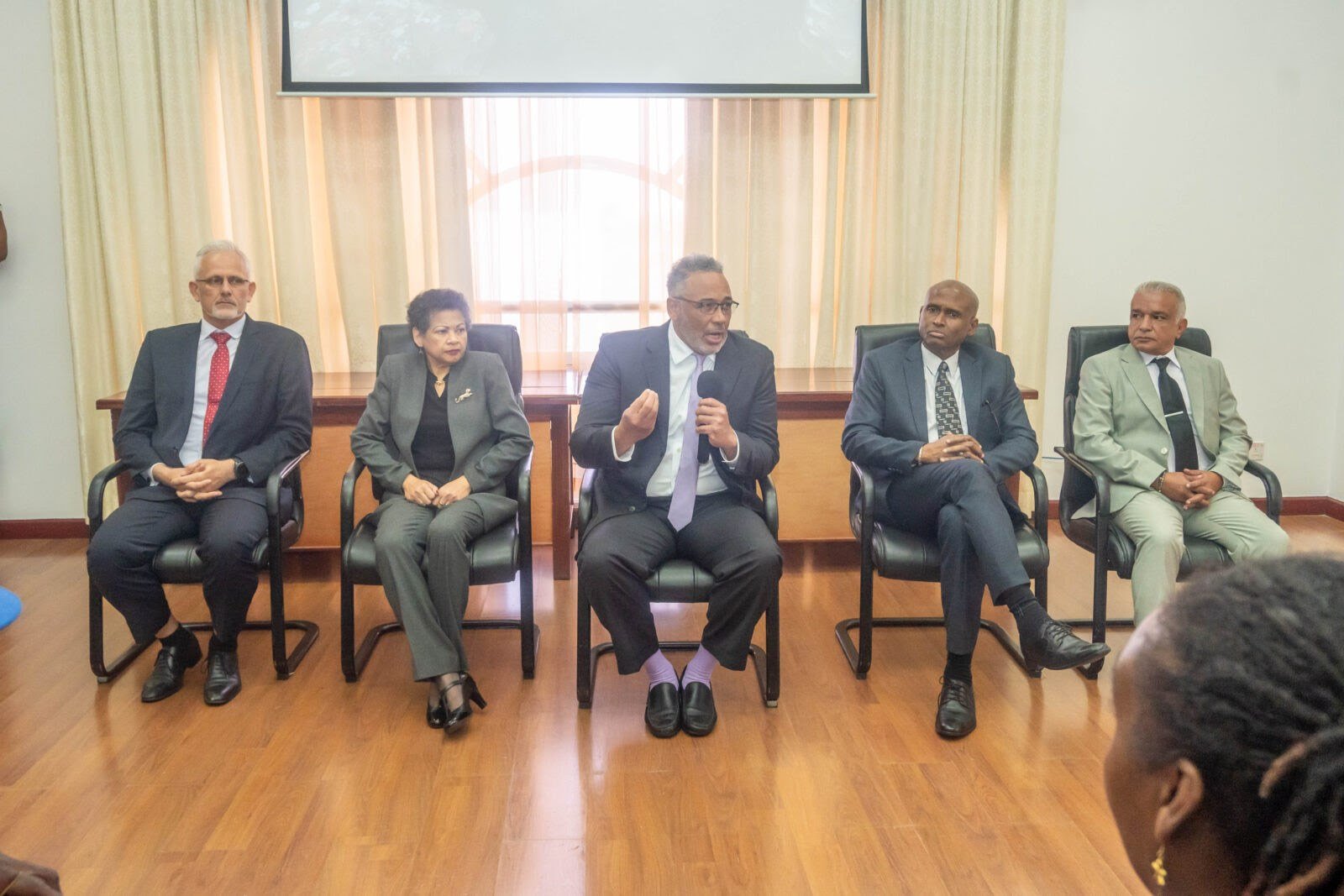
The five-member Commission of Inquiry into the sinking of the MV Barima pledged on Wednesday to conduct an independent, transparent and people-centred investigation into the July 18, 2026 tragedy.
Introducing the commissioners to the media, Chairman Justice Godfrey P. Smith said the inquiry would examine not only the vessel’s final moments but also the decisions, conditions and failures that may have contributed to its sinking.
“We approach our task with no predetermined view… and will inquire into all the circumstances around the sinking of the Barima, without fear or favour,” he said.

The investigation will cover the vessel’s seaworthiness; passenger and cargo operations; the qualifications and conduct of its crew; search, rescue and recovery efforts; regulatory oversight; and human factors that may have influenced decisions before and during the tragedy.
Justice Smith stressed that the commission is not a criminal court.
Its role is to establish the facts, identify causes and contributing factors, expose shortcomings and recommend measures to strengthen Guyana’s maritime safety systems, not to determine criminal guilt or award compensation.
“Our allegiance is to the law, our terms of reference, procedural fairness and, above all, to the truth as established by credible, tested evidence,” he said.
Families, survivors at the centre
Even before taking testimony, the commissioners met with approximately 120 relatives and survivors at the Arthur Chung Convention Centre. Some attended the meeting with young children.
Justice Smith acknowledged the profound grief families continue to endure and warned that the proceedings could revive painful memories and raise further questions.
“We cannot promise that every question you may have will have an answer. But we will endeavour to find those answers,” Justice Smith told the gathering.

Family members and survivors who spoke described their grief and loss and appealed to the commission for answers. At the close, some embraced the commissioners, sobbing as they were comforted.
Five invited WIN parliamentarians, including the Leader of the Opposition, attempted to hijack the meeting, seeking to draw attention away from the accounts of survivors and bereaved relatives.
Evidence will determine who testifies
Justice Smith said the commission wants to hear from the three crew members charged in connection with the tragedy because they may hold important information.
Their participation, however, must be handled within the law and with due regard for their rights and whatever legal advice they might receive from their lawyers, he said.
Asked whether ministers responsible for the sector would be called, Justice Smith declined to prejudge the witness list.
“We are collecting as much information as we can, and we promise you that we will follow the evidence wherever it leads,” he said.
The commission expects to examine more than 100 witnesses, consider documentary and technical evidence, and visit communities and locations connected to the tragedy.
Sunken vessel retains forensic value
Recovery of the Barima remains an important part of the investigation, although commissioners said the inquiry’s success does not depend entirely on raising the vessel.
Commissioner and maritime expert Andrzej Jasionowski said the vessel’s “forensic value will be there almost in its entirety; the time has very little effect.”

Arrangements for salvaging the vessel are being advanced, and late Wednesday, the National Tender Board awarded the contract for the salvaging of the MV Barima to BK International.
Commissioner Rear Admiral Hayden Pritchard said substantial documentary, technical and other evidence had already been gathered, allowing the investigation to proceed without relying solely on the vessel’s recovery.
Six-month target
The commission intends to complete its work in approximately six months, while maintaining that a thorough examination of the evidence must guide the process.
Smith said the outcome must go beyond explaining the sinking to identifying lessons that can help prevent another tragedy.
“When this inquiry is complete, the country should know more than simply what happened… It should know what lessons can properly be learned from the tragedy.”