






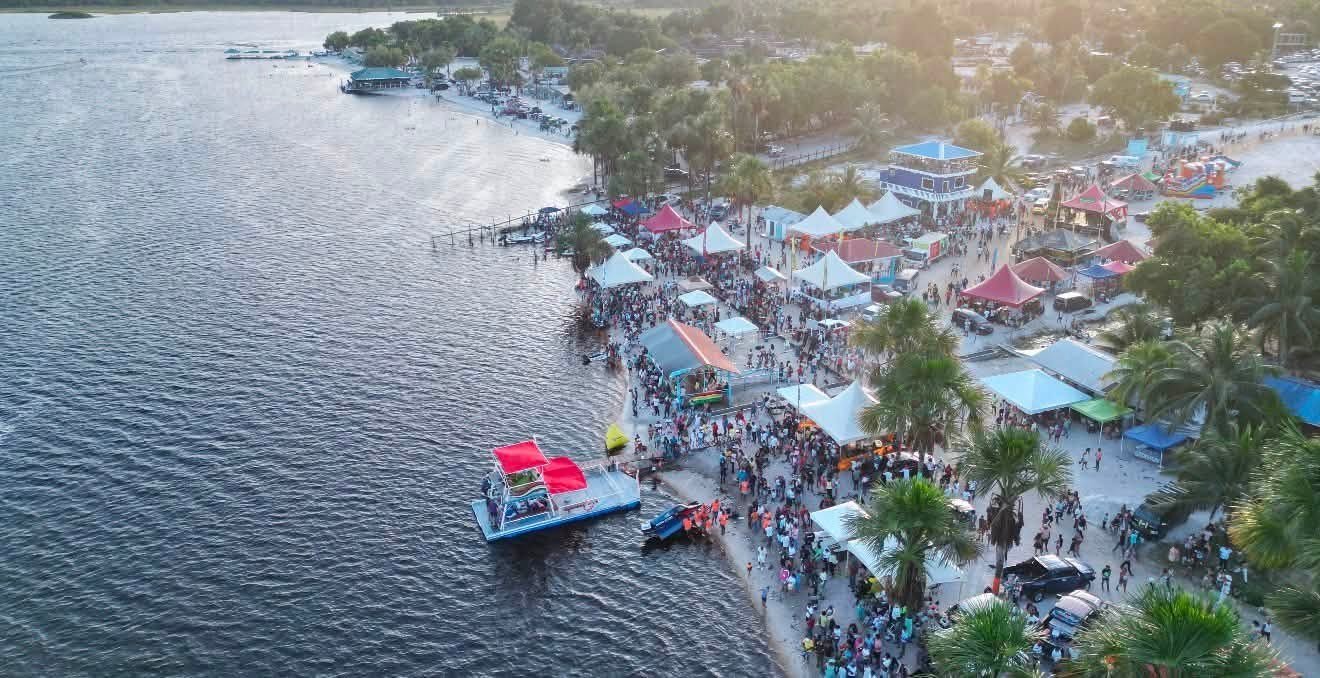
The Amerindian village of Mainstay-Whyaka in Region Two (Pomeroon-Supenaam) is emerging as a hub for indigenous-led tourism, with new cabin accommodations, a cage fish farming project, and an expanding agri-integrated venture.
These projects are backed by the government’s investment through the Low Carbon Development Strategy (LCDS) 2030.
Speaking on the sidelines of a regatta hosted in the village, President Dr Mohamed Irfaan Ali highlighted how the community’s original forestry, chicken, and pineapple initiatives have grown into a broader development push encompassing tourism, fisheries, and agriculture.

“This little indigenous village [is] showing us what the government infrastructure and investment is doing,” the president said in a video posted on his social media page.
Meanwhile, Toshao Marsha Williams explained that the village’s first two cabins were funded through LCDS support, part of what she described as the government’s commitment to indigenous peoples.
A newly built village office was also funded under the LCDS 2025 allocation.
The cage fish project has already produced strong harvests, with fish reportedly reaching weights of 7 to 10 pounds.
“We have a lot of sporting activities within the lake because of our boost of tourism and more people coming to …our Mainstay Resort, which is part of our village as well,” the Toshao said.

She further highlighted that the increased visitor traffic has boosted demand for local services, with residents’ catering and transportation businesses benefiting directly from guest bookings.
President Ali pointed to the regatta itself as evidence of the ripple effect with nearly every room and guesthouse in the wider Essequibo area reportedly booked out ahead of the event.
Improved road access, including ongoing work described as a presidential commitment to complete the Mainstay road,, is expected to bring more visitors and, in turn, more emand for accommodation in the village.
The president said the village council plans to expand its offerings further, with the community moving toward a large-scale agri-integrated project aimed at self-sufficiency.
“One aspect of development triggers an entire system,” the president said. “And guess what? They are also going to be self-sufficient, because they are going into a massive agri-integrated project and we are backing them. We are rooting for the people of Essequibo and the people of Mainstay.”

Earlier this year, President Ali commissioned the Anna Regina Airstrip in the village, boosting connectivity and economic growth across its tourism and agriculture sectors.