




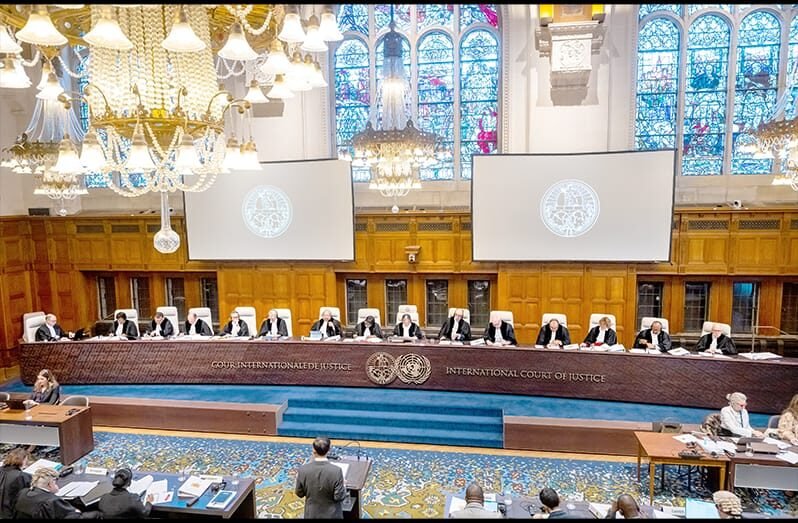
To begin with, these are some of the legal points our Guyana team presented to the ICJ in The Hague, Netherlands. Venezuela lacked any legal justification for persuading the ICJ.
These are firm commitments and deliberations from our team to demonstrate that they are doing their utmost to defend Guyana’s border.
“The 1899 award did not deprive anyone’s territory. It determined the boundaries of both, restoring the good relations between the parties and removing the threats of armed conflict which hung over the region.”
— Alain Pellet
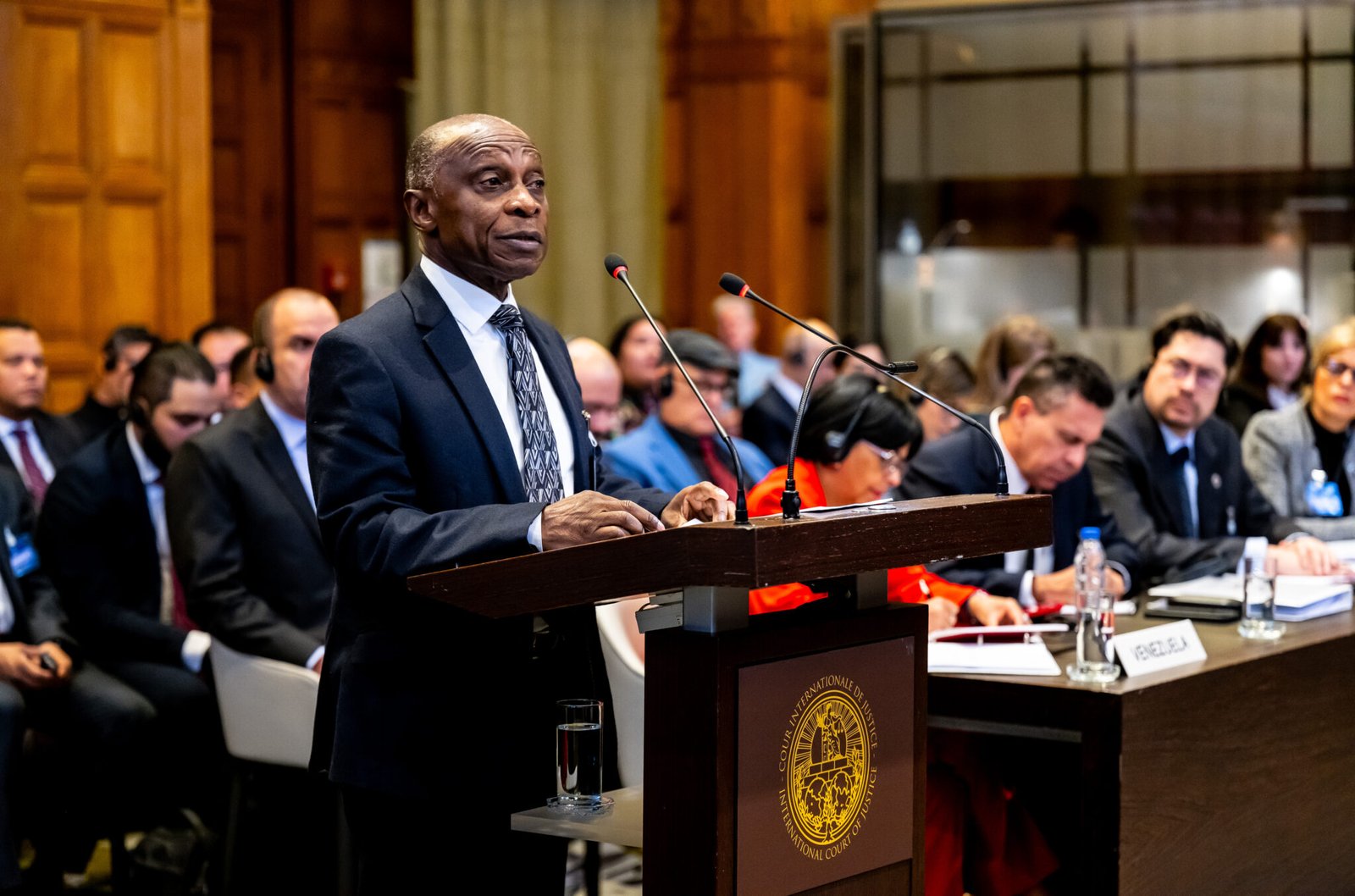
“Guyana enjoys full sovereignty over the territory between the Essequibo River and the boundary established by the 1899 Award and the 1905 Agreement, and… Venezuela is under an obligation to fully respect Guyana’s sovereignty and territorial integrity in accordance with the boundaries established by the 1899 Award and the 1905 Agreement.”
— Carl Greenidge
“Venezuela, which misconstrues both the 1897 treaty and the 1966 agreement, and belatedly and groundlessly rejects the 1899 award, is in historical reality the aggressor, having obstructed and delayed Guyana’s independence, and threatened it ever since.”
— Paul Reichler
On Friday, Guyana urged the International Court of Justice (ICJ) to issue a firm and unequivocal ruling on the border dispute with Venezuela, arguing that only a clear judgement can permanently safeguard the country’s territorial integrity and national existence.
Speaking during the second round of oral hearings at the World Court in The Hague, Attorney General Anil Nandlall told the judges that any uncertainty in the Court’s eventual decision would likely be exploited by Venezuela to continue asserting claims over large portions of Guyanese territory.
“If the Court accepts Guyana’s arguments, as we firmly believe it will, the judgement must directly and explicitly affirm the validity of the 1899 Arbitral Award and the boundary it established,” Nandlall argued before the UN’s highest judicial body.
He warned that a vague or qualified decision could allow Venezuela to prolong the dispute. According to him, the case goes beyond a territorial dispute and speaks directly to Guyana’s survival as a sovereign state.
“The loss of the territory claimed by Venezuela would eviscerate Guyana. The country as we know it would cease to exist,” he said, echoing earlier remarks by Foreign Affairs Minister Hugh Todd, who previously described the matter as having an “existential quality” for the nation.
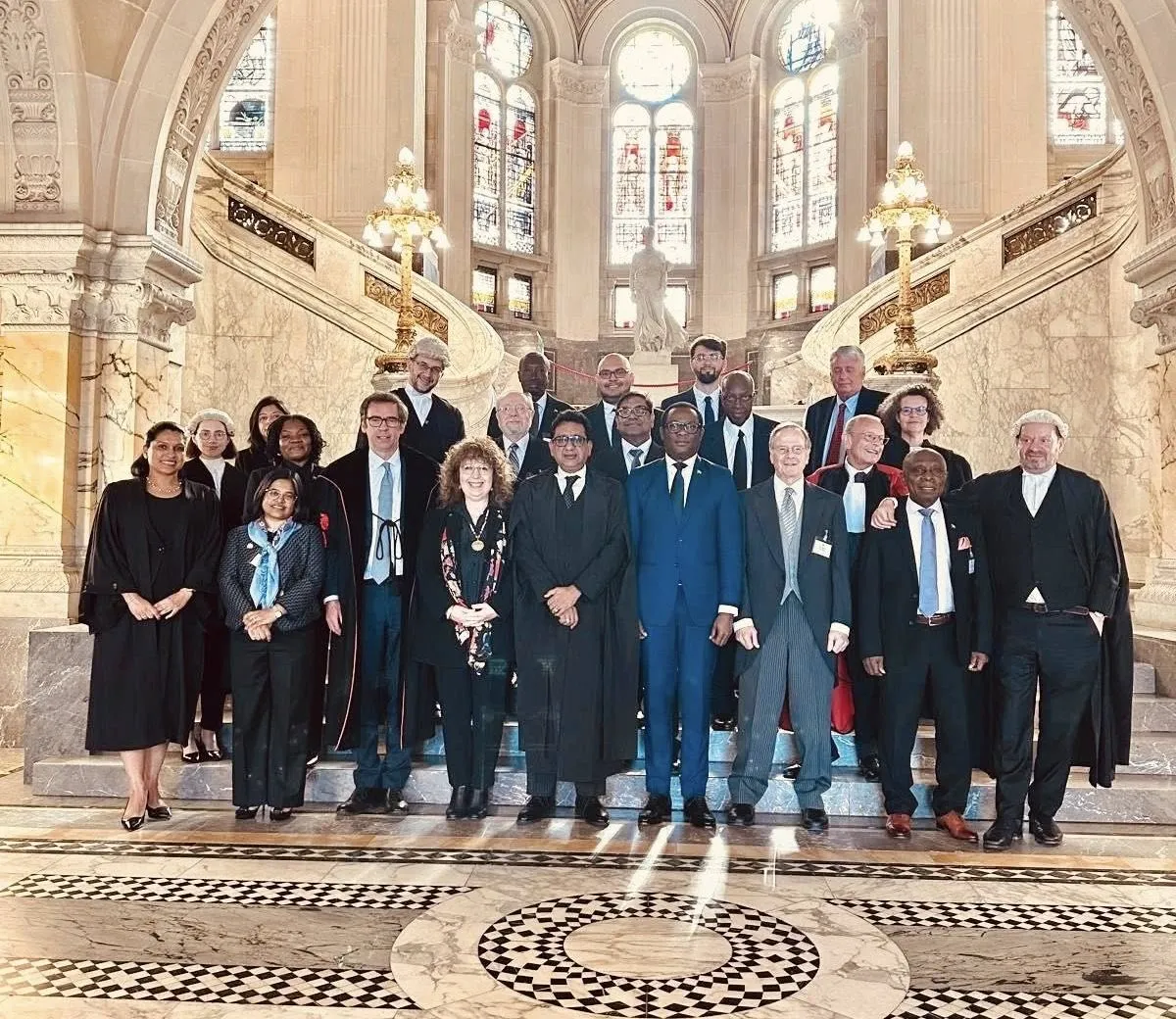
Anil Nandlall, the Attorney General, maintained that Guyanese citizens regard the ICJ process as their last hope for lasting peace and stability. He also accused Venezuela of repeatedly seeking to avoid a substantive judgement from the Court by misrepresenting the 1966 Geneva Agreement and advancing arguments unsupported by either the treaty’s wording or historical records.
“Since these proceedings began, Venezuela has exerted every effort to prevent this Court from ruling on the merits of Guyana’s application,” he said.
According to Guyana’s Attorney General, Caracas understands that its legal case is weak and recognises that a judgement on the merits could permanently extinguish its claim to nearly 160,000 square kilometres of Guyana’s territory.
Closing submissions on behalf of the Guyanese Government were presented to the Court by Guyana’s agent, Carl Greenidge, who reaffirmed that the 1899 Arbitral Award remains valid, binding and final.
Carl Greenidge, former Vice President and Foreign Minister of Guyana, urged the Court to formally declare that Venezuela is obliged, under international law, to respect Guyana’s sovereignty and territorial integrity.
“The 1899 Award is valid and binding upon Guyana and Venezuela, and the boundary established by that Award and the 1905 Agreement is the boundary between Guyana and Venezuela,” he told the judges.
He further stressed that Guyana has full sovereignty over the territory between the Essequibo River and the internationally recognised border established by the Award and the subsequent 1905 agreement.
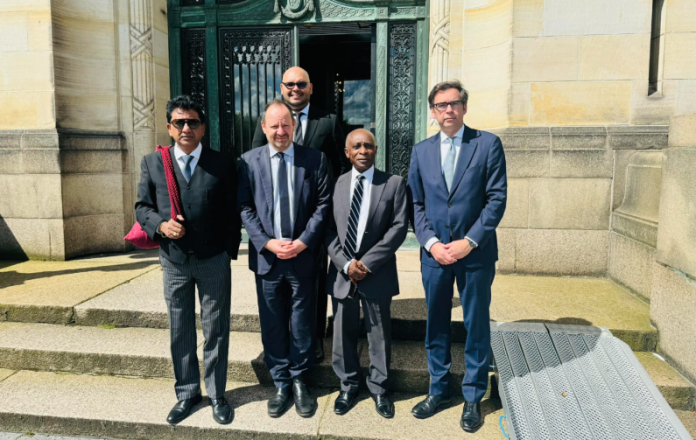
As part of the relief sought, Guyana requested that the Court order Venezuela to cease asserting sovereignty over any part of Guyanese territory and to revoke all laws, decrees and administrative measures intended to annex or control areas within Guyana.
Guyana also asked the ICJ to direct Venezuela to dismantle institutions established to administer the disputed territory, including the so-called High Commission for the Defence of Guayana Essequibo, and to halt all military or administrative operations within Guyanese territory.
Additionally, Georgetown urged the Court to recognise Venezuela’s failure to comply with the ICJ’s provisional measures of December 1, 2023, and May 1, 2025. Guyana argued that Venezuela must withdraw from areas under Guyanese sovereignty, including the section of Ankoko Island awarded to Guyana under the 1899 settlement.
Carl Greenidge further requested that Venezuela stop promoting narratives that the Award was fraudulent and remove official maps depicting Guyanese territory as Venezuelan.
Throughout Friday’s proceedings, Guyana’s legal team repeatedly challenged Venezuela’s historical claims, arguing that Caracas relied heavily on rhetoric and failed to produce documentary evidence of occupation east of the Essequibo River.
International lawyer Paul Reichler opened the day’s session by criticising Venezuela’s arguments as “passionate rhetoric” unsupported by facts or treaty interpretation.
He argued that Venezuela had distorted both the 1897 Arbitration Treaty and the 1966 Geneva Agreement, while ignoring the historical realities of the border settlement process.
Guyana’s legal representatives argued that Venezuela failed to provide any contemporaneous evidence of Spanish or Venezuelan occupation of territory east of the Essequibo River. Instead, Guyana presented maps and colonial records showing Dutch and later British settlements across the disputed region.
One major piece of evidence cited was the 1897 United States–Venezuela Boundary Commission map, which illustrated European settlements as they existed in 1814 and showed no Spanish presence extending eastward beyond the boundary later confirmed in the 1899 Award.
“There is no evidence before this Court that either Venezuela or Spain ever occupied any part of this territory,” Guyana’s counsel argued.
Guyana also dismissed Venezuela’s claims that the 1897 Treaty was forced upon it by Britain and the United States. Guyana’s lawyers presented dozens of historical documents showing that Venezuela actively sought international arbitration and appealed to Washington for diplomatic support during the negotiations.
The team further noted that Venezuela’s then-President Joaquín Crespo had publicly welcomed the settlement process and acknowledged that the agreement had been reached without coercion.
Regarding the Geneva Agreement, Guyana rejected Venezuela’s recent interpretation that the accord nullified or suspended the 1899 Award. Counsel described the argument as a late and unsupported invention, raised only in Venezuela’s 2025 rejoinder.
Guyana cited Article V of the Geneva Agreement, arguing that it expressly preserved existing rights and obligations arising from the Award.
“It is undeniable from the text that this preserves all assertions of rights and obligations under the 1899 Arbitral Award,” the Court heard.
Guyana’s legal team also accused Venezuela of disguising territorial ambitions behind decolonisation claims while simultaneously seeking to annex more than two-thirds of Guyana’s territory through recent legislation.
French international law expert Alain Pellet defended the legitimacy of the 1899 tribunal’s decision-making process, noting that written explanations for arbitral awards were not legally required then.
He added that arbitrators were free to deliberate privately and still reach a unanimous, legally binding decision.
Meanwhile, renowned barrister Philippe Sands warned that overturning the 1899 Award would create dangerous global consequences by reopening settled colonial-era borders and arbitration agreements worldwide.
“You would rekindle an age of instability and uncertainty,” Sands cautioned, warning that such a precedent could encourage challenges to long-settled international boundaries across multiple regions.
Guyana first approached the ICJ on March 29, 2018, seeking confirmation that the 1899 Arbitral Award had legally established the boundary between the former British Guiana colony and Venezuela.
The Court has already affirmed its jurisdiction over the matter twice, in rulings delivered in December 2020 and April 2023. It has also issued provisional measures ordering Venezuela not to interfere with Guyana’s administration and control of the disputed territory during the proceedings.
The written phase of the case concluded in 2025 after both countries submitted extensive pleadings on the merits.
The ICJ is scheduled to resume hearings on Monday when Venezuela begins its second round of oral arguments.