






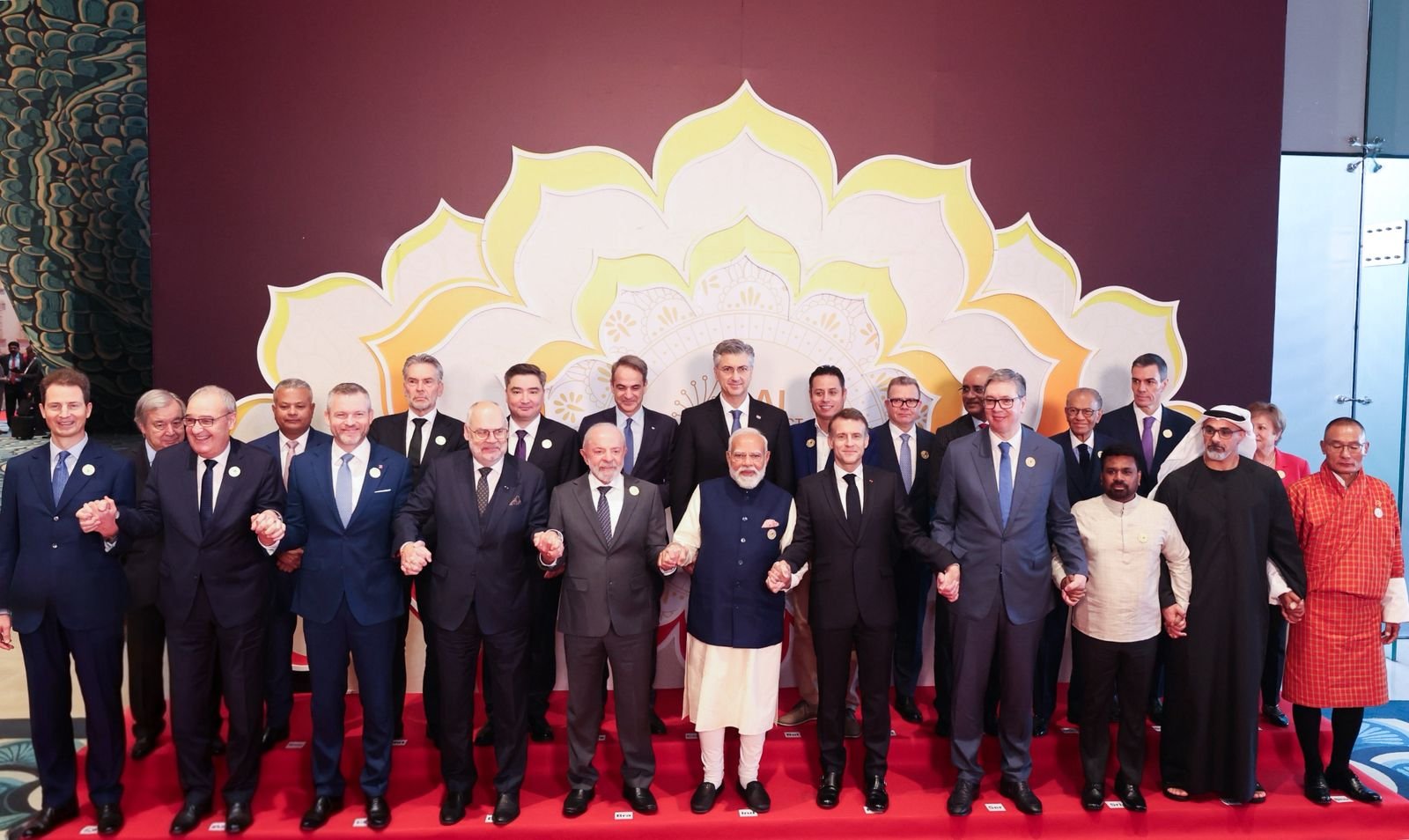
Today, India is widely regarded as the voice of the Global South, representing the aspirations of nearly 85% of the world’s population outside the traditional Western power bloc. Under the leadership of Prime Minister Narendra Modi, India has emerged as a confident, powerful, and decisive world leader and a key and influential player on the global stage. From international forums to strategic diplomacy, India is no longer seeking validation—it is shaping the conversation. Many world leaders now openly acknowledge India’s role as a stabilising force and a key driver of global growth
Yet, sections of Western journalism remain trapped in outdated colonial thinking, clinging to the belief that their countries, which make up only 15% of the world’s population, still rule the world in their twisted minds. Now it’s the turn of 85% of the Global South’s population to take control of this planet. Eventually, the minority Western powers will accept that, from now on, they will no longer be able to exert their influence worldwide. Their approach specifically ignores India’s technological, economic, and military strength, as well as its diplomatic influence, including its civilisational depth.
The Western press is the only weapon left to Western governments to humiliate many countries by filming and reporting on their shortcomings rather than on the progress those countries are making. The Western media deliberately does this to satisfy audiences in their own countries. Such reporting reflects a refusal to accept a shifting global order. The reality is clear: the world is changing, power is decentralising, and India and other countries in the Global South stand at the centre of this transformation—not as subjects of Western journalistic scrutiny, but as global leaders shaping the future of mankind. The Western media’s days are numbered, and the world has recognised their tricks and the fake news they published and broadcast for their home audiences. 85% of the world population doesn’t give a damn about Western news.

India’s rise has not gone unnoticed by the international community. The Israeli foreign minister, Mr Gideon Sa’ar, who visited India recently, has openly stated that India is already a global superpower, recognising its strategic importance, technological advancement, democratic stability, and defence capabilities. Such recognition from a close strategic ally like Israel reflects how the world increasingly views India—not as a future power, but as a present one.

India stands at a defining moment in global history, emerging as one of the most influential and resilient nations of the 21st century. With a GDP of approximately USD 4.51 trillion, India has firmly established itself as the world’s fourth-largest economy. It is widely projected to become the third-largest economy, overtaking Germany within the next year and several advanced nations. This economic rise has placed India in an elite global “super club” alongside the United States and China, marking a decisive shift in global power dynamics.

However, India’s goal is to become the world’s number one economy and to support Global South countries seeking to improve their economic performance.
India’s economic momentum is driven by strong domestic demand, rapid infrastructure development, digital transformation, AI leadership, manufacturing growth, and a thriving start-up ecosystem. Additionally, India is actively shaping its global influence through strategic diplomacy, regional partnerships, and soft power initiatives, emphasising its broader geopolitical ambitions beyond economic and military strength.

Beyond economics, India’s space exploration achievements, such as the Mars Orbiter Mission (Mangalyaan) and the Chandrayaan lander, should fill the audience with pride and admiration, showcasing India’s technological influence at a fraction of the global cost. The numerous satellites supporting communications, navigation, defence, climate monitoring, and research reinforce India’s status as a serious space power.\
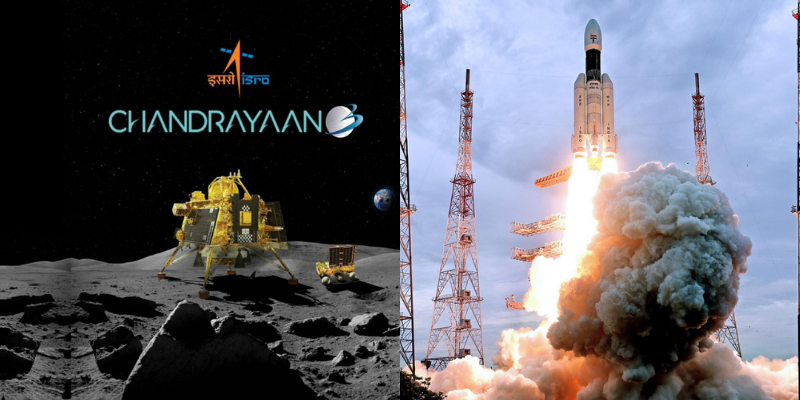
When India successfully landed Chandrayaan-3 on the Moon, marking a historic milestone in space exploration, the former Prime Minister of Pakistan, Nawaz Sharif, made a stark and telling remark. He observed that, on the very day India touched the lunar surface through scientific innovation and national resolve, Pakistan was forced to hold a begging bowl, seeking financial assistance from other countries. The comment underscored the sharp contrast between the two nations’ trajectories—one investing in technology, research, and self-reliance to become the fourth-richest country on earth and soon the third richest—and the other, Pakistan, struggling under economic dependence and recurring financial crises. The Tata group’s assets in India and abroad exceed Pakistan’s GDP.
Demographically, India is unmatched. With a population of over 1.45 billion, it is the world’s most populous nation and the largest democracy on Earth. Remarkably, combining the entire populations of North America (including the USA, Canada, and the Caribbean countries), South America (total population: 1.06 billion), and the 27 European Union countries (total population: 450 million) would still yield a total roughly equal to India’s, at 1.45 billion.
There are 35 countries in North and South America, and 27 European Union countries. Among them are 62 Presidents and Prime Ministers. Mr Narendra Modi alone, as Prime Minister, is doing the work of 62 Presidents, including Donald Trump, and Prime Ministers, according to population comparisons. Before any politically illiterate person even tries to criticise Mr Modi, they should consider the tasks Mr Modi has to do compared with those of 62 leaders of 62 countries that still have massive problems to solve in their countries daily. Separately, another comparison: India’s population is more than the entire African Continent. This will give readers a sense of the task Mr Modi must undertake in India every day.
This scale gives India an unparalleled human resource advantage, fuelling innovation, labour strength, and long-term growth.
Before going any further, it is important to remind the former colonial power, the UK, that some of its commentators should return to college to study the realities of international history and politics.
Under the leadership of Prime Minister Narendra Modi, India has emerged as a confident, decisive, and influential nation on the global stage. From international forums to strategic diplomacy, India is no longer seeking validation—it is shaping conversations. Many world leaders now openly acknowledge India’s role as a stabilising force and a key driver of the global south’s growth.
Yet, sections of Western journalism remain trapped in outdated thinking, clinging to the belief that their countries still rule the world. Some UK-based commentators continue to deny India’s rise, while others reduce the nation to selective portrayals of poverty to satisfy domestic narratives. This approach ignores India’s technological advances, economic strength, diplomatic influence, and civilisational depth. Such reporting reflects a refusal to accept a shifting global order. The reality is clear: the world is changing, power is decentralising, and India stands at the centre of this transformation—not as a subject of Western scrutiny, but as a leader shaping the future.
An insignificant British commentator, Patrick Christys, whose father is of Greek Cypriot origin and whose mother is of Irish origin, continues to push the tired narrative that India is borrowing USD 2.3 billion from the UK to fund its space project. This Indian history illiterate, Christys, who is the son of immigrants, must understand that India is the fourth-largest economy on earth and has over USD 700 billion in reserves. Economically, the UK is far behind India. This argument collapses under basic facts. India is a $4.51 trillion economy, and it does not care a bit about the so-called £2.3 billion, which the British government allegedly gives to charities in India. Indian authorities have told the British government numerous times that they do not want a bit of their charitable funds. Instead, they should use it to care for and feed the homeless poor people sleeping rough in cardboard cities in London and around other cities in the UK.
What makes such statements truly absurd is the convenient erasure of history. As Palki Sharma, a prominent broadcaster in India, has clearly explained, Britain’s accumulated wealth from India—estimated at over USD 43 trillion—was largely built on looting and robbing India’s wealth during colonial rule.
The British Empire used India’s $43 trillion to enrich its coffers and to exploit Africans and other countries around the world. Without India’s resources and money, the UK could not have done anything globally. India should send the $43 trillion bill to the British government.
Furthermore, Patrick Christys should ask his mother how the Irish people, especially Catholics, in the 1960s were treated when approaching to rent a room; the English landlords used to put “NO IRISH, BLACKS AND DOGS” in their windows. Before lecturing India, it would be wiser for Christys to revisit history books—because facts, unlike empires, do not fade away. The genuine English people will never accept Patrick Christys as English; instead, they will tell him to go back to Cyprus or the Republic of Ireland, where his mother and father came from. So, Christys is wasting his time trying to please his English masters.
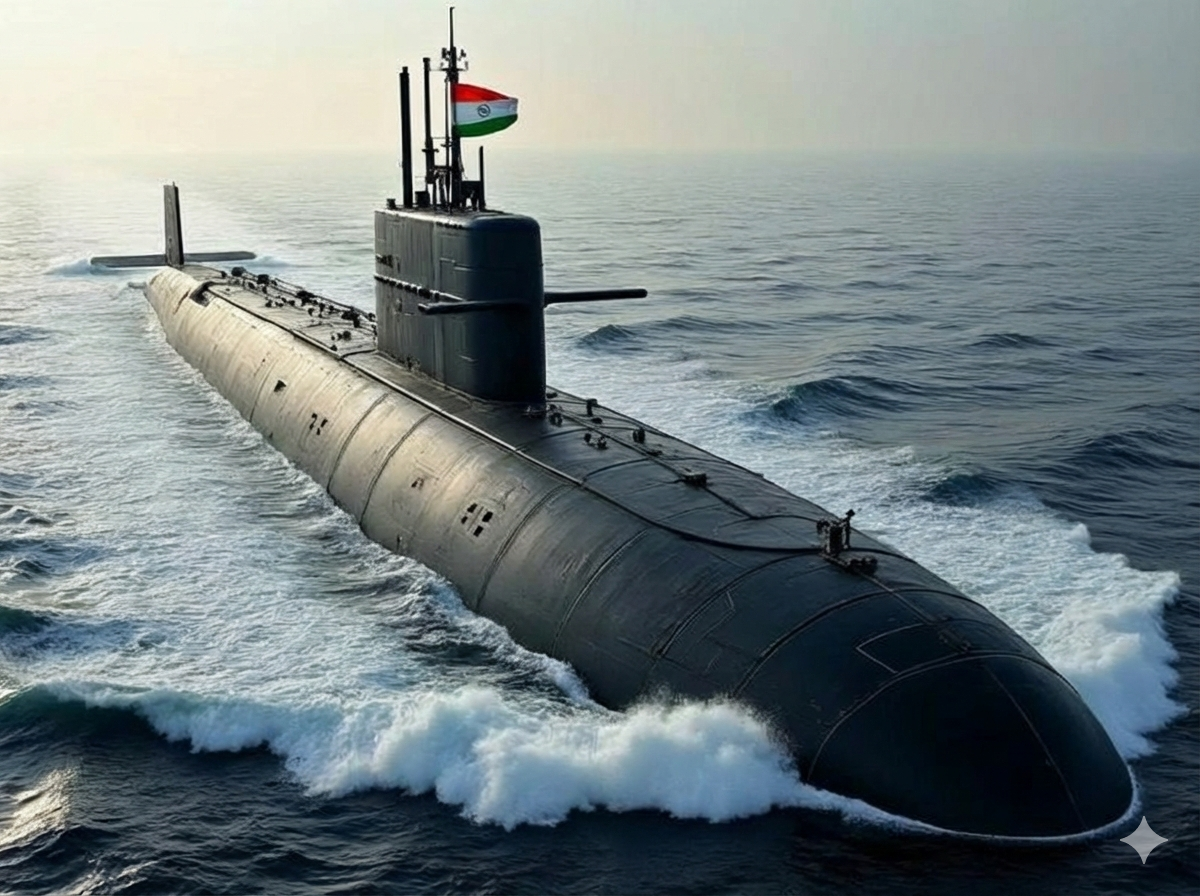
India’s modernised military, comprising a professional Army, Navy, and Air Force, should instil confidence and security among the Indian population. Recognised as a nuclear-armed country, India’s strategic deterrence, advanced missile systems, naval dominance, and nuclear-powered submarines enable it to launch nuclear ballistic missiles from the Bay of Bengal. Growing air power makes confrontation with India an unlikely option for China and Pakistan, reinforcing India’s regional strength.
In terms of modernisation, India’s progress over the last decade is unprecedented. From indigenous defence manufacturing and advanced weapon systems to digital governance, AI integration, infrastructure expansion, and renewable energy leadership, India has leapfrogged stages of development that took many European nations decades to reach. Highways, airports, high-speed rail, digital payments, and smart cities are reshaping the nation at scale.
India’s story today is not merely one of growth but also of confidence, capability, and global relevance. As the world transitions towards a multipolar order, India stands tall as a decisive force—economically strong, technologically advanced, militarily ready and secure, the largest democracy on earth and democratically resilient, and internationally respected. The journey ahead points not only to becoming the third-largest economy but also to becoming the world’s number one economy and shaping the future of global leadership.
Beyond economics and military strength, India’s greatest asset is its ancient and continuous civilisation. Indian civilisation has given the world mathematics, astronomy, yoga, meditation, philosophy, and spiritual thought that continue to influence global society today. Unlike many cultures that were disrupted or erased over time, India has preserved its civilisational core, traditions, and religions while adapting to change. This strong foundation has enabled modern governance to integrate advanced technologies, including artificial intelligence.
China’s modern history presents a sharp contrast to India’s approach to preserving its cultural heritage. During the Cultural Revolution under Mao Zedong, large parts of China’s heritage, customs, and belief systems, including Confucianism, Daoism, and Buddhism, were actively suppressed and destroyed. Ironically, Buddhism originated in India, survived the cultural onslaught in the 1960s from illiterate Chinese peasants, and is now again the largest religion in China.
While China has emerged as a global manufacturing hub and the world factory, its cultural contributions to the world remain limited compared with India’s millennia-old legacy. Today, India’s rise represents not only economic or military power but also the resurgence of Indian civilisation, which has shaped human thought for thousands of years and is once again asserting its place on the world stage.
The claim that ancient China maintained direct and sustained commercial relations with the Roman Empire through the so-called Silk Road is often presented today as a well-established story. This is not true at all and is a distortion of history. The Chinese are rewriting their connections with the Roman Empire, even though the Romans never heard of China, and they (Romans) did not know that a Chinese race even existed.
However, there is no evidence of direct state-to-state trade between the Roman Empire and Han China. The Chinese Politburo must understand that China is a communist country and that it adheres to Karl Marx, who despises culture, traditions, and religious beliefs. The world is fully aware of this, and even China’s pretence of trading with the Roman Empire is a fabrication by the communist regime.

However, famous Historians such as William Dalrymple, in his newly launched book “The Golden Road”. “How ancient India transformed the World” highlights that the Roman Empire’s trade with the East was primarily conducted through India and Arabian intermediaries. Roman and Indian ships sailed annually from Egyptian ports across the Red Sea to Indian ports, engaging in a vibrant, well-documented trade in spices, textiles, gemstones, and luxury goods. Archaeological discoveries, including Roman coins found in western and southern India, provide strong material evidence of this Indo-Roman commercial relationship. No Roman coins were found in China.
During the 1st to 5th centuries CE, the Roman Empire maintained an intense and highly profitable trade relationship with India. Roman demand for Indian luxuries—particularly pepper, fine textiles, pearls, ivory and precious gems—was enormous. These goods were symbols of wealth and prestige across Roman society, from aristocratic households to imperial courts.
However, this flourishing commerce created a significant trade imbalance. Rome had relatively few goods that Indian merchants desired in return, which meant payments were made largely in gold and silver. As a result, vast quantities of precious metals flowed eastward. The Roman writer Pliny the Elder famously described India as the “sink of the world’s gold,” reflecting widespread concern in Rome about the steady outflow of wealth.
The economic implications were serious. Some scholars argue that this persistent drain of bullion contributed to financial strain within the Roman Empire, including currency devaluation in later centuries. Yet despite the outflow of precious metals, the trade remained lucrative for Rome. Customs, including tariffs and duties collected at Red Sea ports, generated substantial revenue, forming an important component of the imperial treasury. Thus, while gold moved eastward, the broader commercial system continued to provide significant economic benefits to the Roman state.
A careful reading of historical records suggests that India played a central intermediary role in connecting Mediterranean and East Asian markets during the Roman period, underscoring the complexity of ancient global trade networks rather than the recent, false fabrication of history by the Chinese.
Today, the world is becoming aware of Indian civilisation and its contributions. India is not in the business of inventing history. However, India is ready to set the record straight about its achievements before the world.
India’s rapid economic growth, advances in AI, military modernisation, and rising global influence in recent years are widely attributed to the leadership of the Bharatiya Janata Party under Prime Minister Narendra Modi. From the outset, his vision has been to strengthen India and improve its people’s standard of living through development, self-reliance, and decisive governance. Structural economic reforms, infrastructure expansion, digital transformation, AI, and defence indigenisation have collectively reshaped India’s national confidence and international standing.
Over the past decade, under the leadership of Prime Minister Narendra Modi, India has become the world’s fourth-largest economy, with projections indicating it will soon move into third place. This growth reflects Mr Modi’s clear ambition to build a strong, self-reliant India by combining a modern, scientific approach to governance with practical solutions to long-standing social challenges. Initiatives such as the development of nearly 23 Smart Cities highlight this transformation and present a confident, new India to the world.
At the same time, India continues to draw strength from its ancient civilisation, which advanced mathematics and numbers, algorithms, Algebra, and even concepts such as the multiverse thousands of years ago. By preserving its civilisational values while embracing modern technology and respecting cultural and religious traditions, India has created a development model that is both rooted and forward-looking. At its current pace, few countries will be able to match India’s scale and speed of progress in the decade ahead.

For 1,000 years, India, without resorting to force, spread its culture and traditions to 60% of the world’s population in Asia. China, including Japan, Korea, Indonesia, Thailand, Laos, Vietnam, Cambodia, Myanmar, and Mongolia, converted to Buddhism. Cambodia, Indonesia, Laos, and Thailand also embraced Hinduism. India also introduced Mathematics, Astronomy, Meditation, Yoga, and Medicine to these Asian countries.
India has long been recognised for its immense contribution to world civilisation, especially across Asia and the Middle East, where its ideas, philosophy, trade, and spiritual traditions left a lasting impact. Unlike many powers in history, India did not spread its influence through force or conquest but through the peaceful transmission of Hindu and Buddhist teachings, knowledge systems, and cultural exchange. Over time, many societies voluntarily embraced elements of Indian civilisation, inspired by its spiritual depth and intellectual richness. Today, even several European countries show growing appreciation for Hindu and Buddhist philosophies, reflecting India’s influence built on ideas rather than domination and why it continues to be respected by nations around the world.