





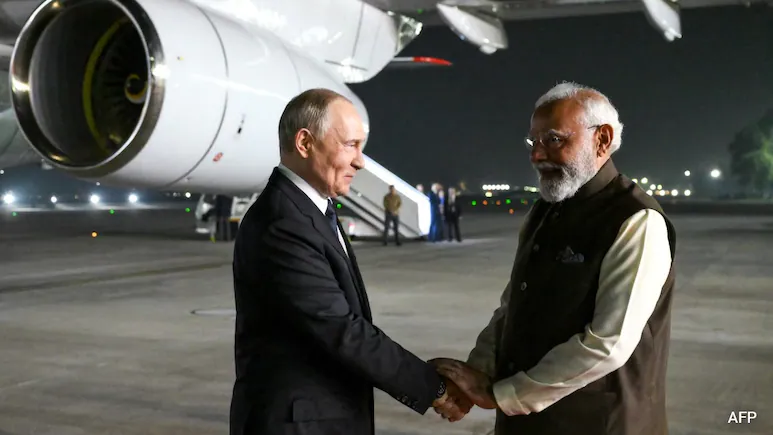
Russian President Vladimir Putin has strongly defended India’s continued purchase of Russian fuel, questioning the criticism often raised by Western countries over India’s growing energy partnership with Moscow. Speaking at a recent interaction, Putin said that if the United States and European nations reserve the right to buy Russian oil and gas when it suits their strategic or economic interests, India should not be questioned for doing the same.
Putin emphasized that energy security is a sovereign decision for every nation, and India has the full right to choose affordable and reliable sources of fuel. He argued that despite Western sanctions, several Western countries continue indirect or re-routed purchases of Russian energy products. “If the US has the right to buy our fuel, why should India be denied the same right?” Putin remarked, adding that New Delhi’s energy policy has always been guided by national interest and long-term stability.
He praised India’s balanced geopolitical stance and highlighted that Russia and India have decades-long cooperation in the energy sector, including crude oil, LNG, and nuclear energy. Putin noted that India’s decision to increase Russian oil imports had contributed to stabilizing its domestic fuel prices while strengthening bilateral economic ties. He also credited Prime Minister Narendra Modi’s leadership for maintaining an independent foreign policy, saying that India’s choices are respected globally because they are pragmatic and self-driven.
The Russian President further criticized what he called the “double standards” of some Western nations, stating that they cannot lecture others while pursuing their own benefits behind the scenes. He reaffirmed Russia’s commitment to continuing energy cooperation with India and expanding trade despite global geopolitical pressures.
Putin’s remarks come at a time when India–Russia trade has surged, with India becoming one of the largest importers of Russian crude. His comments have once again underlined Moscow’s strong support for India’s sovereign economic decisions and its pushback against international pressure aimed at restricting bilateral energy flows.