




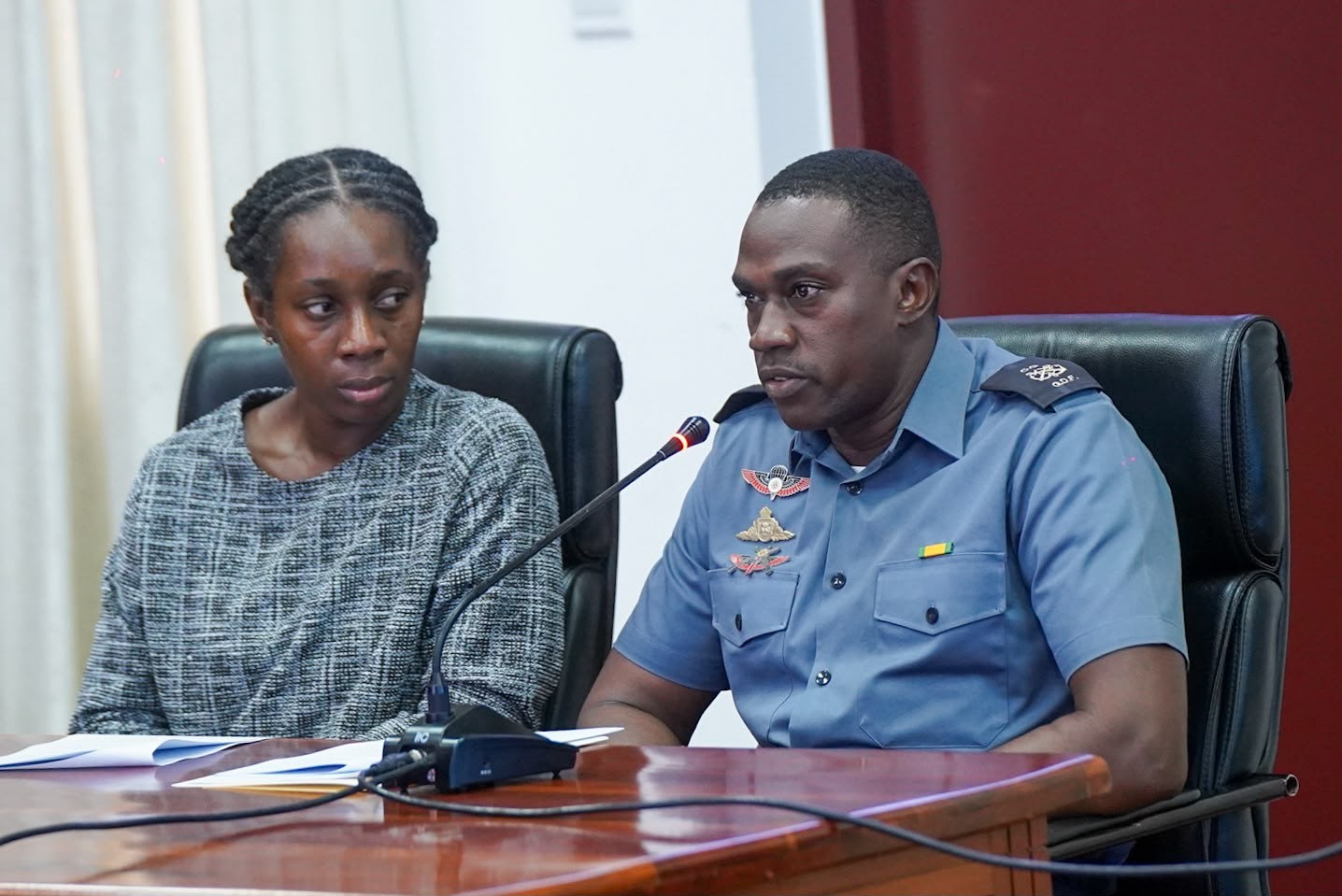
Georgetown, Guyana — Guyana Defence Force (GDF) Coast Guard personnel were the first rescuers to reach survivors of the MV Barima tragedy, pulling men, women and children from the turbulent ocean during a nighttime operation, the Presidential Commission of Inquiry (COI) has heard.
Petty Officer Deon Smith testified that his Metal Shark crew followed cries for help through the darkness, using spotlights to locate people struggling to stay afloat. The crew rescued survivors within hours of the initial distress alert and later transferred them to a Maritime Administration Department pilot boat.
Coast Guard Responded to Distress Alert
Lieutenant Rolwyn Heywood, the weekend duty officer at Coast Guard headquarters, told the commission that he received a distress alert at 10:51 p.m. on July 18.
He plotted the beacon’s position approximately 8.25 nautical miles off the Essequibo Coast and checked vessel-tracking information. By 11:10 p.m., he had directed the Pomeroon Coast Guard base to proceed towards the reported location.
As additional distress coordinates became available, they were relayed to vessels participating in the search.
Rescuers Followed Cries for Help
Petty Officer Smith described the difficult conditions faced by his crew as they searched the dark waters.
The rescuers heard people shouting for help and directed their spotlights towards the voices. As they pulled survivors aboard, they continued listening for others who might still be in the water.
The testimony highlighted the challenges of conducting a nighttime maritime rescue in turbulent conditions, where locating survivors depended on coordinated communication and visual searches.
Aircraft and Additional Vessels Joined the Operation
Roraima Airways and GDF aircrews also responded to the emergency.
Captain Learie Barclay, Director of Operations at Roraima Airways, testified that he received a call requesting an aerial search and travelled to Ogle to assist. An Islander aircraft departed at 1:36 a.m., with the crew using emergency signals and flares to help identify the search area.
A GDF Bell 407 helicopter also supported the response by transporting a drone team and conducting coastal reconnaissance. However, operational limitations and aviation requirements prevented the single-engine helicopter from searching offshore at night.
Regional Security System aircraft from Barbados later joined the wider operation.
Coast Guard Coordinated a Wider Search
The GDFS Shahoud departed Ruimveldt at approximately 3:30 a.m., with Lieutenant Heywood aboard as navigation officer.
At around 7:30 a.m., the vessel encountered a fishing boat carrying 11 survivors and two police ranks. Because the survivors needed urgent medical attention, they were directed towards shore.
The Shahoud subsequently coordinated a wider search involving six Coast Guard vessels and 12 civilian boats, including fishing vessels that volunteered to assist.
Heavy rain, mist and rough seas complicated the operation, with visibility reportedly reduced to approximately 500 yards during the night.
Search and Recovery Efforts Continued
Senior Petty Officer Lyndon Phillips told the commission that search teams continued looking for survivors and recovered floating life jackets and cargo. On July 20, his team found six bodies and transported them to Charity wharf, where medical assistance was available.
The wider search involved multiple agencies and continued over several days, followed by diving operations.
During his testimony, Petty Officer Smith also spoke about the psychological impact of the rescue. He told commissioners that he was receiving therapy and continued to experience anxiety and trauma when recalling the incident.
The Commission of Inquiry is examining the emergency response, rescue operations and circumstances surrounding the MV Barima tragedy.