






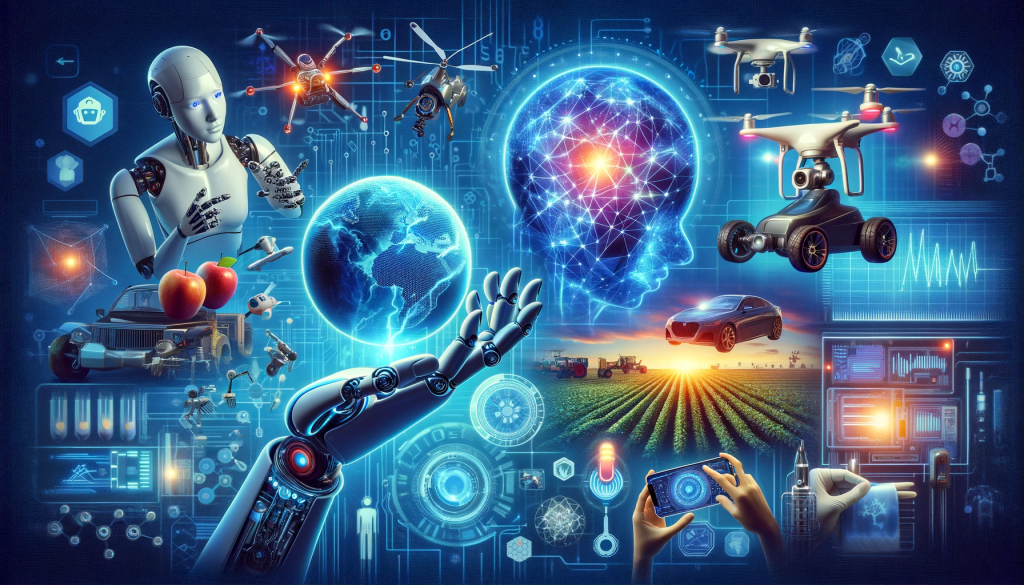
Human civilisation has progressed through a series of industrial revolutions, each of which has transformed the way people live and work.
The First Industrial Revolution was powered by steam engines and water power, replacing manual labour with mechanised production.
The Second Industrial Revolution brought electricity, petroleum, and steel, enabling mass production and modern transport.
The Third Industrial Revolution brought electronics, computers, and microprocessors, ushering in the digital age.
The Fourth Industrial Revolution builds on these advances through the Internet of Things (IoT), cloud computing, big data, robotics, and automation, connecting machines, systems, and people like never before.
Today, the world is entering the Fifth Industrial Revolution, driven primarily by Artificial Intelligence (AI). Unlike previous revolutions, which focused on machines replacing manual or repetitive tasks, the Fifth Industrial Revolution emphasises collaboration between humans and intelligent machines.

AI serves as a cognitive partner, helping people make better decisions, solve complex problems, accelerate innovation, and improve productivity across industries. From healthcare and education to energy, agriculture, and government services, AI is ushering in a new era in which technology is not only smarter but also more human-centric, sustainable, and focused on improving quality of life.
Artificial Intelligence (AI) is rapidly transforming the world. From healthcare and education to banking, agriculture, transport, media, and national security, AI is becoming one of the most powerful technologies ever developed. As the Industrial Revolution reshaped economies in the 19th century and the internet transformed communication in the 21st century, AI is now shaping the future of nations and redefining how people work, learn, and live.
Today, the global AI race is largely dominated by three countries: the United States, China, and India. While each nation has adopted different strategies, they all recognise that AI will be a major driver of economic growth, innovation, and global competitiveness in the decades ahead. For emerging economies such as Guyana, understanding AI and preparing for its opportunities and challenges is no longer optional—it is essential.
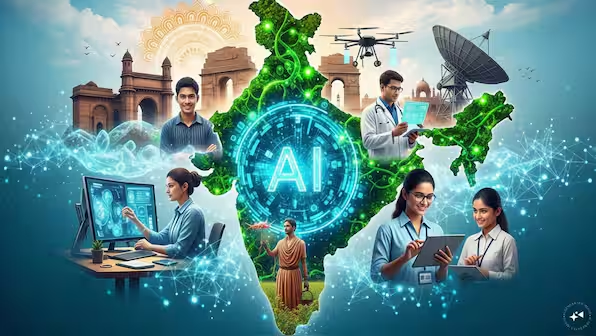
The United States remains the world’s leading AI powerhouse. Home to many of the world’s most influential AI companies and research institutions, America continues to lead in advanced AI models, cloud computing infrastructure, investment, and innovation. The U.S. government has also emphasised AI as a strategic priority, viewing it as critical to economic growth, national security, and technological leadership.
China, however, has emerged as America’s strongest competitor. Through massive government investment, aggressive research programmes, and the widespread deployment of AI across industries, China has rapidly narrowed the gap. Recent studies and reports indicate that Chinese AI capabilities are approaching those of leading American systems. In contrast, China now leads in several areas, including AI patents, publications, robotics deployment, and large-scale implementation.
India tells a different but equally important story. Rather than focusing solely on frontier AI research, India has prioritised large-scale adoption and practical implementation. Recent reports indicate that India now leads the world in workplace AI adoption, with businesses, managers, and employees embracing Indian AI tools at unprecedented rates. The country’s vast technology workforce and digital infrastructure position it as a rising AI giant.
During the internet and software revolution, India emerged as one of the world’s most important technology partners, with companies such as Infosys, TCS, and Wipro helping governments, banks, and businesses in developed countries modernise their systems and improve efficiency. Thousands of highly skilled Indian engineers and technology professionals were deployed worldwide to support digital transformation and drive innovation.

Today, India is adopting a similar approach to Artificial Intelligence, investing heavily in AI education, research, and workforce development. While the United States leads in advanced AI innovation and China excels in large-scale deployment, India’s advantage lies in its vast talent pool and its ability to develop and implement AI solutions globally, positioning the country as a major player in global AI implementation in the next phase of technological advancement.
India is positioning itself as the leader in introducing AI to Africa, South America, the Arab World, and Western Europe.
While these global powers compete for AI leadership, smaller nations have an opportunity to benefit from technology without necessarily leading its development. Guyana is in this position today.
Guyana is undergoing one of the fastest economic transformations worldwide. The country’s growing oil and gas sector, expanding infrastructure, rising foreign investment, and digital modernisation efforts create ideal conditions for AI adoption. Rather than competing directly with the United States, China or India to develop foundational AI systems, Guyana can focus on applying AI to solve local challenges and improve national productivity.
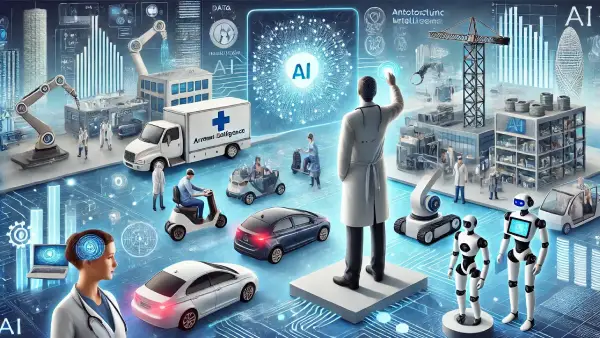
The benefits of AI for Guyana are substantial. In healthcare, AI can assist doctors with disease diagnosis, medical image analysis, improved patient management, and expanded access to healthcare services in remote hinterland communities. In education, AI-powered learning platforms can provide personalised instruction, enable students to learn at their own pace, and support teachers with administrative tasks.
Agriculture, one of Guyana’s traditional economic pillars, can also be transformed by AI. Farmers can use AI-powered systems to monitor crops, predict weather patterns, detect plant diseases, optimise irrigation, and increase yields. These technologies can help strengthen food security and boost agricultural exports.
The use of Artificial Intelligence (AI) in the banking and finance sector is expanding rapidly worldwide, with many developed countries already integrating AI-driven technologies to improve efficiency, security, and customer service. From fraud detection and risk management to personalised banking and automated customer support, AI is transforming how financial institutions operate.
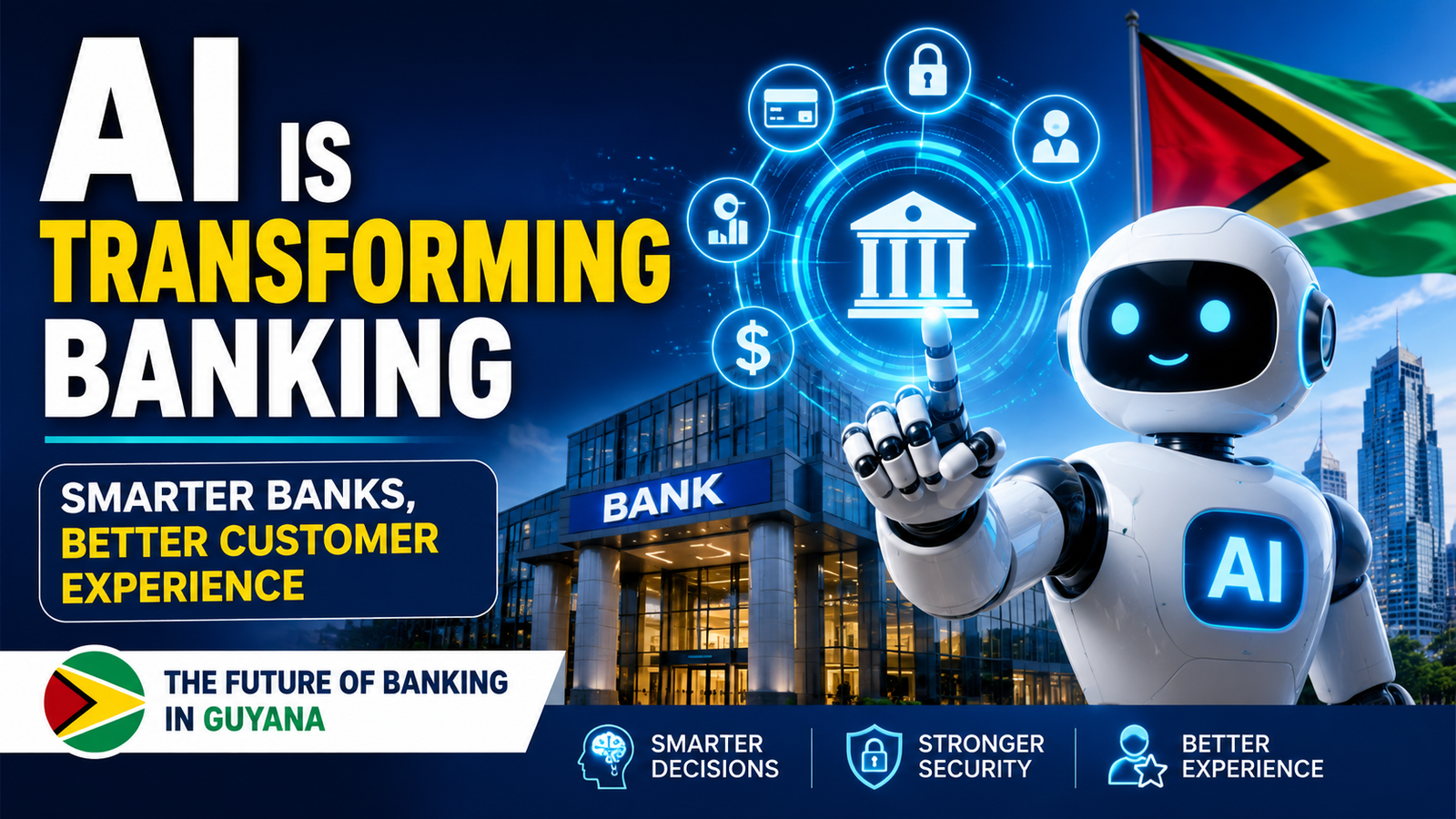
In Guyana, several banks have already begun exploring AI-powered solutions to enhance the customer experience, while others are actively considering adopting them as part of their digital transformation strategies. As the country’s financial sector continues to modernise, AI is expected to play an increasingly important role in delivering faster, smarter, and more convenient banking services to customers.
The energy sector offers another major opportunity. AI can optimise oil production, improve safety standards, predict equipment failures, reduce operational costs, and support the management of renewable energy systems. As Guyana positions itself as a major global energy producer, AI can enhance efficiency and competitiveness across the sector.
The government itself can benefit significantly from AI. Smart public services, digital governance, data analysis, infrastructure planning, and improved service delivery can help create a more responsive and efficient state. Recent discussions among Guyanese leaders have already underscored the importance of AI in governance and public administration.
The media industry is another area where AI presents both opportunities and challenges. AI can assist journalists with research, transcription, translation, data analysis, and content production. However, as recently highlighted in discussions within Guyana’s media landscape, AI must be used responsibly. Accuracy, ethics, transparency, and editorial oversight remain essential. AI should support journalism rather than replace the human judgement, integrity, and accountability that define quality reporting. Responsible use of AI will be critical to maintaining public trust and combating misinformation.
Despite its many benefits, AI poses significant risks.
One of the biggest concerns is job displacement. As AI becomes more capable, many routine and repetitive tasks can be automated. Clerical workers, data-entry staff, customer service representatives, basic accounting staff, and certain administrative roles may face increasing disruption. Around the world, companies are already restructuring operations and reducing some roles as AI tools become more sophisticated.
However, history shows that technological revolutions often eliminate some jobs while creating entirely new industries and professions. The challenge for Guyana is to ensure that workers have the skills needed for the emerging AI economy. Education, retraining, digital literacy, and lifelong learning must become national priorities.
Another concern is misinformation. AI can generate realistic images, videos, and written content that may be difficult to distinguish from authentic material. Without adequate safeguards, these tools can be used to spread false information, manipulate public opinion, or undermine trust in institutions.
Privacy and cybersecurity are also critical issues. AI systems often require large volumes of data, making data protection and responsible governance essential. As Guyana’s digital economy expands, robust cybersecurity measures and privacy protections will become increasingly important.
The question, therefore, is not whether Guyana should adopt AI, but how it should do so responsibly.
The answer lies in balanced regulation and strategic planning. Governments must foster innovation while establishing clear rules on privacy, accountability, transparency, and ethical use. Educational institutions must prepare students for AI-driven careers. Businesses must invest in workforce development. Citizens must become informed users of AI technologies.
Importantly, Guyana still has an opportunity to build its AI framework early. Experts note that many countries are still developing comprehensive AI regulations, creating an opportunity for emerging nations to learn from global experience and adopt best practices.
The future will not belong solely to countries that create AI. It will belong to those that use it effectively, responsibly, and inclusively. The United States may lead in innovation, China may excel at scale, and India may dominate adoption. Still, Guyana can chart its own path—one that leverages AI to improve lives, strengthen institutions, diversify the economy, and create opportunities for future generations.
Artificial Intelligence is not merely a technological trend. It is a transformational force that will shape the global economy for decades. For Guyana, the challenge is to harness its benefits while managing its risks. If approached wisely, AI can be a powerful tool for national development, helping Guyana build a more productive, innovative, and prosperous future.
The AI revolution has arrived. The question for Guyana is not whether it will participate, but how effectively it will harness this extraordinary technology for the benefit of all Guyanese.
Artificial Intelligence (AI) is emerging as the driving force behind the Fifth Industrial Revolution (5IR). This new era moves beyond automation and digital connectivity towards deeper collaboration between humans and machines. While the Fourth Industrial Revolution focused on technologies such as cloud computing, the Internet of Things (IoT), and automation, the Fifth Industrial Revolution places people at the centre of innovation. AI is enabling businesses, governments, and individuals to solve complex problems, make smarter decisions, and create highly personalised solutions that improve quality of life. Rather than replacing human intelligence, AI is increasingly designed to enhance human creativity, productivity, and innovation.
The Fifth Industrial Revolution is grounded in sustainability, ethics, resilience, and human well-being. AI-powered systems are helping industries optimise resources, reduce waste, improve healthcare outcomes, strengthen education, and support the development of smart cities. At the same time, the rapid growth of AI raises important questions about governance, transparency, privacy, and responsible use. As nations embrace this technological transformation, success will depend not only on technological advancement but also on ensuring that innovation aligns with societal values and benefits all citizens. Countries that effectively balance AI-driven progress with ethical leadership will be best placed to thrive in the age of the Fifth Industrial Revolution.
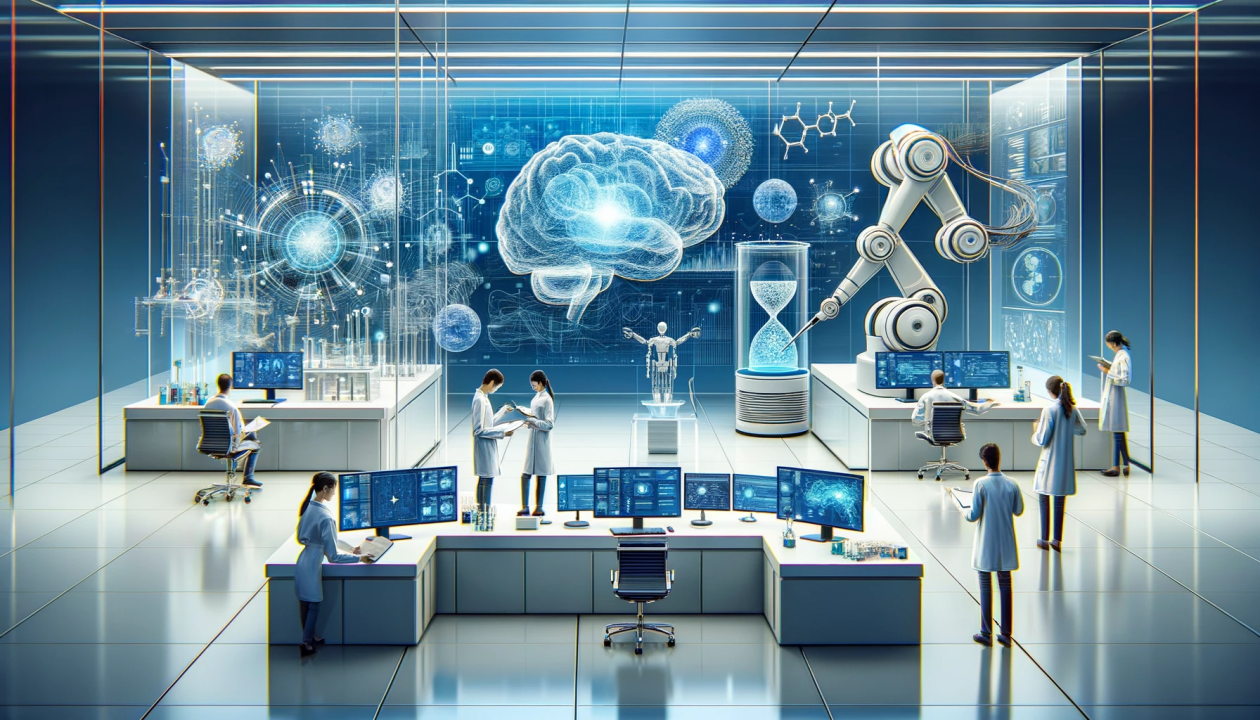
Countries around the world are investing heavily in Artificial Intelligence (AI) because they recognise its potential to transform economies, strengthen national security, improve public services, and drive innovation. Nations that fail to embrace AI risk falling behind in an increasingly competitive global economy. Today, AI is used across healthcare, education, agriculture, banking, manufacturing, government services, and even political strategy. While many people worry that AI will lead to job losses or eventually replace human workers, the reality is that it is also creating new opportunities, improving productivity, and helping people perform tasks more efficiently.
In Guyana, there is still a need for greater public awareness about what AI is and how it can benefit citizens. Although advanced robotics are not yet widespread in the country, AI will increasingly become part of government institutions, businesses, schools, hospitals, and other sectors.
It would be beneficial for the government to introduce basic AI education into the school curriculum at an early stage, such as “AI for Beginners in Schools”: Equipping the Next Generation for an AI-Driven World.
This would not necessarily focus on teaching children to build AI tools or advanced technologies, but rather on helping them understand what artificial intelligence is, how it is transforming the world, and why it is important—much as the Industrial Revolution changed societies centuries ago. By giving students an introductory understanding of AI, they can gradually build their knowledge as they grow older and eventually learn the more advanced aspects of the technology. Since children are the future, preparing them for an AI-driven world through education is far more impactful than simply discussing these changes in public forums without equipping the next generation with the knowledge they need to succeed.
The Government of Guyana should welcome partnerships with reputable AI companies and experts to help introduce these technologies responsibly. With proper planning, education, and regulation, AI can make life easier for Guyanese, improve public services, create new economic opportunities, and help position Guyana as a modern, competitive nation in the digital age.