






– High-speed internet reaches thousands of public facilities
The government’s aggressive push to deliver affordable, high-speed internet access is rapidly transforming connectivity in education, healthcare, security and hinterland communities, with the National Data Management Authority (NDMA) now providing internet services to more than 3,800 locations nationwide.
New figures released by the NDMA show that 97 per cent of schools, 92 per cent of hospitals and health centres, 72 per cent of police stations and 100 per cent of fire stations across Guyana are now connected to high-speed internet services exceeding 200 megabits per second.

The expansion forms part of the government’s broader agenda to modernise public services, bridge the digital divide and ensure citizens in every region can access reliable internet connectivity.
In the education sector alone, schools across Regions One, Two and Three, along with Georgetown, have achieved full internet connectivity, while Regions Four and 10 have reached 98 per cent coverage.
Meanwhile, health facilities are also seeing major improvements, with Regions One and Two recording 100 per cent connectivity, while Regions Seven and 10 have each surpassed 97 per cent coverage.
Significant gains have also been made in strengthening digital infrastructure for public safety services.
Police stations in Regions One, Two, Nine and 10 are now fully connected, improving communication and operational efficiency within the security sector.
The NDMA said its nationwide expansion has extended beyond urban centres into Guyana’s hinterland, remote and riverain communities.
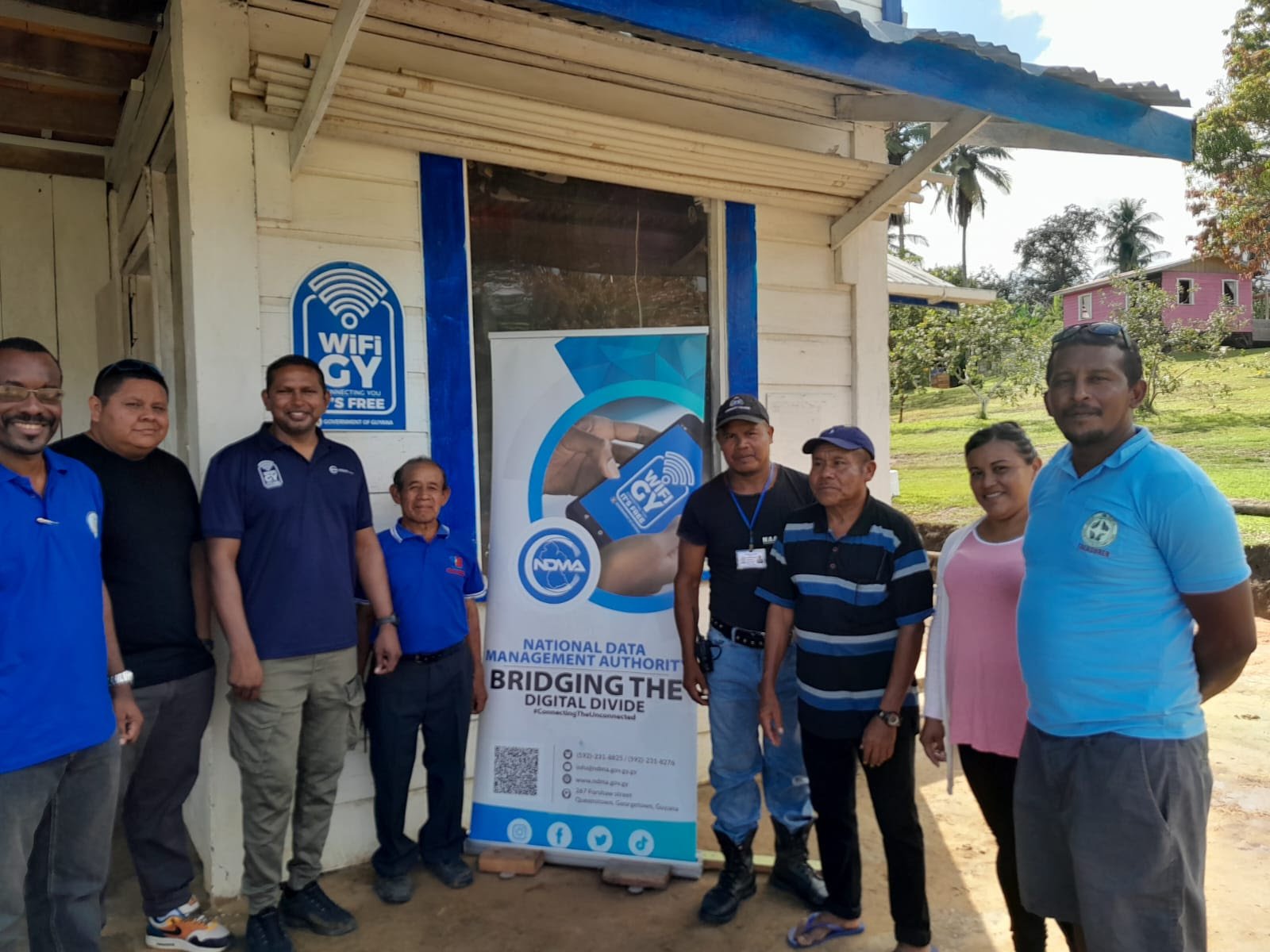
High-speed internet services have now been deployed in all 253 hinterland, remote and rural communities through installations at government buildings and public spaces.
Among the major beneficiaries are 178 Hinterland ICT Hubs, which provide internet access and digital opportunities to more than 135,000 residents.
Under its 2026 work programme, the NDMA will continue to expand connectivity services nationwide, targeting additional schools, health centres, teachers’ and doctors’ quarters, student dormitories, and WiFiGY sites to increase access to free public internet hotspots for citizens.