


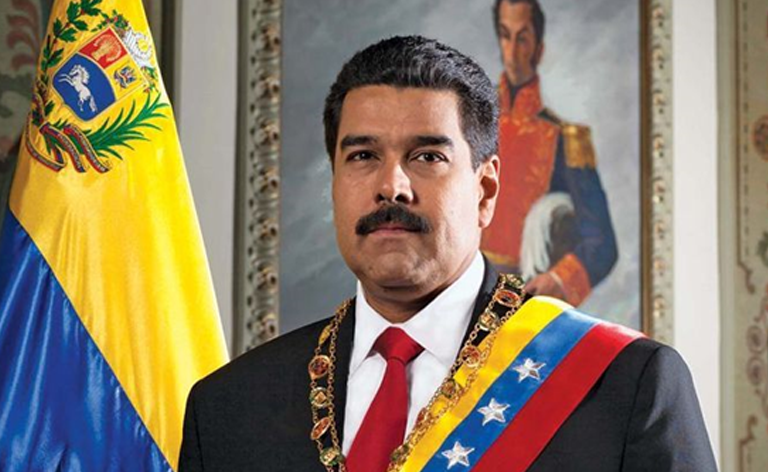
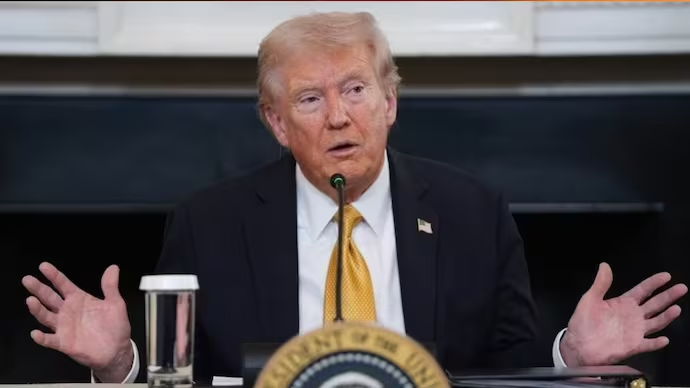
US President Donald Trump has claimed a dramatic victory over Venezuela, announcing that Venezuelan President Nicolás Maduro has been captured following what he described as large-scale US military action in the South American nation. The claims were made in a series of posts on Trump’s social media platform, Truth Social, and have sent shockwaves across the region and beyond.
According to Trump, US forces carried out coordinated strikes inside Venezuela, detained Maduro and his wife, and flew them out of the country. He said the operation was conducted in coordination with US law enforcement agencies and promised further details at a press conference to be held at his Florida residence, Mar-a-Lago. No independent confirmation of the capture has yet been provided.
In recent weeks, Trump has repeatedly used strong language against the Maduro government. Earlier in December, he claimed that Venezuela was “completely surrounded by the largest armada ever assembled in the history of South America,” warning that pressure would intensify until what he called stolen US assets — including oil and land — were returned. Trump has long accused the Maduro administration of using oil revenues to finance drug trafficking, human trafficking, and other serious crimes.
The operation comes amid a broader escalation in US actions against Venezuela. In December, US forces seized two oil tankers carrying Venezuelan crude, and the US Treasury Department imposed sanctions on four additional companies operating in Venezuela’s oil sector. Treasury Secretary Scott Bessent said the measures were part of a sustained campaign to prevent what Washington calls an “illegitimate regime” from benefiting from oil exports.
Just before Christmas, reports emerged that US intelligence agencies had used drones to strike a Venezuelan dock allegedly linked to drug and human trafficking networks. The strike was described as the first direct attack on Venezuelan territory under Trump’s renewed pressure campaign. Ironically, only days later, Maduro appeared to signal openness to dialogue, saying he was willing to engage with Trump “in whatever form you want” and suggesting cooperation with US companies similar to existing arrangements with Chevron.
Within the US, reactions have been mixed. Senator Mike Lee, a critic of military action against Venezuela, said he did not expect further strikes. Citing discussions with Secretary of State Marco Rubio, Lee said any recent use of force was intended to protect US personnel executing an arrest warrant. He added that such action would likely fall within the president’s constitutional authority to defend Americans from imminent threats.
Venezuela has firmly rejected Trump’s claims and actions. Vice President Delcy Rodríguez issued a statement condemning what she described as US military aggression, alleging attacks in Caracas and in the states of Miranda, Aragua, and La Guaira. She called the operation a “flagrant violation” of the United Nations Charter and accused Washington of seeking to seize Venezuela’s oil and mineral resources under the guise of regime change.
Rodríguez urged Venezuelans to mobilise in defence of national sovereignty, insisting that past efforts to remove the government had failed and would do so again. The developments have also triggered regional and international responses. Iran reportedly declared a state of emergency following news of Maduro’s alleged capture, recalling earlier warnings from Trump that the US was prepared to intervene if Iranian authorities violently cracked down on protesters.
In neighbouring Colombia, President Gustavo Petro said his government was preparing for a possible influx of refugees, noting that instability in Venezuela has previously driven large numbers of people across the border. While expressing concern for civilians, Petro rejected any unilateral military action against Venezuela’s sovereignty, despite his often-tense relationship with Trump.
Argentina’s President Javier Milei welcomed the reported developments, declaring that “liberty advances.” Meanwhile, Venezuelan opposition leader María Corina Machado, speaking days earlier, had predicted that 2026 would mark a turning point for Venezuela’s freedom — a prediction now being revisited by her supporters in light of Trump’s claims.
As the world awaits further clarification and independent verification, Trump’s announcement has added a new layer of uncertainty to an already volatile situation, with potentially far-reaching consequences for Venezuela, the region, and global geopolitics.