




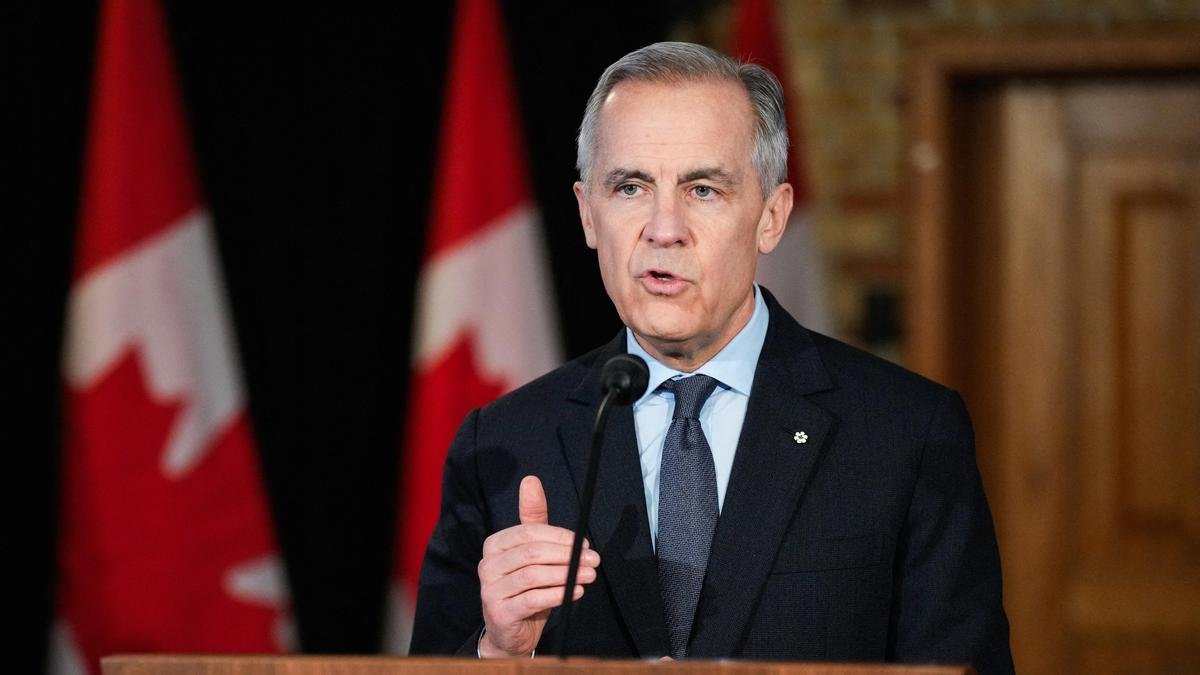
When Donald Trump once again framed Canada as an economy surviving at America’s convenience, the response from Mark Carney was firm, measured, and revealing. Canada, Carney made clear, is not an extension of the United States—it is a sovereign nation with its own economic foundations, institutions, and global relevance.
Carney’s rebuttal was not emotional; it was structural. Canada’s prosperity does not stem from dependency but from diversification. While the U.S. is Canada’s largest trading partner, trade volume is not the same as economic ownership. Canada’s strength lies in its financial stability, natural resources, innovation capacity, and credibility in global markets—assets built over decades, not granted by proximity.
Trump’s rhetoric reflects a transactional view of alliances, where economic relationships are framed as favors rather than mutual benefit. Carney’s response dismantles that framing. The Canada–U.S. relationship has always been reciprocal: integrated supply chains, shared energy systems, and cross-border industries that sustain millions of jobs on both sides. To suggest one survives because of the other oversimplifies a deeply interdependent reality.
More importantly, Carney’s statement speaks to a broader principle in modern geopolitics: partnership is not subservience. Canada trades with the U.S. by choice, not necessity. It also trades with Europe, Asia, and emerging markets, positioning itself as a globally connected economy rather than a satellite state. Economic sovereignty, in this sense, is about options—and Canada has them.
Carney’s answer also signals a quiet confidence. It avoids escalation while asserting dignity. In an era where loud nationalism often replaces policy substance, his response reminds audiences that credibility is built through institutions, consistency, and long-term planning—not sound bites.
Canada does not “live because of” the United States. It thrives alongside it, sometimes aligned, sometimes independent, but always sovereign. That distinction matters—not just for Canada, but for how middle powers navigate a world increasingly shaped by dominant voices.