





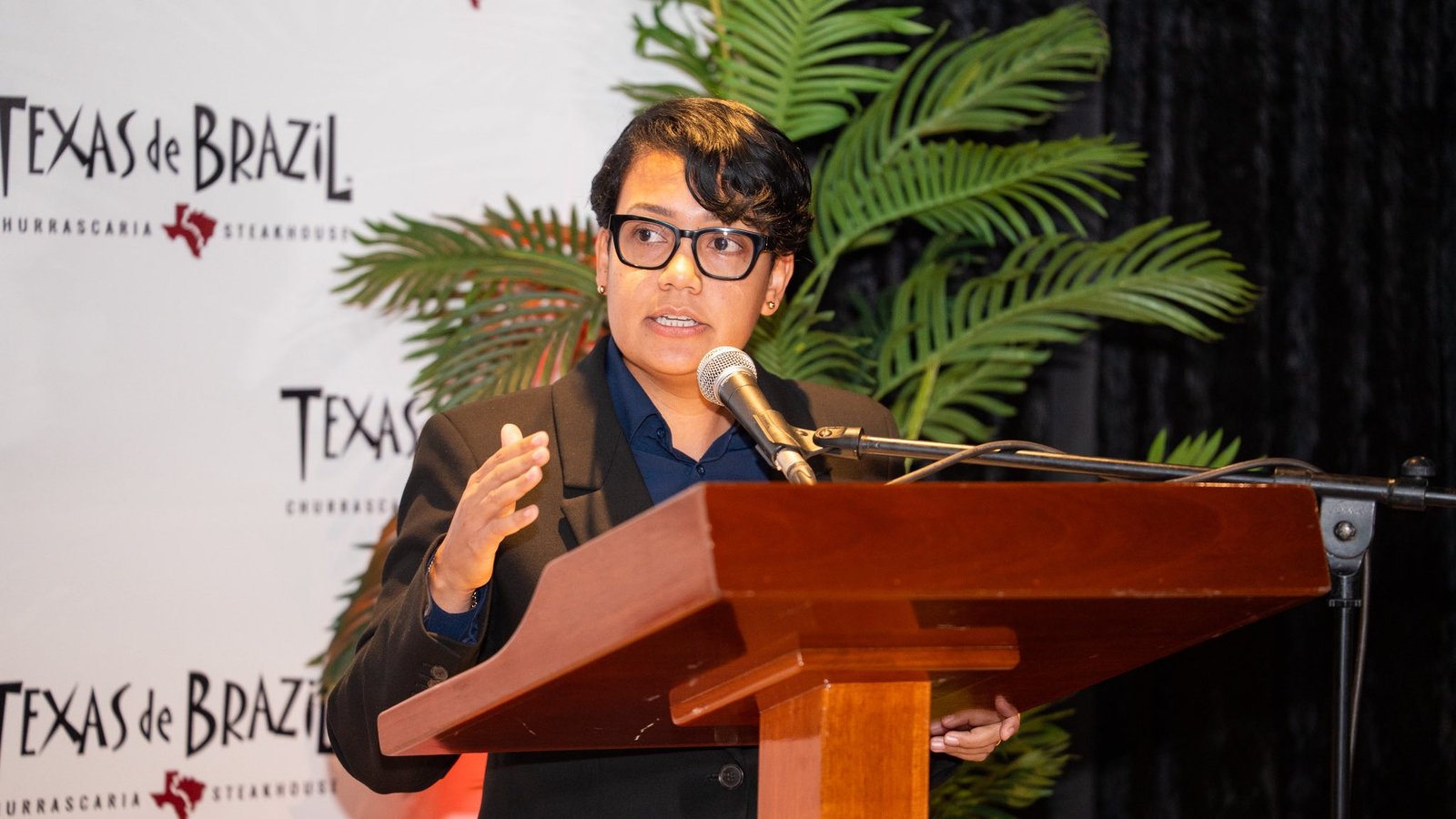
Minister of Tourism, Industry and Commerce Susan Rodrigues has described Budget 2026 as a decisive, forward-looking plan that places the well-being of Guyanese citizens at the heart of national development, describing it as both courageous in scope and clear in purpose.
Speaking during the Budget in Focus programme, Minister Rodrigues said the latest budget reflects the governing People’s Progressive Party/Civic (PPP/C)’s consistent philosophy of easing financial pressure on households while expanding growth opportunities. She underscored that the government’s approach contrasts sharply with that of the opposition, noting that the administration prioritises removing burdens on citizens rather than cutting benefits that directly support families.
According to the minister, the 2026 budget is one of the strongest demonstrations yet of a people-centred policy framework. She highlighted expanded support for vulnerable groups, broad-based tax relief, and interest-free financing for micro, small and medium-sized businesses as key indicators of the government’s commitment to inclusive development.
Minister Rodrigues explained that Budget 2026 is the first in a series of five budgets intended to fulfil the PPP/C’s post-election manifesto following the 2025 General and Regional Elections. Together, these budgets are designed to advance President Dr Irfaan Ali’s long-term vision of ensuring that prosperity reaches every Guyanese household by 2030.
Minister Rodrigues encouraged citizens to assess the government’s performance since 2020, arguing that past budgets show a clear pattern of promises made and promises delivered. In her view, the PPP/C has consistently aligned policy decisions with public commitments across multiple sectors.
A major focus of the 2026 fiscal plan, Minister Rodrigues highlighted, is easing the rising cost of living. To this end, an additional $9 billion has been allocated to provide further relief to households struggling with everyday expenses.
Support for children and senior citizens will also see significant expansion. The Because We Care cash grant will rise to $60,000 per child, complemented by a new annual transportation allowance of $20,000 for schoolchildren and a $5,000 uniform voucher. Collectively, these measures mean that each child will now benefit from support totalling $85,000, resulting in an estimated $12.4 billion being transferred directly to parents under the programme.
Educational assistance will extend beyond cash transfers, with the government continuing to cover examination fees for both CSEC and CAPE students, benefiting approximately 14,000 learners. Minister Rodrigues said these initiatives not only help parents plan for their children’s futures but also reinforce sustained investment in education infrastructure, teacher support, and improved learning environments nationwide.
From a broader economic perspective, the minister argued that the cumulative impact of PPP/C budgets since 2020 shows that the country is steadily moving towards inclusive prosperity. She stressed that the government has maintained policy consistency, ensuring that no budget unexpectedly withdraws benefits that citizens have come to rely on.
Senior citizens will also see tangible improvements, with old-age pensions rising to $46,000 per month and a $20,000 annual transport grant introduced. These measures will inject an additional $1.9 billion into support for the elderly.
Further steps to boost disposable income include higher stipends for community-based workers, reinstating the $100,000 national cash grant for adults aged 18 and over, eliminating net property tax for individuals, and raising the income tax threshold to $140,000 per month. Minister Rodrigues estimated that, taken together, these measures will channel more than $100 billion directly into citizens’ hands. The government will also continue the $100,000 grant for every newborn child.
Addressing criticism from the opposition, A Partnership for National Unity (APNU), Minister Rodrigues reminded the public of policies implemented during APNU’s tenure from 2015, when several social benefits, including the Because We Care grant, were removed after being deemed unsustainable. She contrasted that period with the PPP/C’s actions, noting that her party not only restored those benefits but also expanded them.
Minister Rodrigues urged citizens to critically assess political claims and judge by performance, noting that the PPP/C has consistently honoured its commitments year after year through concrete budgetary allocations.
In the Minister’s view, Budget 2026 marks the first step in translating the government’s 2026–2030 manifesto into action, and she believes it provides strong grounds for Guyanese to be optimistic about the country’s future.