




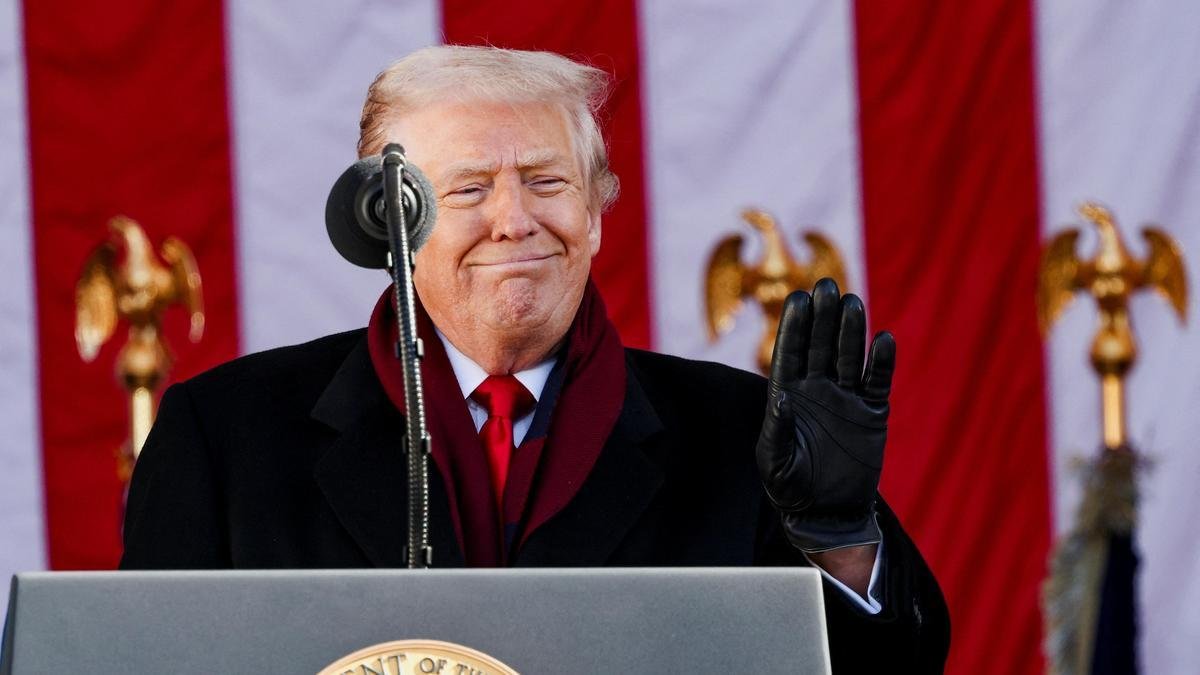
Global power today resembles a complex chessboard, where peace is not declared—it is negotiated, balanced, and constantly tested. On this board, India occupies a position that is neither aggressive nor passive, but deliberate. It is a player that understands patience, leverage, and timing. When Donald Trump speaks of peace, deals, and strength, India’s role cannot be reduced to a mere spectator; it is a calculated piece whose moves matter beyond rhetoric.
Donald Trump’s worldview treats diplomacy like a transaction. Peace, in his framing, is not sentimental—it is strategic. It is achieved through pressure, bargaining, and visible strength. India fits naturally into this framework. As a rising power with economic weight, military capability, and democratic legitimacy, India represents stability in an unstable region. For Trump, India is not just a partner; it is a counterweight—particularly in the Indo-Pacific, where power equations are constantly shifting.
India’s strength, however, lies in restraint. Unlike impulsive global actors, India has historically avoided ideological crusades. Its foreign policy is rooted in sovereignty, non-alignment with flexibility, and strategic autonomy. This makes India a credible peace stakeholder. It can engage with rival powers without surrendering its core interests. On Trump’s board of peace, this makes India a rook—strong, steady, and capable of altering the game without dramatic noise.
The India–Trump dynamic was never about shared ideology; it was about mutual utility. Trade disagreements, immigration tensions, and tariff battles existed, but they did not overshadow strategic convergence. Defense cooperation deepened, intelligence sharing expanded, and regional security dialogues gained momentum. Peace, in this context, was not absence of conflict—it was management of power.
India’s challenge is not choosing sides, but choosing moments. As global politics move toward transactional realism, India must continue to assert that peace is not weakness and neutrality is not indecision. On any board—Trump’s or otherwise—India’s value lies in its ability to engage without being absorbed, to cooperate without being coerced, and to lead without imposing.
In the end, peace is never owned by one leader or one nation. It is shaped by those who understand the cost of chaos and the discipline of balance. India is not the loudest piece on the board—but it is one that cannot be ignored.