






Robert Corbin was laid to rest in Guyana this past week. A former Leader of the Opposition, leader of the PNC and former member of a past PNC-led Cabinet, in which he was a Deputy Prime Minister, he served his country at the highest level for decades. Bharrat Jagdeo, as Vice President of Guyana and as General Secretary of the PPP, paid tribute to Robert Corbin and praised him as a leader who tried to go beyond his party’s narrow interest and tried to work with colleagues in the PNC, in the PPP and in other parties in the interest of Guyana.
I personally worked with Robert Corbin in the oversight committee on constitutional reform between 1999 and 2001. I also worked with him when he was leader of the PNC and Leader of the Opposition during the massive floods of 2005. In 1997, when the PNC under Desmond Hoyte tried to rig elections from the outside and demanded total verification of the votes, which also led to a total recount by a CARICOM team, he was one of the verification and recount members from the PNC. I was one of the PPP members. At all times, he was a fierce representative of his party, a formidable opponent. But at all times, we also remained civil and even friendly to each other. As Minister of Health, Robert Corbin, in his capacity as Opposition leader, always treated me with respect and always openly stated, “Give Jack his jacket.” This was his way of commending me and the Government for the work we were doing in health.
When Bharrat Jagdeo paid tribute to Robert Corbin, he was making a point: both men had conceded to each other when one served as President and the other as Leader of the Opposition. Both had conceded that unless we were able to respect and trust each other, Guyana cannot realise its full potential. Of course, this is something that many had accepted long before these two gentlemen had become leaders in their country. Their political mentors had spoken about the need for respect and trust among those fighting to be leaders in our country. But as leaders in their political parties and as the occupiers of the two leading political positions in the country, they had a unique opportunity to make something out of the vision and commitment they had.
When Robert Corbin was elected to the leadership of the PNC in 2002, he inherited the “slo’ fyah, mo’ fyah” campaign which Desmond Hoyte had employed after his defeat in the 1997 General and Regional Elections. His stated goal was to destabilise Guyana, making it impossible for the PPP under Janet Jagan and, subsequently, under Bharrat Jagdeo, to administer the country. Hoyte’s goal, first, was the overthrow of the Government, or second, forced the Government into shared governance. In Hoyte’s world, it was either the PNC was in control of the Government – making reality of Burnham’s Sophia Declaration of party paramountcy – or that the PPP shared Government with the PNC, giving them control of certain ministries and rotating the positions of President and Prime Minister.
The tension and violence caused by Hoyte’s “slo’ fyah, mo’ fyah” campaign had disrupted the economic and social development momentum that Guyana had entered after Elections 1992. Robert Corbin, after the death of Desmond Hoyte, assumed the leadership of the PNC in 2002. Gradually, the tension eased, and the “so’ fyah, mo’ fyah” campaign started to dissipate. Robert Corbin was trying to find a way to bring maturity to party politics for the sake of the nation. For this, he incurred the wrath of senior members of his own party.
In 2003, I was present at State House when President Bharrat Jagdeo released his “Building Trust” paper. Representatives of other political parties, from the Diplomatic Corp, the private sector, the faith-based community and others were present. While I know that Corbin did not give up the idea of sharing Cabinet as the definition of shared governance, I am also certain that he understood that there are different levels of shared governance.
Bharrat Jagdeo had put a PPP position before Corbin and before the nation. The position is that the level of shared governance must be determined by the level of trust among those who would be in the shared governance architecture. Constitutional reforms had provided opportunities for sharing governance. For example, in Parliament, Standing Sector Committees were established, with annual rotating chairs from the Government and Opposition sides. These committees were to scrutinise various sectors. For example, the Natural Resources and Economic Standing Committees serve as a monitoring and evaluation committee that, if properly functioning, can serve as an oversight committee that could hold accountable various ministries, such as Natural Resources, Agriculture, etc.
An independent Procurement Commission with a full-time staff was provided for by the constitution. This committee is able to oversee overall national procurement, ensuring the laws are abided by. Commission members are nominated through a participatory process, with Parliamentary approval, before being appointed by the President. All members of service commissions, such as the public service, the police and judicial commissions, are now appointed through a mechanism that must be approved by a weighted majority, not a simple majority.
In 2003, in his “building trust” framework, Bharrat Jagdeo’s position was that we need to make these lower-level sharing of governance work. For these to work properly, we need to build an environment of trust. Unless we can make the existing opportunities for shared governance work, it is futile to think that sharing governance at the level of Cabinet will work. Trust is entirely missing in our politics. Bharrat Jagdeo and Robert Corbin flirted with the idea of building trust. It may not have panned out, but Bharrat Jagdeo related that even if it was for a very brief period, Robert Corbin was willing to try.
Subscribe to Updates
Get the latest news from DemocracyGuyana.com
Bharrat Jagdeo reminds country that trust is required for shared governance
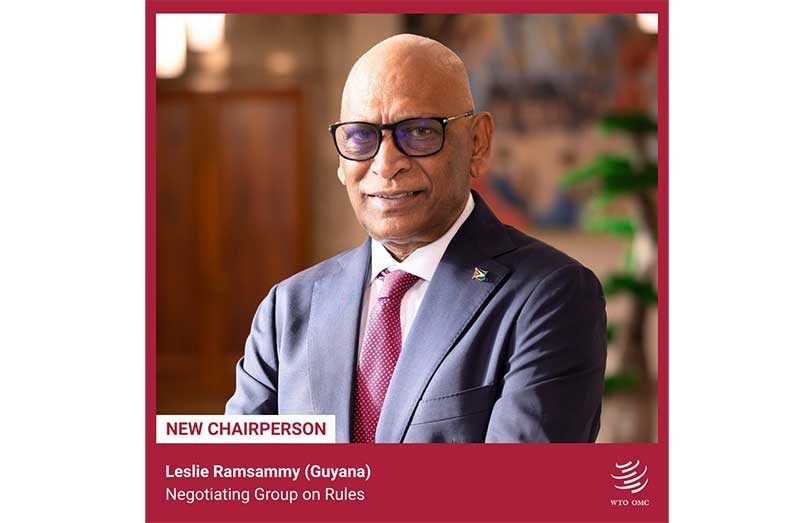
New chairperson, Dr. Leslie Ramsammy