






I HAVE read many glowing and well-deserved tributes to the late Mr. Robert Herman Orlando Corbin, CCH, and I too equally offer my own condolences and tribute to his family and all I believe were well received and deserving for this political giant.
But what is most significant in my estimation was former President, now Vice-president and General Secretary of the People’s Progressive Party/Civic, Dr The Honourable Bharrat Jagdeo’s tribute to Mr Corbin, which I believe was a masterclass of a tribute and moreover, it opens a door through which Guyana Should Walk.
Vice-president Bharrat Jagdeo deserves commendation for the generosity, candour and national perspective expressed in his tribute to the late Robert Herman Orlando Corbin. His remarks offered Guyana an opportunity to reflect on the quality of leadership our future requires and the possibilities that emerge when political opponents recognise their shared responsibility to the nation.
Particularly significant was his acknowledgement that Mr.Corbin fiercely defended the People’s National Congress Reform (PNCR) while maintaining a broader vision for Guyana. That recognition challenges the damaging assumption that engaging an opposing party amounts to abandoning one’s own or being the now famous term “sellout.”
Dr Jagdeo’s account affirmed that Mr Corbin could uphold his political convictions and still pursue co-operation in the national interest.
This is a lesson our political culture urgently needs to embrace. Too often, dialogue attracts suspicion, compromise invites condemnation, and co-operation becomes grounds for questioning a person’s loyalty. Such attitudes make reconciliation costly for the very people courageous enough to attempt it. What is significantly important to establish is that a country cannot continually punish bridge-building and then lament the divisions that remain.
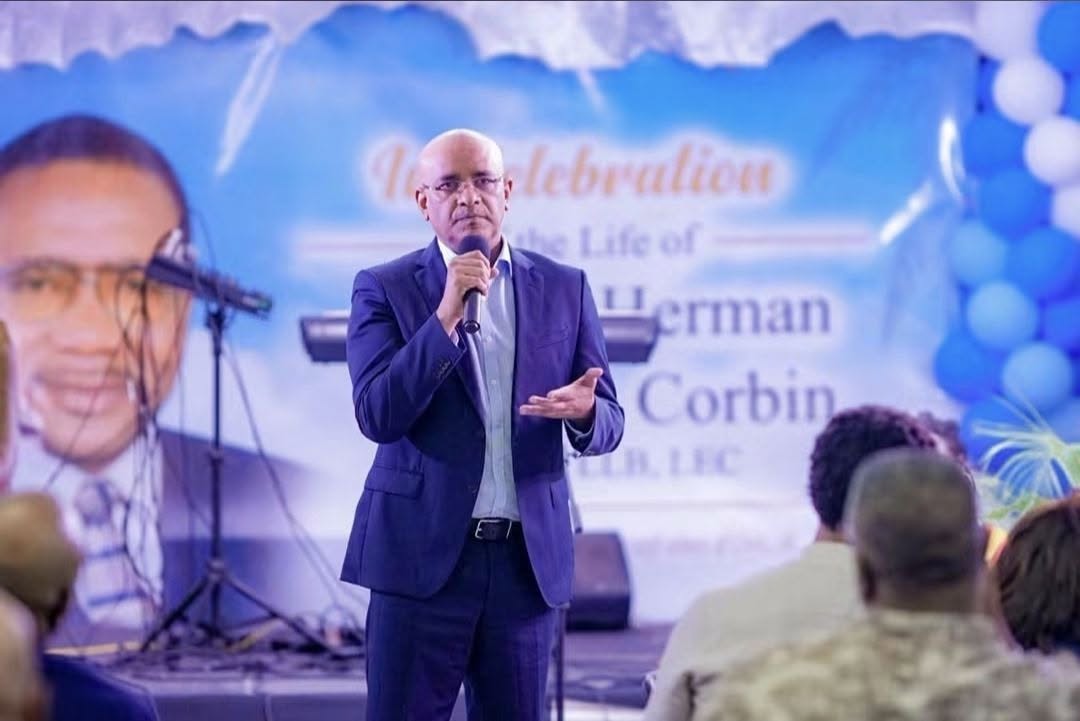
Dr Jagdeo’s reflections also identified common ground between the PPP/C and the PNCR, concerns for working people, an appreciation of private enterprise and a commitment to country. He posited that co-operation between the parties would be necessary for Guyana’s future, giving the PNCR a lifeline of greater importance in the body politic at present, while acknowledging that mistrust could undermine shared decision-making. These observations create a meaningful opening for discussion that should be taken seriously, although they do not constitute an agreed proposal for shared executive governance.
Again, I say the implication, in my view, deserves serious consideration. If the parties share important aspirations for ordinary Guyanese, for Guyana’s transformation and collective development, then their leaders should be capable of identifying a programme or more of national priorities around which sustained co-operation can be built.
Workers need fair opportunities. Young people need education and skills for the future, employment and a credible path to advancement. Entrepreneurs need access to greater capital and predictable public institutions. Communities need dependable electricity, clean water, security and functioning infrastructure. These needs should provide ample ground for constructive engagement across political differences.
Shared governance therefore deserves a patient, practical and honest national conversation. Its purpose must be to improve how citizens are represented, how national decisions are made and how public resources best serve the country. Any arrangement should have clear responsibilities, transparent procedures and enforceable accountability. Citizens must be able to identify who makes decisions and hold those decision-makers responsible.
The concern about mistrust is equally deserving of respect. Co-operation cannot endure on goodwill alone. Trust grows when commitments are specific, undertakings are honoured and disagreements are handled through credible processes. The task for political leadership is to establish those conditions through consistent conduct.
A sensible beginning would be structured dialogue on a limited number of national priorities, supported by published commitments and regular reporting. Parliamentary co-operation, meaningful consultation on major development policies and agreements on standards of public accountability could provide opportunities to demonstrate that working together produces results. Experience gained through such co-operation could inform any later consideration of broader governance arrangements.
That conversation must also welcome smaller parties, civil society, religious bodies,organised labour, business, women and young people. Guyana’s diversity extends beyond its largest political organisations. A credible national framework should give citizens confidence that inclusion reaches beyond negotiations among party leaders.
In this regard, Dr Jagdeo’s tribute presents an opportunity for leadership on both sides. His words deserve a thoughtful response, followed by practical efforts to determine where co-operation is possible. The measure of their significance will ultimately be the willingness to carry their spirit into political conduct.
Mr Corbin’s example, as recognised in that tribute, offers an enduring principle: a leader can remain faithful to his party while accepting obligations larger than party loyalty. Political conviction and national responsibility can strengthen one another when guided by sound judgment and respect.
I commend Vice-president Dr Jagdeo for giving public expression to that possibility. Guyana would benefit if his reflections encouraged a more mature conversation about shared purpose, mutual respect and the institutions needed to sustain co-operation.
The finest tribute to Robert Corbin would be to advance the work of bringing Guyanese together. Let this moment encourage our leaders to begin that work with seriousness, courage and a clear commitment to the betterment of all our people.