






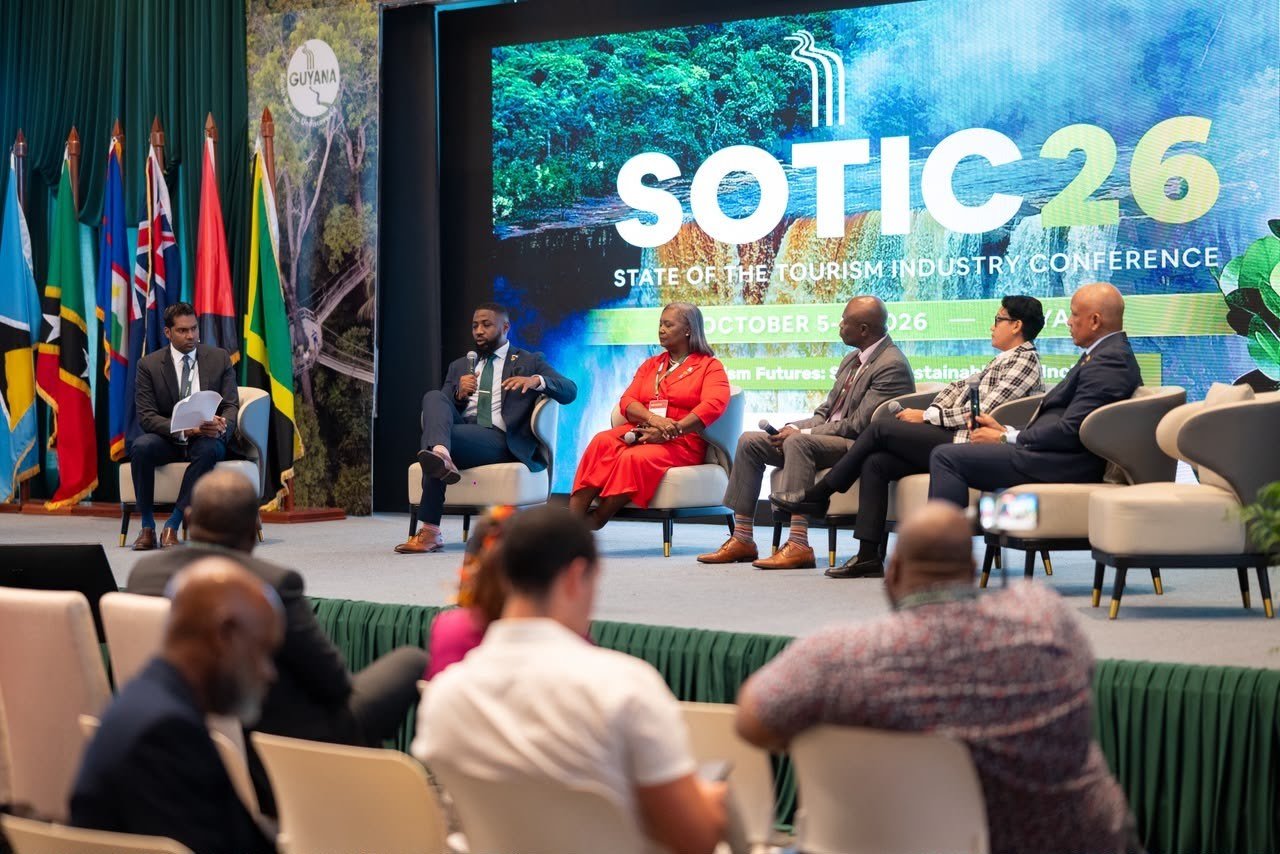
GEORGETOWN, Guyana — Minister of Tourism, Industry and Commerce Susan Rodrigues has called for stronger cooperation among Caribbean nations, emphasising that a unified regional strategy is essential to unlocking the tourism sector’s full economic and social potential.
Rodrigues made the remarks on Thursday during a ministerial session titled “Competing for Tomorrow: Ministerial Priorities for a Smart, Sustainable and Inclusive Caribbean” at the State of the Tourism Industry Conference (SOTIC) 2026, held at the Atlantic Suites by Hyatt in Kingston, Georgetown.
The minister stressed that Caribbean governments must move beyond working in isolated sectors and adopt a coordinated approach that connects tourism with transportation, infrastructure, education, healthcare and trade.
She explained that tourism development should contribute to broader national and regional objectives, ensuring that investments improve living standards and create opportunities for communities throughout the Caribbean.
Connectivity Key to Tourism Development
Rodrigues highlighted the importance of improved connectivity, describing it as a foundation for economic development rather than simply a tourism concern.
She pointed to a 432 per cent increase in passenger movement over the past six years, alongside an 88.5 per cent increase in total imports and exports, as evidence of the broader economic impact of improved connectivity.
According to the minister, roads and transportation networks should connect remote and Indigenous communities to essential services, markets and investment opportunities while supporting the growth of tourism destinations.
She emphasised that stronger regional air links and cooperation between Caribbean destinations could make travel easier and help visitors explore multiple countries during a single trip.
Supporting Local Businesses and Entrepreneurs
The minister said tourism must generate opportunities beyond traditional hotel and tour operator employment, allowing small businesses, manufacturers, farmers, processors and service providers to participate in the sector’s expansion.
She highlighted the Guyana Development Bank’s financing programme, which offers eligible small businesses zero-interest loans of up to G$3 million to establish or expand their operations.
Rodrigues said improved access to financing is important for building a tourism ecosystem in which local entrepreneurs can supply goods and services, create jobs and retain more economic benefits within their communities.
She also underscored the importance of working with financial institutions to expand access to capital for businesses seeking to enter or grow within the tourism industry.
Indigenous Communities at the Centre of Sustainable Tourism
Rodrigues pointed to Guyana’s Indigenous tourism initiatives as an example of how communities can use local resources and cultural heritage to develop sustainable economic opportunities.
Under Guyana’s benefit-sharing mechanism, 15 per cent of carbon-credit proceeds are allocated to Indigenous communities, enabling them to invest in local priorities, including accommodation and tourism-related activities.
The minister emphasised that community participation is essential to ensuring tourism growth delivers meaningful benefits to residents while protecting the natural and cultural assets that attract visitors.
She also highlighted opportunities to expand tourism and trade links with neighbouring Brazil, noting that greater Portuguese-language capacity could help Guyana reach new markets and strengthen cultural exchanges.
Caribbean Countries Urged to Build a Shared Identity
Rodrigues called on Caribbean nations to identify and promote the region’s shared identity while preserving the distinct cultures, traditions and experiences that make each destination unique.
She said stronger collaboration would allow countries to combine their individual strengths, improve regional marketing and ensure tourism benefits reach communities across the Caribbean.
The minister’s remarks came as SOTIC 2026 brought together tourism ministers, industry leaders, researchers, innovators, young people and private-sector representatives to discuss the future of tourism under the theme “Tourism Futures: Smart, Sustainable and Inclusive.”
The discussions highlighted the importance of coordinated regional planning, stronger partnerships and inclusive development in building a more resilient and competitive Caribbean tourism industry.