






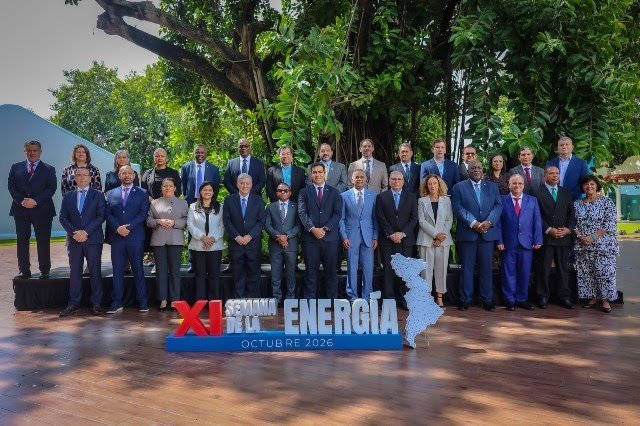
SANTO DOMINGO, Dominican Republic — Guyana’s Prime Minister, Brigadier (Ret’d) Mark Phillips, has called on Latin American and Caribbean countries to strengthen regional energy cooperation and adopt long-term strategies to ensure reliable, affordable and sustainable electricity supplies.
Speaking during the ministerial dialogue at the 11th Energy Week of the Latin American and Caribbean Energy Organization (OLACDE) in Santo Domingo, Phillips emphasised the need for countries to prepare for rising electricity demand, climate-related challenges and rapid technological advancements.
The Prime Minister noted that economic expansion, industrialisation, urbanisation and digitalisation will place increasing pressure on regional energy systems. He urged governments to look beyond immediate electricity needs and develop infrastructure capable of supporting economic and social development over the coming decades.
Guyana Advances Diversified Energy Strategy
Phillips highlighted Guyana’s Low Carbon Development Strategy 2030 (LCDS), which supports a diversified energy mix incorporating natural gas, hydropower, solar, wind and other technologies.
He said Guyana’s position as an emerging oil and gas producer, alongside its approximately 85 per cent forest cover, demonstrates the importance of managing natural resources responsibly while pursuing economic development and environmental sustainability.
According to the Prime Minister, renewable energy projects implemented or committed between 2020 and 2026 represent investments totalling G$37.717 billion.
These initiatives have contributed to a reported 623 per cent increase in installed renewable energy capacity, rising from 5.35 megawatts in 2019 to 38.72 megawatts in 2026.
The projects include 13 utility-scale solar farms, 57 solar mini-grids, three hydropower plants, 37,730 solar home energy systems and 239 rooftop solar photovoltaic installations on public and community buildings.
Based on projects committed through 2031, Guyana’s installed renewable energy capacity is projected to reach 77.14 megawatts.
Natural Gas and Renewable Energy to Support Electricity Supply
Phillips explained that natural gas is expected to help replace more carbon-intensive imported fuels used in electricity generation, strengthening energy security and supporting efforts to reduce electricity costs.
He added that continued investment in renewable energy and battery storage will complement natural gas development and contribute to a more diversified electricity supply.
The Prime Minister also highlighted the importance of modernising the electricity grid and adopting digital technologies, including artificial intelligence, to improve demand forecasting, energy planning and predictive maintenance.
However, he cautioned that the growing use of artificial intelligence and the expansion of data centres will increase electricity demand, requiring additional investment in cybersecurity, data governance and technical expertise.
Expanding Energy Access for Hinterland Communities
The Prime Minister stressed that the transition to cleaner and more reliable energy must deliver practical benefits to people, particularly those living in hinterland, riverine and Indigenous communities.
He called for expanded access to affordable electricity, greater opportunities for local employment and enterprise, investment in technical skills, and meaningful community participation in energy projects.
Phillips noted that decentralised renewable energy systems are already helping communities improve access to education, healthcare and communications while supporting entrepreneurship and local economic activity.
Regional Integration and Sustainable Development
The Prime Minister underscored the importance of continued collaboration among OLACDE member countries, particularly in developing innovative financing arrangements, building climate-resilient infrastructure and expanding cross-border energy connections where feasible.
He reaffirmed Guyana’s commitment to working with regional partners to advance an energy agenda that balances economic growth, environmental protection and improved living standards.
The discussions at the regional meeting focused on the need for coordinated planning, technological innovation and investment to build energy systems capable of meeting Latin America and the Caribbean’s future needs.