






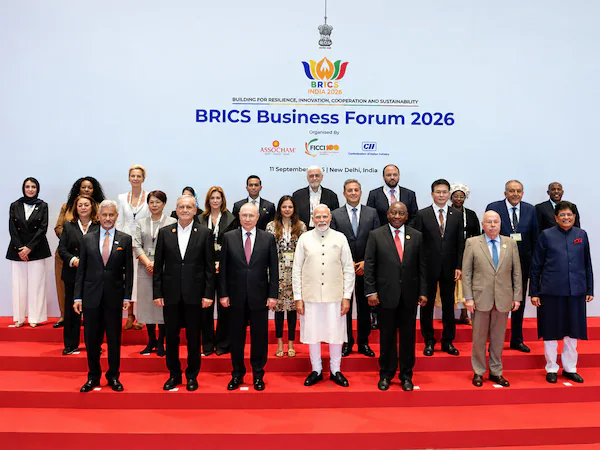
The 18th BRICS Summit in New Delhi concluded with the adoption of the New Delhi Declaration, a comprehensive document addressing some of the most pressing global economic, political and security challenges. The declaration covered issues ranging from tariffs and international trade to terrorism, the conflicts in West Asia, global governance, artificial intelligence and cooperation among developing nations.
A major focus of the declaration was the growing use of tariffs and other trade restrictions. BRICS leaders expressed concern that unilateral tariff measures and increasing trade barriers could create uncertainty, disrupt global supply chains and negatively affect economic growth. The bloc called for a more predictable and rules-based international trading system and reaffirmed the importance of the World Trade Organization.
Terrorism featured prominently in the declaration, with BRICS leaders strongly condemning terrorism in all its forms. The leaders rejected attempts to justify terrorist acts on the basis of religion, nationality or ethnicity. They also stressed the need to strengthen international cooperation against terrorist financing, radicalisation, terrorist networks and safe havens, while calling for those responsible for terrorist attacks and their support networks to be held accountable.
The declaration also addressed the continuing conflict and instability in West Asia. BRICS leaders expressed deep concern over the worsening humanitarian situation and called for restraint, dialogue and diplomatic efforts to prevent further escalation. The declaration emphasised the protection of civilians and civilian infrastructure and called for unhindered humanitarian assistance to affected populations.
The situation in Gaza was another important concern. BRICS reiterated support for international efforts aimed at achieving peace and a lasting political settlement. The bloc stressed the importance of humanitarian access and reaffirmed the need for a solution that addresses the rights and aspirations of the Palestinian people.
On global governance, BRICS leaders renewed their call for reforms to international institutions. They argued that developing countries and emerging economies should have a greater voice in organisations such as the United Nations and other global financial institutions. The declaration reflected the bloc’s broader push for a more representative and multipolar international system.
Economic cooperation within BRICS was another key area. The members supported efforts to increase the use of local currencies in trade and strengthen cross-border payment mechanisms. The bloc also backed greater cooperation through financial institutions such as the New Development Bank, particularly in providing financing in local currencies for development projects.
Artificial intelligence and emerging technologies also received attention. BRICS leaders called for responsible, inclusive and secure development of artificial intelligence and highlighted the need to ensure that developing countries are able to benefit from technological advances. Greater cooperation in areas such as digital infrastructure, innovation and technology was encouraged.
The declaration further highlighted the importance of resilient supply chains and cooperation in critical sectors, including critical minerals and advanced technologies. BRICS members emphasised the need for developing countries to participate more actively in global value chains and benefit from investment, technology transfer and industrial development.
Overall, the New Delhi Declaration underlined BRICS’ growing ambition to play a larger role in shaping global economic and political affairs. While the members have differing views on several geopolitical issues, the declaration demonstrates their effort to build common ground on trade, terrorism, development, technology and global governance. Its long-term significance will depend on how effectively these commitments are translated into concrete cooperation among the expanding BRICS membership.