






Guyana has taken a significant step towards strengthening professional legal education in the Caribbean with the commencement of work on a new law school at the University of Guyana’s Turkeyen Campus.
The institution is expected to become the fourth law school established under the Council of Legal Education (CLE), expanding opportunities for law graduates across the region to pursue professional training and qualification.
The development comes against the backdrop of growing demand for legal education throughout the Caribbean. Over the years, an increasing number of universities and tertiary institutions have introduced undergraduate law programmes, creating a larger pool of graduates seeking places in professional law schools.
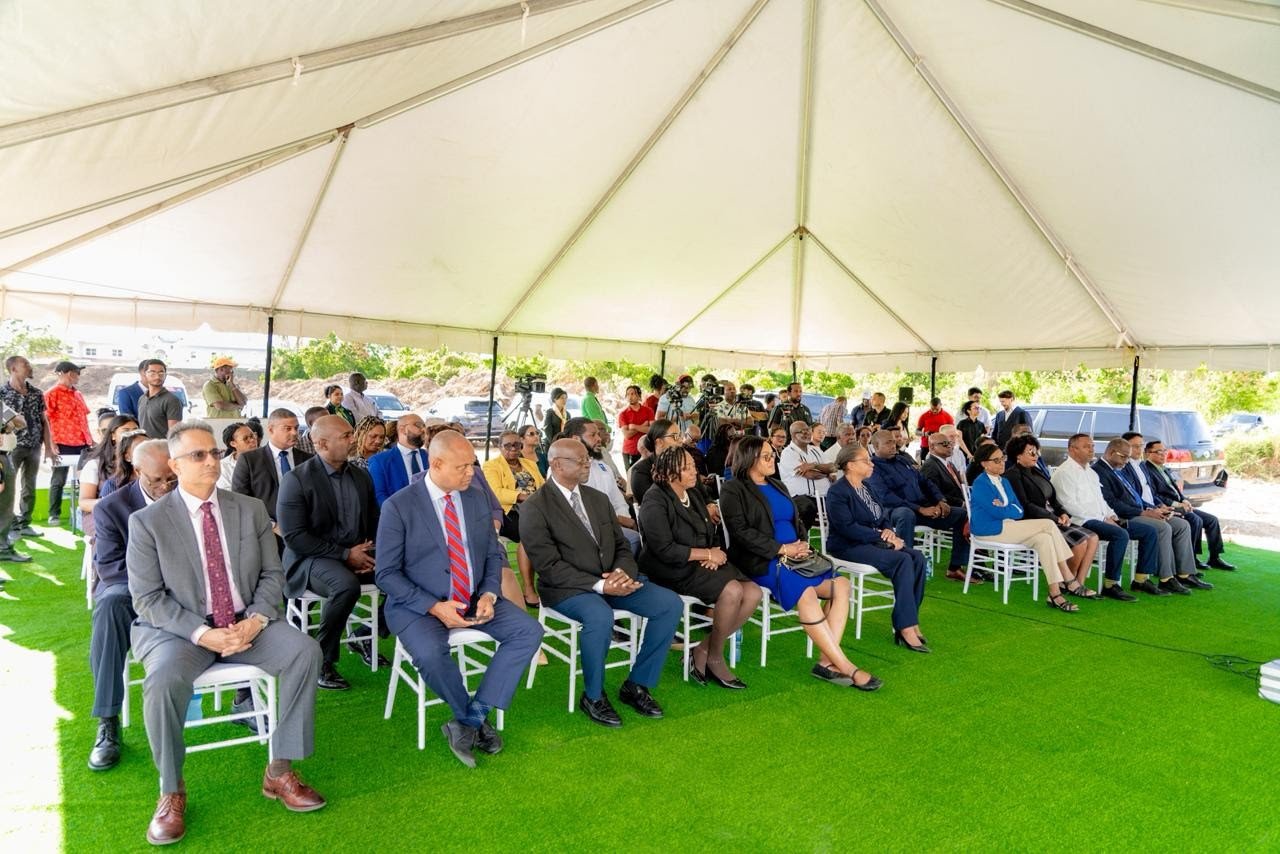
Attorney General and Minister of Legal Affairs Mohabir Anil Nandlall joined regional judicial officials, members of the legal profession and representatives of the University of Guyana on Thursday for a turning-of-the-sod ceremony marking the advancement of the project.
Addressing those gathered, Nandlall said the legal education landscape has undergone significant transformation as the Caribbean adapts to technological, social and educational changes.
“The world has dramatically changed. The Caribbean has dramatically changed. Legal education as we know it has changed,” he said.
According to the Attorney General, technological developments have reshaped how information is accessed, how students learn and how professionals communicate, making it necessary for legal education systems to evolve accordingly.
He also pointed to the substantial increase in demand for professional legal training since the establishment of the CLE.
“The demands for legal education have skyrocketed over the last five decades, and I dare say beyond the wildest expectation of the original signatories to the Council of Legal Education,” Nandlall said.
The idea of establishing a law school in Guyana is not new. The initiative was first formally raised at a CLE meeting in 1996. Although the proposal experienced periods of progress followed by inactivity, efforts in recent years have helped move the project towards implementation.
Nandlall recalled the challenges faced by University of Guyana graduates who, after completing their undergraduate legal studies, often encountered difficulties gaining entry into professional law schools. In some cases, students were forced to wait for extended periods before securing admission and continuing their legal careers.
The new institution is therefore expected to address a longstanding gap in Guyana’s legal education system while also contributing to the broader needs of the Caribbean legal profession.
Beyond professional training, the project is also expected to deepen Guyana’s role in regional legal development. Plans are being advanced for collaboration with the Caribbean Court of Justice (CCJ) to establish the CCJ Academy of Law at the Turkeyen Campus.
Such an arrangement could provide students and legal professionals with greater exposure to Caribbean jurisprudence, judicial practice and developments in regional law.
For Nandlall, however, the project represents more than the construction of another educational institution. He described it as the fulfilment of a long-standing ambition held by generations of Guyanese.
“It is the realization of the aspirations of generations of Guyanese,” he said.
The establishment of the law school is expected to create a more accessible pathway for aspiring lawyers, reduce barriers to professional legal training and strengthen the region’s capacity to develop its own legal professionals.
As Guyana continues to expand its higher-education infrastructure, the project also signals a broader investment in the country’s legal sector and its contribution to Caribbean jurisprudence.
With the fourth CLE law school taking shape, Guyana is positioning itself to play a greater role in preparing the next generation of Caribbean legal professionals and strengthening the institutions that support justice across the region.