






Guyana’s electricity network is undergoing another major expansion as the country experiences unprecedented growth in electricity consumption, with the national grid recently reaching a historic peak demand of 246.2 megawatts (MW).
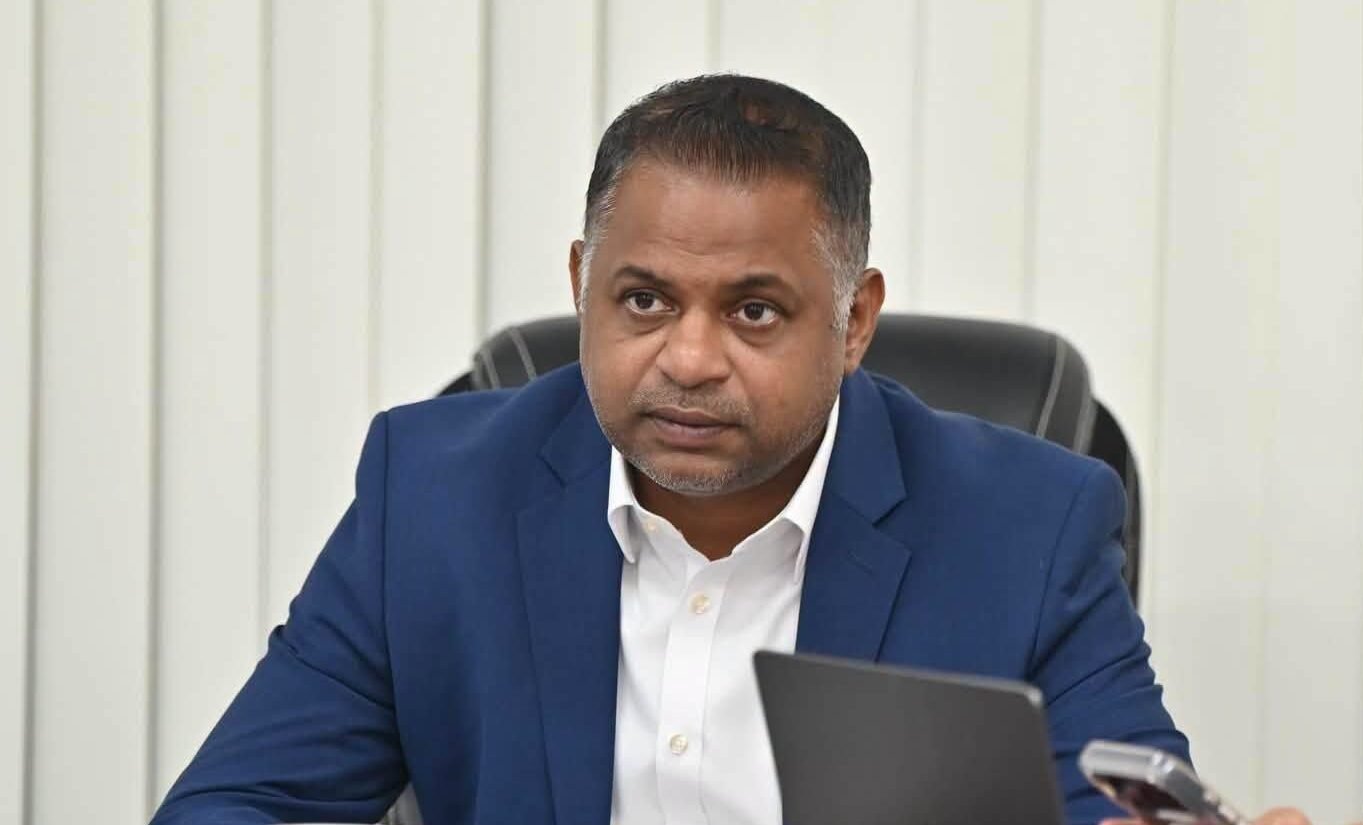
Public Utilities and Aviation Minister Deodat Indar said the record was reached at approximately 20:45 on Thursday, underscoring the urgent need to strengthen generation and transmission infrastructure to keep pace with the country’s expanding economy and growing customer base.
Minister Indar disclosed it on Friday while inspecting ongoing works on a new 69-kilovolt (kV) submarine transmission cable being installed beneath the Demerara River.
The latest demand figure marks a significant increase compared with last year’s peak of about 221MW. Demand, which had previously fluctuated between 235MW and 240MW, has risen steadily in recent weeks, reaching approximately 242.64MW before setting the new record.
The Government, through Guyana Power and Light (GPL) Inc., has been accelerating investment in generation, transmission and distribution infrastructure to ensure the electricity system can accommodate continued growth.
Available generation capacity has also been expanded. Earlier this month, the system had approximately 256MW available capacity, but an additional 9.3MW has since been added to the network, bringing available generation to around 266.3MW.
With demand projected to reach 266MW between August and October, GPL is preparing to increase available generation capacity to approximately 280MW in the coming weeks.

Among the measures already being implemented is the addition of six 1MW generating units, donated to GPL by the Chinese operators Bosai Minerals Group Guyana Inc. and Guyana Manganese Inc. (GMI). The units are expected to strengthen electricity supply in Region 10 and in communities along the Soesdyke-Linden Highway.
Bosai is also supporting the Linden power supply by adding another 3MW via two 1.5MW engines. One engine has already been installed and is in service, while work is underway to commission the second. Once completed, Bosai’s output to Linden and Wismar is expected to reach about 17MW, exceeding the current peak requirement of roughly 15.1MW.
Further improvements are planned along the Soesdyke-Linden corridor, including the installation of poles for the GPL’s F5 Feeder. The feeder will carry electricity from the Garden of Eden Substation to Timehri and to communities along the highway.
Meanwhile, Region Four is benefiting from approximately 70MW supplied by the power ship moored in the Demerara River. An additional 5MW was expected to come online by Sunday, August 30, further supporting the national grid.
In Region Two, GPL is nearing completion of procurement for an additional 8MW of generating capacity. The additional supply is expected to improve reliability and provide greater flexibility in meeting demand.
Anna Regina is also expected to receive an additional 2MW with support from GMI. The extra capacity will allow GPL to take several smaller generating units offline for maintenance and overhaul following prolonged operation.
In Berbice, a 2.2MW engine has been installed in Region Six to improve voltage stability and increase the region’s generation capacity.
At the same time, a major transmission project is progressing in Region Three, with construction of a second submarine electricity crossing beneath the Demerara River underway.
The new 69kV double-circuit cable will connect the Princess Street Substation in Georgetown with the Vreed-en-Hoop Substation on the West Bank of the Demerara River. Once commissioned, it will be capable of transmitting approximately 7MW of electricity across the river.
The project marks a significant development for Guyana’s transmission network and is the country’s first such crossing.
During Friday’s inspection, Minister Indar, accompanied by GPL officials and project representatives, reviewed drilling operations on the Vreed-en-Hoop side of the project.
The cable is installed approximately 75 feet beneath the riverbed using horizontal directional drilling, a method that avoids excavation across the river and allows normal river traffic to continue without disruption.
GPL officials said the project is intended to create a stronger and more flexible connection between Regions Three and Four while providing an additional route for electricity to flow through the national grid.
The project will also involve upgrades to the Vreed-en-Hoop and Kingston substations to accommodate the new transmission infrastructure. A new 69KV gas-insulated switchgear (GIS) installation will be established at Kingston.
According to GPL, the new connection will provide an alternative transmission route for electricity generated at the Gas-to-Energy facility in Wales. This additional pathway is expected to improve reliability by allowing electricity to continue flowing if another transmission link is temporarily unavailable.
The need for stronger transmission infrastructure has become increasingly urgent as electricity consumption rises across the country. On the West Demerara corridor alone, demand has reportedly risen from approximately 25MW to 41MW in recent months.
The underground positioning of the new cable is also expected to have wider implications for the Demerara River. Because the cable will be located well below the riverbed, it will not obstruct planned dredging operations to deepen the river channel.
The dredging programme is expected to improve access for larger vessels and to support the expansion of Guyana’s maritime trade and commercial activity.
Officials present at Friday’s inspection included Kesh Nandlall, Team Leader of the GPL Executive Management Committee; Gary Hall, Director at GPL; and Rafael Nabi of Capital Edge Partners. Shayne Hicks of HDDT International provided an update on the horizontal directional drilling operations.
The submarine cable is part of a broader programme to modernise Guyana’s electricity system. GPL is also advancing projects for new substations, transmission infrastructure, distribution feeders and battery storage facilities.
As demand from households, businesses and major industries continues to rise, these investments are intended to ensure that Guyana’s national grid becomes more reliable, interconnected and capable of supporting the country’s rapidly expanding economy.