






-as Parliament elects committee chairs
Parliamentary committees that examine public spending, natural resources, the economy, foreign relations, social services and the security sector now have their leadership in place, clearing the way for detailed oversight work in the Parliament.
Speaker of the National Assembly Manzoor Nadir convened the committees in back-to-back meetings at the Parliament Chambers located within the Public Buildings on Monday.
At those proceedings, members elected a chairperson to lead each body.

The committees include the Public Accounts Committee (PAC), the Committee on Appointments, the Standing Committee on Constitutional Reform, the oversight committee on the security sector, and the four sectoral committees responsible for economic services, foreign relations, social services and natural resources.
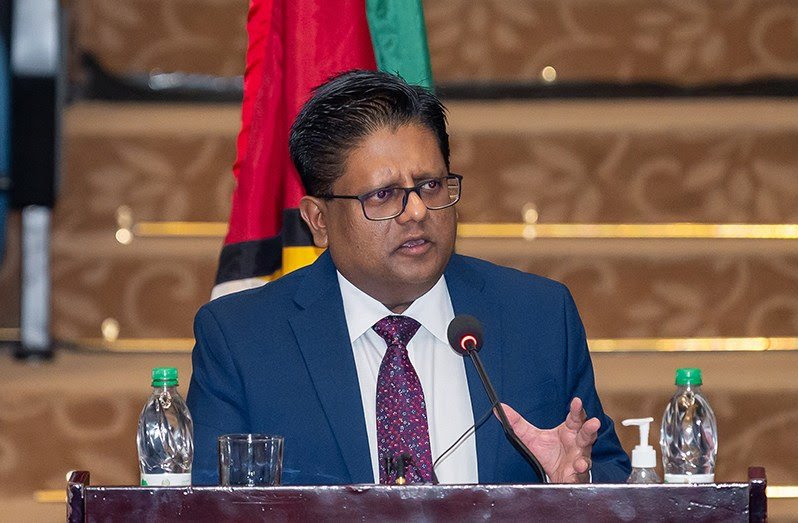
Most nominations went uncontested, and members settled the elections without difficulty, said Senior Minister in the Office of the President with Responsibility for Finance, Dr Ashni Singh, in an interview following the sittings.
“I want to say how pleased we are at the efficiency and smoothness with which these committee meetings were convened and with which the elections [were] held for the respective chairpersons,” he said, speaking on behalf of the government benches.
The minister underscored the point that each committee carries weight in how Parliament functions. “Each one of them has an extremely important role to play and an extremely important mandate that is defined in some cases in the Constitution of Guyana, in some cases in the Standing Orders of our Parliament,” he said.
The committees draw government and opposition members to the same table to work through matters in their respective areas, and they continue that work between formal sittings of the National Assembly.
He traced the present structure to the last major constitutional reform process, which he placed around 2001. The Public Accounts Committee has existed for far longer, he noted, but that reform sharpened its mandate, and the same process created the sectoral committees on natural resources, economic services and foreign relations, which did not exist before.
“These committees have proven their worth, and they’ve proven their value, their indispensable value in the constitutional architecture,” he said.
He credited the Speaker, members on both sides of the House, and government Chief Whip and Minister of Parliamentary Affairs and Governance Gail Teixeira for the nominations and the organising that brought the committees to this stage.
“The respective committees will, of course, convene their meetings in due course, and they all work on different cycles and different calendars,” he said. “That would be determined by the respective chairs and the respective memberships of the various committees.”
The committees operate alongside full sittings of the National Assembly, giving members a setting for closer scrutiny of policy and expenditure across government.