






-as part of national consultations
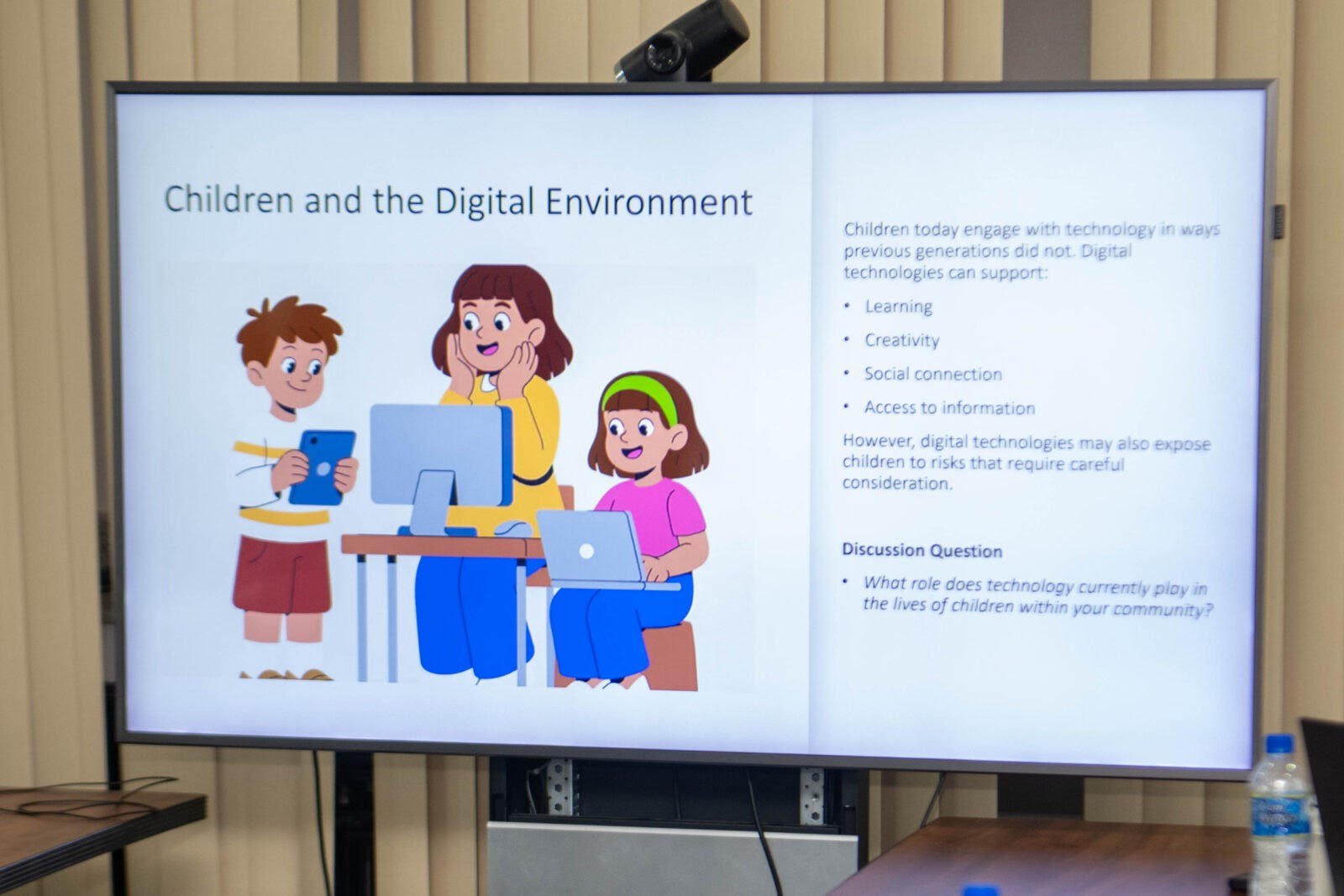
The question of whether children under a certain age should be allowed access to social media took center stage during the final part of a national consultation with communication professionals, as stakeholders weighed the need to protect children from online harm while ensuring they are not denied access to opportunities and information.
The consultation, which brough together public relations officers and communication specialists, opened the engagement for a wider view on how Guyana should approach the growing concerns surrounding children’s use of social media platforms.
Discussions focused heavily on the possible introduction of age limits, parental responsibility, online safety measures and the need for a balanced approach that addresses both the risks and benefits associated with digital platforms.

Deputy Director of the Department of Public Information (DPI), Cassandra Persaud, shared the view that stronger restrictions may be necessary, particularly for younger children, given the evolving nature of social media and the challenges parents face in monitoring online activities.
“I think social media should be off limits for children under 16. I’m of that view because of the dangers that exist,” Persaud said.
She noted that placing the responsibility solely on parents could prove difficult, especially given the realities faced by working parents and single-parent households.
“I don’t think at that age, there is sufficient supervision that can be provided by parents. To put that all on parents as well is very difficult,” she added.
Persaud also highlighted concerns surrounding children’s exposure to harmful content and interactions online, pointing to the need for stronger safeguards by social media platforms.
However, other participants cautioned against a complete restriction, noting that social media also provides children with access to education, opportunities and information.

PR and Communications Manager at Digicel Guyana Inc., Gabriella Chapman, shared her concerns about limiting access entirely, explaining that social media played a role in exposing her to opportunities while growing up.
“Social media is what would have exposed me to a lot of realities, a lot of opportunities,” Chapman said.
She explained that access to some these platforms allowed her to discover scholarships, competitions and other opportunities she may not have otherwise known about.
“I knew of scholarship opportunities, I knew of competitions that we could sign up for. I was able to be connected to things and information that I wouldn’t normally be able to access,” Chapman said.
Chapman said the discussion should focus on finding ways to balance protection with access.
“It gets down to how we use social media and how we’re going to control how children are going to use social media,” she added.
Similarly, multimedia and logistics professional Kiana Wilburg argued that a complete ban could encourage children to seek ways around restrictions, instead calling for greater education on responsible use.

“My fear is that the more you impose something like that, the more children will gravitate towards it,” Wilburg disclosed.
She pointed that children are already using social media platforms creatively and that guidance on navigating the digital space may be more effective.
“I think there are advantages to allowing children to understand what are the dangers of social media and how to take advantage of it,” Wilburg argued.
Meanwhile, communications professional Fareeza Haniff suggested that Guyana could examine approaches being considered internationally, including models that separate children into different age groups with varying levels of restrictions.
“I would recommend that Guyana look at the models adopted or implemented or being considered for implementation in the UK, EU and India,” Haniff remakred.
Haniff further explained that different levels of access and safeguards could allow younger users to benefit from digital platforms while receiving greater protection.
“I strongly recommend that we look at the models that the UK, the EU and India are considering,” she argued.
Another key issue raised during the consultation was parental awareness and empowerment, with participants noting that some parents may not fully understand the platforms their children use.
To this end, the participants all agreed that any final approach must involve not only restrictions but also education, awareness and practical measures that support families.
The consultation is one of several engagements being held across sectors, with Government also expected to gather views from stakeholders in education, health, security, labour, culture, youth and sport as it develops a broader framework to address the impact of social media on children.

Closing the session, Minister Kwame McCoy emphasised that no final decision has been made on an age limit.
He noted that the consultation process is intended to gather recommendations and shape a national approach that prioritises child protection while considering the realities of the digital age.