






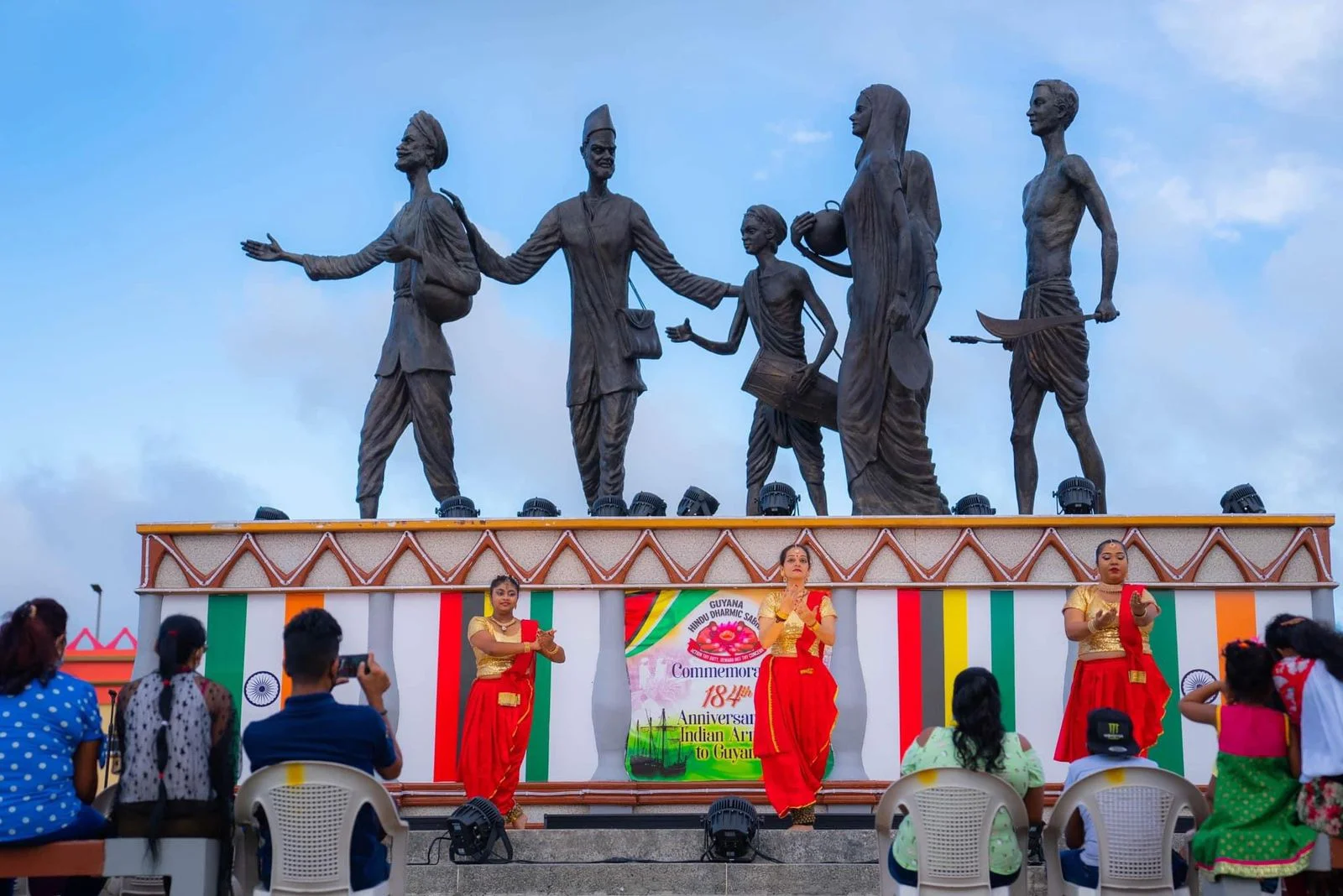
Every year on 5 May, Guyana observes Indian Arrival Day, a deeply significant occasion commemorating the arrival of the first Indians on its shores in 1838. This day is more than a historical remembrance; it is a tribute to endurance, cultural preservation, and the shaping of a modern, multicultural society. It reflects the story of the Indo-Guyanese who crossed oceans under difficult circumstances and went on to transform the country’s social, economic, and cultural fabric.
The Indo-Guyanese came from one of the most advanced civilisations, which are prevalent today and gave the world modern mathematics, astronomy, yoga, meditation, Ayurveda, the Sanskrit language, and two of the most powerful religions, Hinduism and Buddhism, which have over 2.5 billion followers today, including in China, which has over 700 million Buddhists, and in Japan, which has over 48 million devout Buddhists, to name a few.
The British imperialists must learn not to judge a book by its cover, meaning they should not judge Indo-Guyanese arrivals solely by outward appearance. Appearances can be deceiving, and British arrogance and belief in their superiority are now being humbled by the USA, with Britain regarded as a poodle that barks when Washington whistles. How the mighty have fallen. Today, it is the UK which needs India, not vice versa.
Rishi Sunak became the first Hindu to be elected as the Prime Minister of the United Kingdom in nearly 2 years. Winston Churchill, the most prominent imperialist, must be rolling in his grave, shocked that his beloved country had a Hindu Prime Minister sitting in the same chair at 10 Downing Street that he once occupied. This is classic karma.
The origins of Indian Arrival Day date back to the abolition of slavery in the British Empire in 1834. After emancipation, plantation owners in what was then British Guiana faced a severe labour shortage, particularly in the sugar industry, the backbone of the colony’s economy. In response, the colonial administration introduced indentured labour, recruiting workers primarily from India under contracts typically lasting five years. These agreements promised wages, housing, and eventual return passage or land grants, but in practice, conditions were often harsh and exploitative.
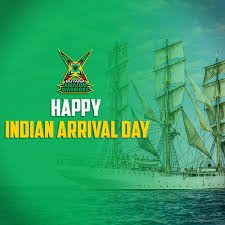
On 5 May 1838, the ships Whitby and Hesperus arrived in Guyana, carrying 396 Indian labourers from Calcutta (now Kolkata). This marked the start of a large-scale migration that continued until 1917, when indentureship was officially abolished. Over this period, nearly 240,000 Indians were brought to Guyana. Most of these migrants came from northern India, particularly present-day Uttar Pradesh and Bihar, while others came from southern regions such as Tamil Nadu. They were often driven by a lack of opportunity, social pressures, or misled by recruiters who promised prosperity abroad.
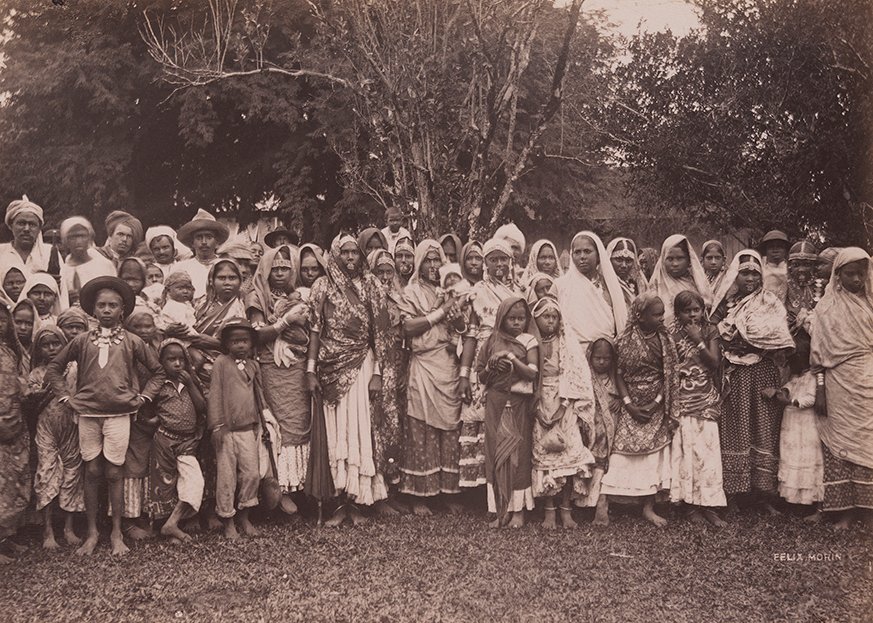
The journey across the oceans was long and physically demanding, often lasting several months. For many, crossing the “kala pani,” or black waters, was a deeply emotional and spiritual rupture, as it meant leaving behind family, caste identity, and familiar surroundings. Upon arrival, the labourers were assigned to sugar plantations, where they endured long hours, strict supervision, low wages, and limited rights. Although indentureship was technically contractual, it shared many characteristics with slavery, including harsh punishments and restricted freedom. Yet despite these conditions, the Indian labourers demonstrated extraordinary resilience and determination.
Over time, many indentured labourers completed their contracts and chose to remain in Guyana, acquiring land and establishing agricultural settlements. They became rice farmers, cattle rearers, and small business owners, gradually moving beyond plantation life. Their efforts were crucial to diversifying and strengthening Guyana’s rural economy. This transition marked the beginning of a new Indo-Guyanese identity, rooted in both Indian heritage and Caribbean experience.
Today, Indo-Guyanese are among the largest ethnic groups in the country, accounting for roughly 40 per cent of the population. Their presence is deeply embedded across every aspect of national life. From politics and governance to education, commerce, and the arts, Indo-Guyanese have made significant contributions to the country’s development. Several prominent national leaders, professionals, and cultural figures have emerged from this community, reflecting its influence and progress over generations.
One of the Indo-Guyanese community’s most remarkable achievements is the preservation of its cultural and religious traditions despite geographical separation from India. Hinduism and Islam remain the two dominant religions among Indo-Guyanese, and both are practised with devotion and continuity. Temples and mosques serve not only as places of worship but also as centers of community life, education, and cultural transmission. Rituals such as pujas, yajnas, satsangs, and Islamic prayers continue to be observed, often blending traditional practices with local influences.
Language also played a key role in cultural retention. Early migrants brought languages such as Bhojpuri, Awadhi, and Tamil. Although English eventually became dominant, elements of these ancestral languages endure in religious practices, music, and everyday speech. This linguistic blend is part of what gives Indo-Guyanese culture its distinctive character.
Festivals are among the most vibrant expressions of Indo-Guyanese identity and are widely celebrated throughout Guyana. Phagwah, also known as Holi, is one of the most popular celebrations, marked by the throwing of coloured powders and water, traditional songs, and a spirit of unity and joy. Diwali, the festival of lights, is another major national event, celebrated with the lighting of diyas, elaborate decorations, prayers, and cultural performances. The entire country often participates in Diwali celebrations, reflecting Guyana’s multicultural harmony.
Other festivals, such as Eid al-Fitr, Ram Navami, and Navratri, are also celebrated with great enthusiasm, highlighting the diversity within the Indo-Guyanese community. These festivals are not only religious observances but also opportunities for social gathering, cultural expression, and the strengthening of community bonds.
Cuisine is another enduring legacy of Indian heritage in Guyana. Traditional dishes such as roti, curry, dhal, rice, and a variety of chutneys and pickles are staples in Indo-Guyanese households. Sweets such as gulab jamun, barfi, and jalebi are commonly prepared for festivals and celebrations. Over time, these dishes have evolved, incorporating local ingredients and Caribbean flavours to create a distinct Indo-Caribbean cuisine that is now an integral part of Guyanese identity.
A wide range of activities across the country mark Indian Arrival Day. Cultural programmes featuring music, dance, and drama showcase the richness of Indian traditions. Religious ceremonies honour the ancestors who made the journey, while exhibitions and lectures educate younger generations about this important chapter in history. Schools, community organisations, and cultural groups all help keep the legacy alive.
The significance of Indian Arrival Day extends beyond the Indo-Guyanese community. It is a national celebration that highlights migration and the contributions of diverse ethnic groups to Guyana’s development. The country’s motto, “One People, One Nation, One Destiny,” resonates strongly on this day, emphasising unity in diversity and the shared history of its citizens.
The contributions of Indo-Guyanese to Guyana’s progress are vast and enduring. From their early role in sustaining the agricultural economy to their modern achievements across professional fields, they have been central to the nation’s growth. Their story is one of transformations from indentured labourers to empowered citizens shaping the country’s future.
Indian Arrival Day ultimately celebrates resilience, identity, and cultural pride. It honours the courage of those who left their homeland in search of a better life and acknowledges the legacy they built through hard work and perseverance. As Guyana continues to evolve into a diverse and dynamic nation, this day serves as a powerful reminder of the strength found in unity and the enduring impact of its people’s shared history.