






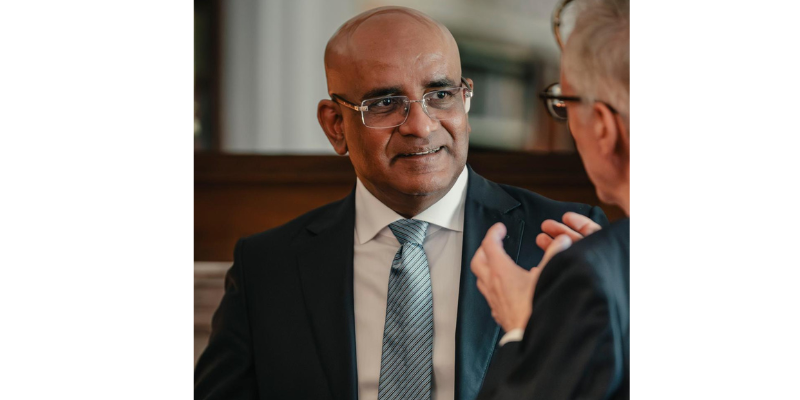
Vice President Dr Bharrat Jagdeo has urged Commonwealth nations to ensure that small and developing countries are not left behind as the world accelerates climate action and digital transformation. His remarks were made during a high-level Commonwealth roundtable on sustainable urbanisation, where leaders and experts gathered to explore solutions to manage rapid urban growth while improving living standards and economic resilience.
The discussion centred on the Declaration on Sustainable Urbanisation, adopted at the 2022 Commonwealth Heads of Government Meeting in Kigali, and was supported by The King’s Foundation. Participants examined how countries can build cities that are not only liveable and economically vibrant but also resilient to climate-related challenges.
Dr Jagdeo emphasised the importance of practical cooperation within the Commonwealth, citing the success of the Commonwealth Climate Finance Access Hub. The initiative, which stemmed from proposals he presented at the 2014 Commonwealth Heads of Government Meeting in Colombo, has since mobilised nearly US$500 million in climate finance, supported more than 100 projects, and deployed technical experts across more than 15 countries.

While welcoming this progress, the Vice President stressed that far greater efforts are needed to address the scale of today’s development and climate challenges. He argued that developing nations require faster, more innovative support systems to turn local ideas into viable, investment-ready projects.
A central theme of Jagdeo’s message was the growing role of data and artificial intelligence in shaping development outcomes. Reflecting on his participation in the India AI Impact Summit 2026, he noted that global technology leaders, including Microsoft, Google, and OpenAI, are already using AI to improve planning and decision-making.
However, Dr Jagdeo warned that these advances risk deepening inequality if smaller states are excluded. He emphasised that AI systems must be trained on diverse datasets that include developing countries; otherwise, they will fail to address their specific needs. Without such inclusion, he cautioned, the world could face a new “compute and data divide” mirroring existing development gaps.
The Vice President also reiterated concerns he had raised at the World Sustainable Development Summit, hosted by The Energy and Resources Institute in New Delhi. There, he urged global stakeholders to design frameworks that enable smaller nations to adopt AI effectively, particularly in critical sectors such as education and healthcare.
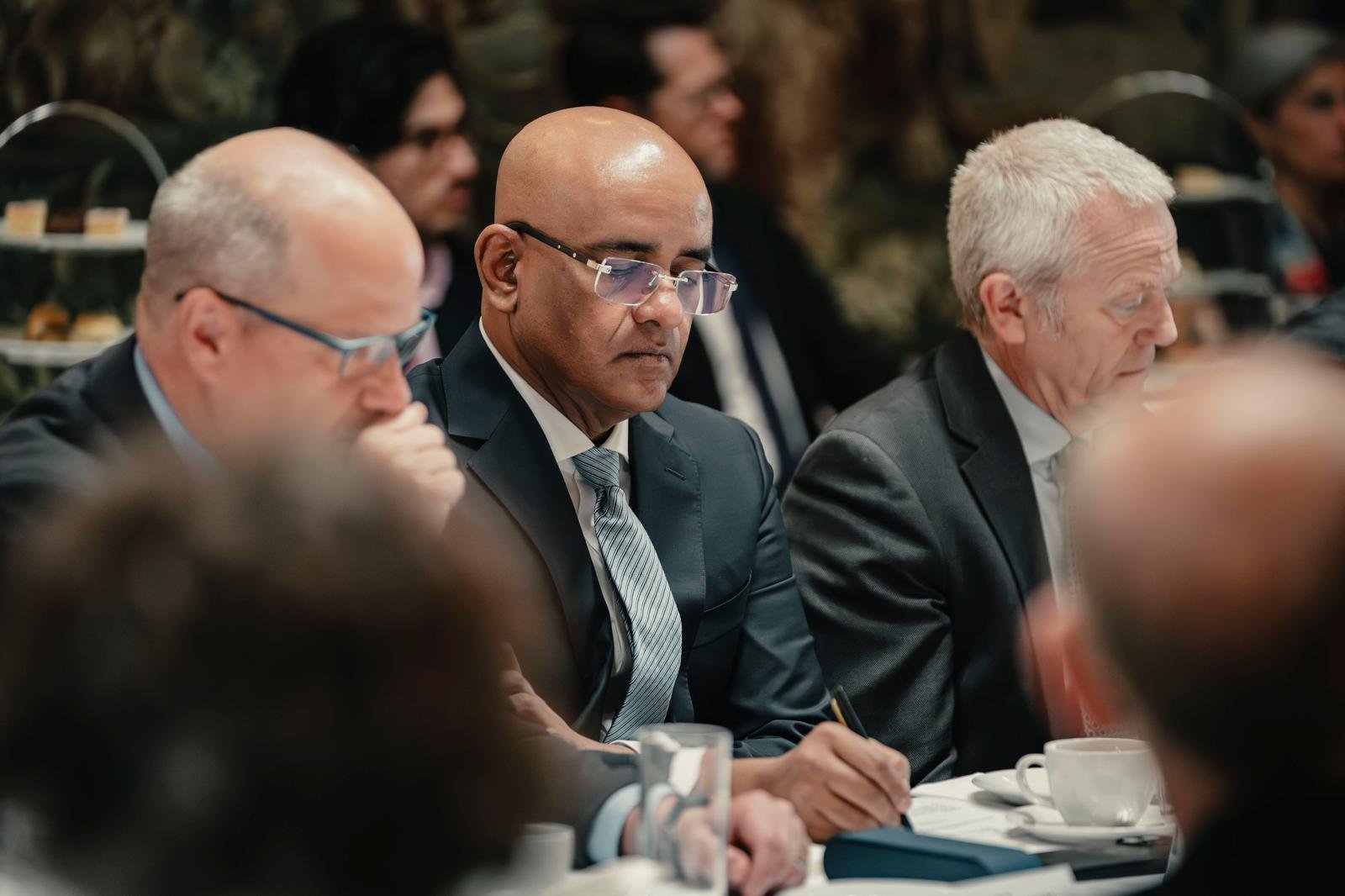
He noted that although countries such as India have strong technological capacity, many nations in Africa, the Caribbean, and the Pacific lack the infrastructure and expertise to fully benefit from AI. To address this imbalance, Jagdeo called for the development of scalable models and templates to help these countries integrate AI into their national development strategies.
The Vice President emphasised that discussions on sustainable development can no longer ignore the transformative impact of artificial intelligence. He stressed that AI must be seen not as a distant innovation but as an essential tool for tackling climate change and driving economic progress.
During his recent visit to the United Kingdom, Dr Jagdeo also held a series of high-level meetings, including discussions with King Charles III at Dumfries House in Scotland. His engagements also focused on strengthening partnerships to support low-carbon growth, sustainable urban development, and practical solutions tailored to vulnerable nations.
Through his interventions, Dr Jagdeo made it clear that although opportunities in climate finance and digital innovation are expanding, equitable access for small states will determine whether global progress is truly inclusive.