






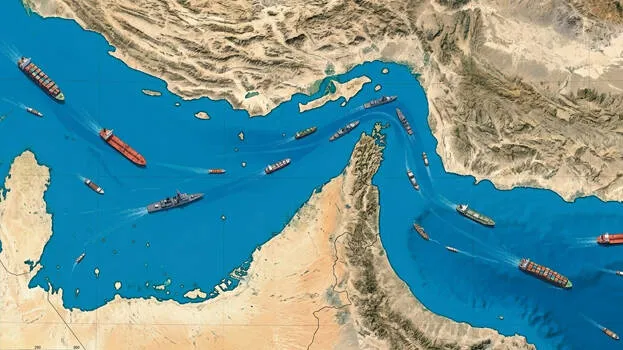
A fragile ceasefire between the United States and Iran is showing signs of breaking down as fresh violence erupts in the strategically vital Strait of Hormuz. The truce, recently extended by Donald Trump, is facing serious challenges after multiple commercial vessels came under attack in the region, raising fears of a renewed escalation in the ongoing conflict.
According to maritime authorities, at least three container ships were struck by gunfire in the Strait of Hormuz. One vessel reportedly suffered damage to its bridge after being targeted with gunfire and rocket-propelled weapons. The attacks were linked to Iran’s Islamic Revolutionary Guard Corps, which has been actively enforcing control over the waterway amid rising tensions.
The incidents come just hours after Trump announced an extension of the ceasefire, which was initially intended to last two weeks. Rather than easing tensions, the extension appears to have deepened uncertainty, as hostilities on the ground and at sea continue despite the pause in large-scale military operations.
A major sticking point in the conflict remains the ongoing U.S. naval blockade of Iranian ports. Trump has made it clear that the blockade will continue until Iran presents a unified proposal for peace. However, Tehran has strongly rejected this position, arguing that the blockade itself is an act of aggression and a violation of the ceasefire conditions.
Iran has also refused to participate in planned peace talks, reportedly mediated by Pakistan, unless the blockade is lifted. This deadlock has stalled diplomatic efforts, leaving both sides locked in a tense standoff with little immediate prospect of resolution.
The Strait of Hormuz remains at the center of the crisis. As one of the world’s most critical oil transit routes, any disruption in this narrow passage has immediate global consequences. The ongoing conflict and uncertainty have already impacted shipping routes and energy markets, with fears of supply disruptions driving volatility in oil prices worldwide.
Beyond the maritime clashes, the broader regional situation remains volatile. The conflict has drawn in multiple actors and has spilled into neighboring areas, raising concerns about a wider Middle East escalation. Analysts warn that even minor incidents, such as attacks on commercial vessels, could trigger a rapid return to full-scale conflict.
Despite the rising tensions, both the United States and Iran have signaled some interest in avoiding an all-out war. However, their conditions for peace remain far apart. While Washington insists on maintaining pressure through economic and military means, Tehran continues to demand concessions before returning to negotiations.
For now, the ceasefire exists more on paper than in reality. Continued clashes in the Strait of Hormuz highlight how fragile the situation remains, with the risk of escalation looming over one of the world’s most strategically important regions.