






The government is closely monitoring a global surge in oil prices following the ongoing conflict in the Middle East, while maintaining stable domestic fuel costs through long-standing proactive policies.
According to reports, international oil prices have climbed above US $100 a barrel after several cargo vessels were targeted in the Persian Gulf and the Strait of Hormuz.
Senior Minister in the Office of the President with responsibility for Finance, Dr Ashni Singh, explained that the situation creates a ‘two-fold effect’ on the Guyanese economy, impacting the nation both as an oil producer and a consumer of refined petroleum products.

On the production side, Dr Singh noted that the price spike increases the value of Guyana’s oil exports. This ultimately results in higher revenues flowing into the Natural Resource Fund (NRF) and subsequently, into the national budget.
The senior minister noted that while higher prices benefit exports, Guyana remains a significant consumer of refined petroleum products, including gasoline, diesel, aviation fuel and kerosene. From this standpoint, he warned that global price increases could drive up the domestic cost of refined fuels.
“And from that standpoint, higher oil prices, of course, have the potential to impact the cost of refined fuel products in Guyana,” he explained.
However, the government has adopted what the minister described as an ‘extremely proactive approach’ to mitigate this impact. A key measure maintained by the administration is the total removal of excise taxes on refined petroleum products.
“We have indicated in this year’s budget our intention to continue to maintain during the course of 2026, a zero per cent excise tax on gasoline and diesel,” the minister further reassured, noting that this is intended to shield consumers from volatility in international fuel prices.
In addition to tax relief, the government has been absorbing the rising fuel costs affecting public utilities.
Diesel and heavy fuel oil remain the primary inputs for electricity generation in Guyana, particularly as the country awaits the full operation of major energy projects, such as the gas-to-energy facility at Wales in Region Three and new hydropower systems.
In the interim, the government continues to subsidise Guyana Power and Light (GPL) and Guyana Water Incorporated (GWI) to shield consumers from price hikes. This will offset the increased fuel costs for power generation.
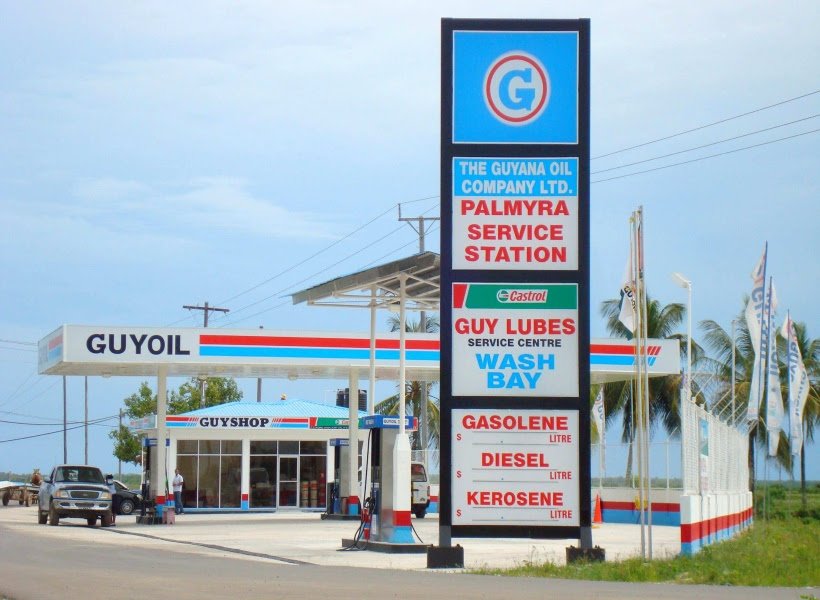
Dr Singh also confirmed that fuel prices at GuyOil have not increased, reiterating that this stability is a result of intentional government policy.
“I want to say that the government remains keenly attentive to what is happening globally, and our paramount objective continues to be the protection of the Guyanese consumer,” he underscored.
Amid global tensions and concerns about disruptions in international shipping routes, questions were raised about the reliability of Guyana’s fuel supply. In response, Minister Singh said there is currently no immediate threat to the country’s fuel supply chain.
Guyana recorded the lowest gasoline price in the Caribbean region in July 2025, well below the global average. These were the findings of the Energy Chamber of Trinidad and Tobago.