






The conflict between Israel, the United States, and Iran has intensified dramatically, pushing the Middle East closer to a full-scale regional war. Israeli and US forces have continued their coordinated assault on Iranian targets, including a controversial strike on Iran’s state broadcaster. As air raids and missile exchanges escalate, the reported death toll in Iran has climbed to 787, marking one of the deadliest phases of the confrontation so far.
The Israeli military has not limited its operations to Iran. Air attacks on southern Lebanon have intensified, and Israeli ground forces have launched a fresh incursion into the country’s south, raising fears of a broader multi-front war. The widening battlefield suggests that regional alliances and proxy forces are increasingly being drawn into direct confrontation.
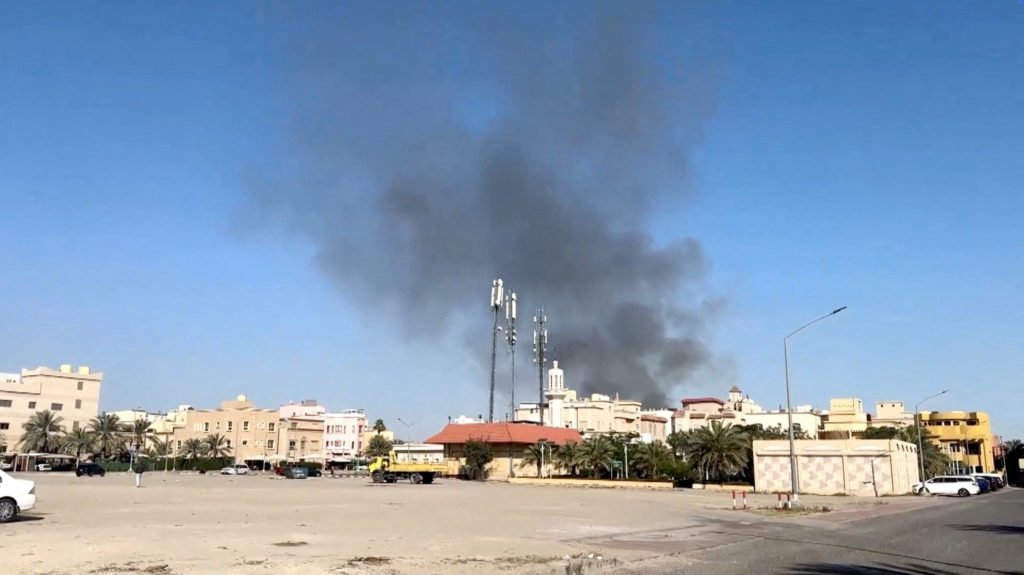
Tensions have also spread to the Gulf. Saudi authorities confirmed that two drones struck the US Embassy in Riyadh, causing a limited fire and minor structural damage. While no major casualties were reported, the attack signals a dangerous expansion of hostilities into key diplomatic and strategic hubs in the region.
US President Donald Trump stated that the military campaign against Iran could last approximately four weeks, emphasizing that Washington will “do whatever it takes” to dismantle Tehran’s missile systems and nuclear capabilities. His remarks suggest that the United States is preparing for a sustained operation rather than a short-term strike campaign.
Iran has responded forcefully. Energy infrastructure across the Gulf has been targeted, triggering sharp spikes in global oil and gas prices. In a major development, QatarEnergy suspended all liquefied natural gas production after two of its facilities were hit. The disruption has rattled international energy markets, raising concerns about supply shortages and prolonged economic fallout.
Adding to the crisis, Iran’s powerful military wing, the Islamic Revolutionary Guard Corps, announced that the strategically vital Strait of Hormuz is now “closed.” The waterway handles roughly one-fifth of the world’s oil consumption. Iranian officials warned that any vessel attempting to pass through the strait would be considered a target. Such a move could paralyze global shipping routes and significantly deepen the economic consequences of the conflict.
Meanwhile, Iran has continued missile strikes on Israeli territory. The Israeli military reported multiple interceptions over West Jerusalem, Tel Aviv, and Eilat. Since Saturday, at least 10 people have been killed in Israel, underscoring the human cost of the escalating confrontation.
With military operations expanding across several countries and global energy markets in turmoil, the conflict shows few signs of immediate de-escalation. Diplomatic efforts appear overshadowed by strategic calculations on all sides, and the region now stands at a critical crossroads. The coming days will likely determine whether the violence remains contained or spirals into a prolonged and far-reaching war with global consequences.