






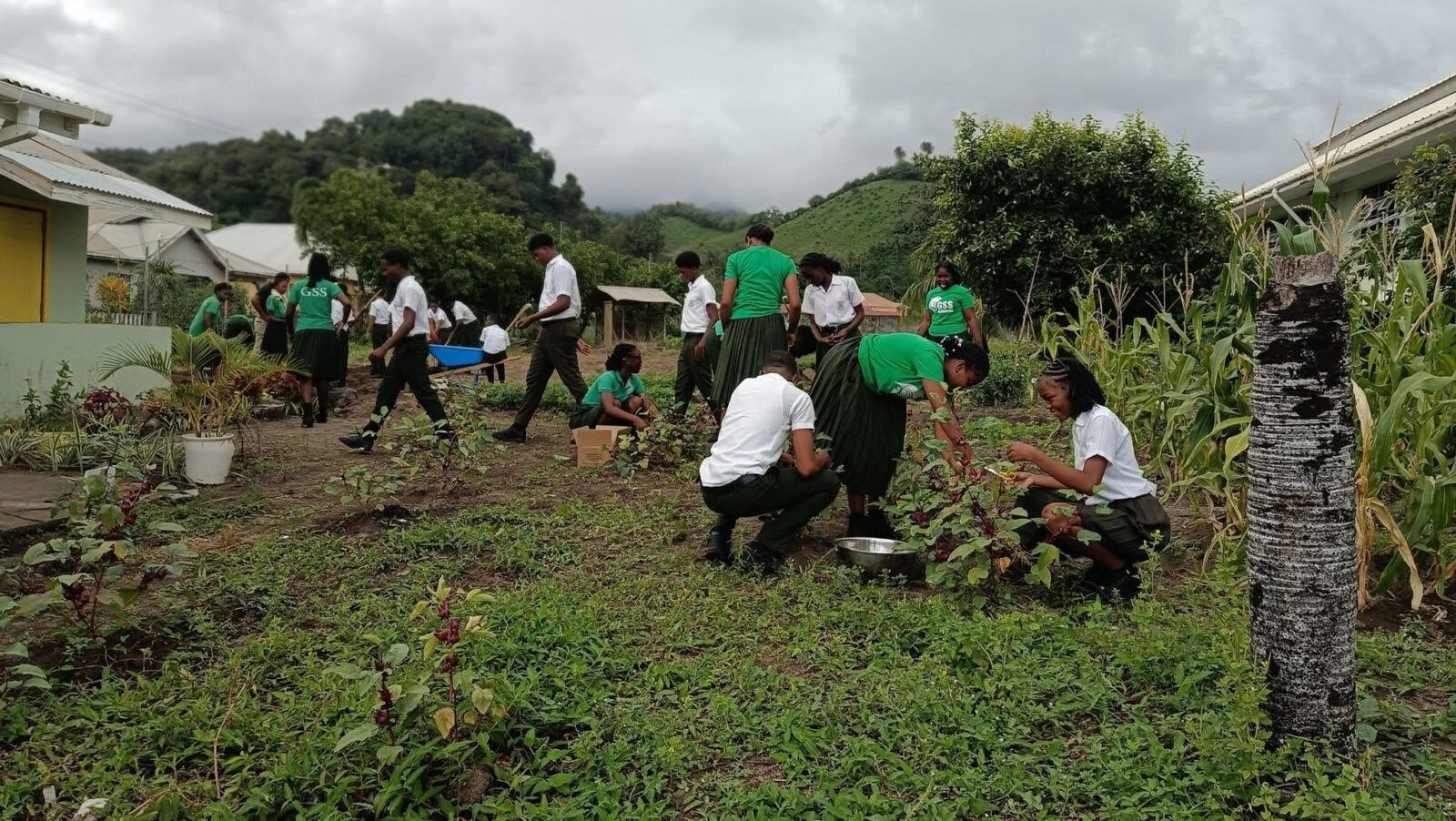
A total of 2,813 Guyanese students are expected to gain Caribbean Vocational Qualifications (CVQs) in 2026, strengthening the pool of young people entering the workforce with practical, industry-relevant skills.
The figure was highlighted by Chief Education Officer, Saddam Hussain, during the release of the 2026 Caribbean Secondary Education Certificate (CSEC), Caribbean Advanced Proficiency Examination (CAPE), Caribbean Vocational Qualification (CVQ) and Caribbean Certificate of Secondary Level Competence (CCSLC) results on Tuesday.

Unlike traditional academic examinations, the CVQ programme focuses on demonstrating practical competence, allowing students to graduate from secondary school with skills that can be applied directly in the workplace or used as a foundation for further technical training.
Hussain described the qualification as an important pathway for students seeking to transition from secondary education into both employment and further education.
“These students have matriculated from secondary school and can now access tertiary institutions. It also means that they can work because they have the necessary skills,” he said.

The 2,813 students are being trained across a wide range of disciplines reflecting both traditional industries and emerging areas of economic activity.
These include agro-food processing, aquaculture, crop production, electrical installation, general construction, welding, motor vehicle repairs, metalwork engineering, garment making, data operations, business and administration, commercial food preparation and housekeeping.
The programme also includes specialised areas such as cricket pitch management, allowing students to develop skills tailored to specific sectors and services.

The diversity of the qualifications reflects a growing emphasis on ensuring that secondary education provides multiple pathways beyond the traditional academic route.
The development also comes as the ministry reports increased participation in technical and vocational education at the CSEC level, as the number of students writing at least one TVET subject increased by 8.9 per cent, bringing participation to close to half of students sitting CSEC.
At CAPE level, almost 50 per cent of entries were in either TVET or science-based subjects, signalling a growing emphasis on technical skills alongside traditional academic disciplines.
The CVQ pathway is therefore becoming an increasingly important component of Guyana’s education system as the country seeks to prepare young people for a rapidly expanding economy and a labour market requiring a broader range of technical competencies.