





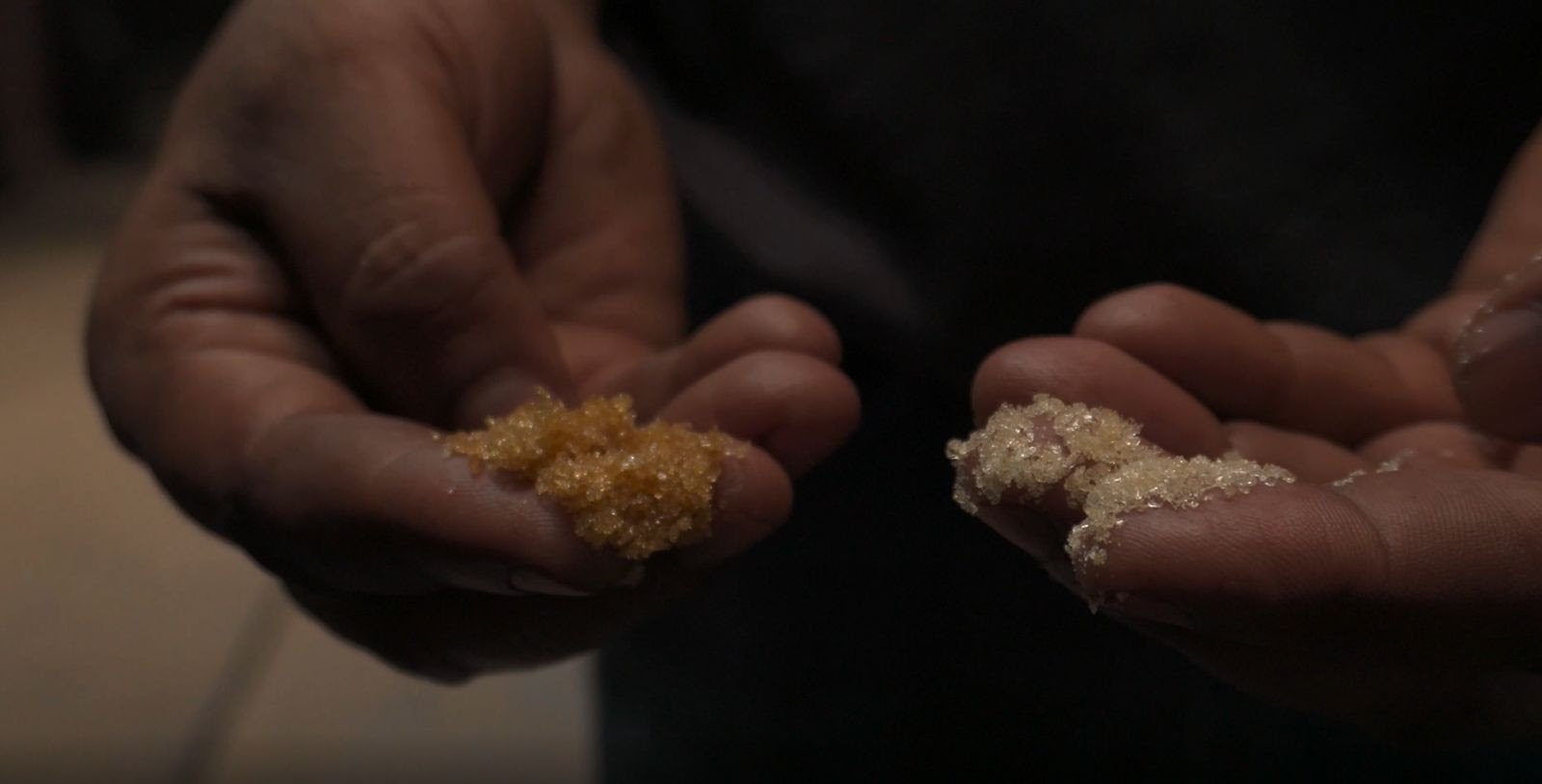
The Rose Hall, Albion and Blairmont Sugar Estates in Berbice have exceeded their weekly production target during the second week of the current crop, producing 2,457 tonnes of sugar against a target of 1,989 tonnes. That’s 468 more tonnes than expected.
The achievement marks a significant milestone for the Guyana Sugar Corporation (GuySuCo) as it continues to strengthen production following the reopening of estates.
According to the Rose Hall estate manager, Threbhowan Shiwprasad, the strong performance also saw the corporation recording its highest daily sugar production since reopening, reaching 156 tonnes in a single day, surpassing the previous high of 147 tonnes.
The production was supported by combined operations between the Albion Estate and Blairmont Estate, where canes from Blairmont are currently being processed at the Albion factory due to ongoing mechanical issues affecting operations.
Shiwprasad explained that efficient coordination in harvesting and grinding helped to boost output. After canes are harvested, they are quickly transported to the factory to ensure fresher cane is processed, allowing for greater juice extraction and higher sugar yields.

Workers were also motivated by the Weekly Production Incentive (WPI), a system designed to encourage higher productivity across estates. This allows all workers to gain an extra day’s pay on top of their usual salary.
One cane harvester, Somadat Rangasammy who has been doing this job since 1995, expressed his eagerness to know that he is one of many workers contributing towards this higher sugar output.
He recalls the 2017 closure of the estate, describing it as a depressing time which turned the community into a ghost town.

“Everything fell apart when the estate closed. We struggle a lot. We didn’t get the money we were supposed to get because there was no work. Now, we’re seeing changes in GuySuCo. This week’s production made us feel happy. We got that extra pay because we passed the target, and I know we’ll go even further,” Rangasammy said.
To address labour shortages and improve efficiency, the corporation is also utilising mechanical harvesting, with two billet harvesters currently operating in the fields. Workers are being upskilled in the mechanisation process as well.
Additionally, workers from Albion have been supporting operations to maintain a steady cane supply to the factory.
GuySuCo is also converting sections of agricultural land from Dutch beds to English beds, a change aimed at making the fields more compatible with mechanical harvesting as the industry moves toward greater mechanisation.


Further support is expected through the engagement of contracted cane harvesters from Jamaica, who recently conducted demonstration exercises and are expected to begin operations shortly.
Despite the encouraging results, the harvesting manager, Partap Kuldeep noted that weather conditions remain the main potential challenge to maintaining production targets. Heavy rainfall could hinder mechanical harvesting and require a shift to manual cutting and loading, which can slow operations.

Nevertheless, with favourable weather and continued collaboration between management and workers, he remains optimistic about achieving its production targets for the current crop.