





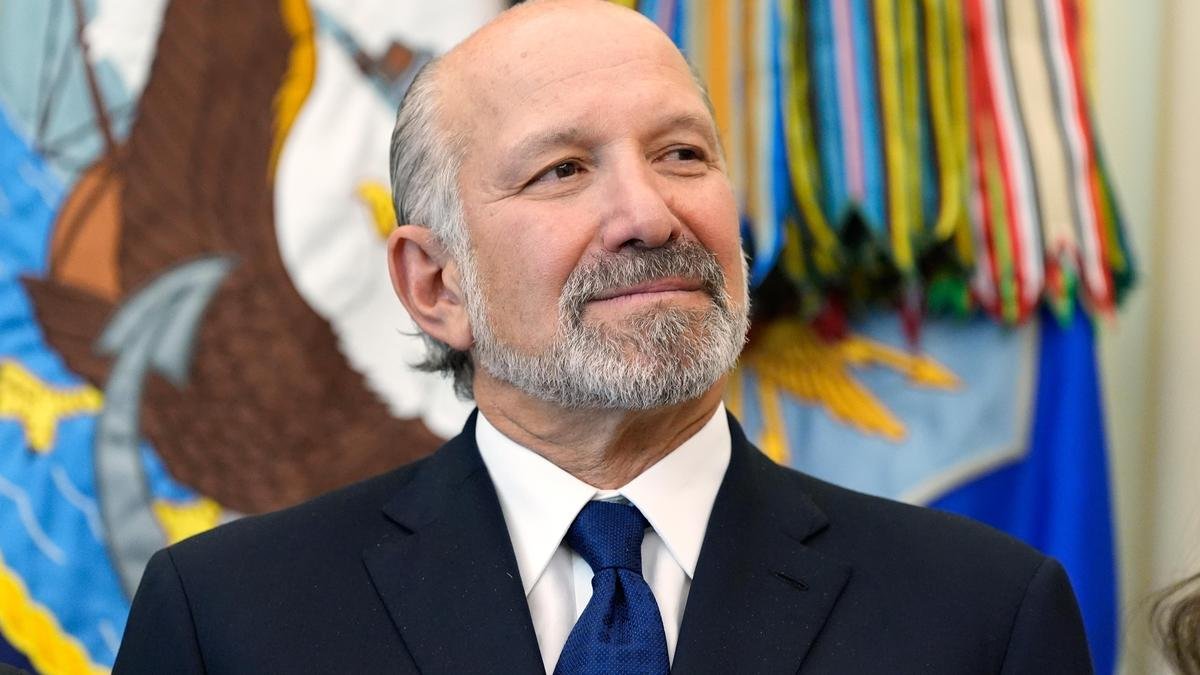
Washington — The U.S. Commerce Secretary has cited India while defending former President Donald Trump’s authority to impose sweeping tariffs, as the Supreme Court hears a landmark case challenging the legality of those trade measures. The case revolves around whether Trump overstepped his constitutional powers when he used emergency provisions to impose tariffs on several countries, including India, during his tenure.
In a recent interview, Commerce Secretary Howard Lutnick argued that the former president’s tariff strategy was a legitimate use of executive power, designed to protect American interests and influence global trade behavior. Lutnick referred to India’s continued oil imports from Russia as an example of how trade leverage can serve diplomatic purposes. “The president is using these taxes to buy justice,” Lutnick said, suggesting that tariffs are not merely financial penalties but tools for shaping fairer global relations.
The legal dispute centers on Trump’s invocation of the International Emergency Economic Powers Act (IEEPA), a 1977 law that grants presidents authority to regulate commerce during national emergencies. Critics argue that Trump misused this law to impose tariffs without congressional approval, while supporters insist that such measures fall squarely within presidential powers, especially in the context of international crises or trade imbalances.
Lutnick emphasized that restricting the president’s authority under IEEPA would undermine the United States’ ability to act decisively in global matters. He defended the tariff structure applied to India — a 25% reciprocal tariff and an additional 25% levy linked to India’s purchases of Russian oil — as measures aligned with America’s strategic and economic priorities. According to him, these tariffs were part of a broader effort to ensure fair competition and to discourage actions that contradict U.S. foreign policy objectives.
India, however, has described the U.S. tariffs as “unfair and unreasonable,” maintaining that its trade and energy decisions are based on national interests, affordability, and the need for stable energy supplies. Indian officials have reiterated that their economic policies remain independent and are not subject to external pressures, even from major partners like the United States.
Legal experts note that the Supreme Court’s decision could have far-reaching consequences for U.S. trade policy and the balance of power between the executive and legislative branches. If the Court rules that Trump’s use of emergency powers exceeded his legal authority, it could reshape how future presidents approach tariffs and international trade negotiations.
The mention of India in the ongoing debate highlights the growing interconnection between global diplomacy and economic policymaking. As the Supreme Court deliberates, both American businesses and international partners are watching closely, aware that the outcome could redefine how the world’s largest economy wields trade as a diplomatic weapon.