



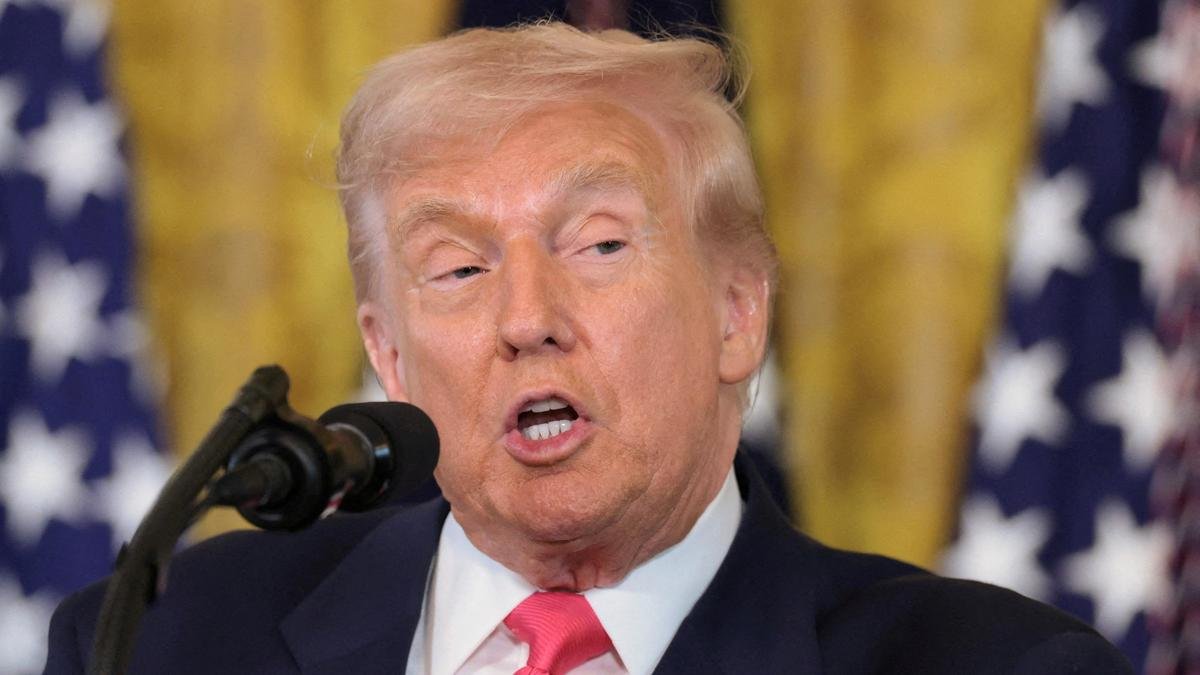
Former U.S. President Donald Trump has sparked fresh controversy by threatening to impose 200% tariffs on French wine and champagne, escalating tensions between the United States and France. The remarks come amid growing disagreements between Trump and French President Emmanuel Macron over global diplomacy and international cooperation.
Trump made the comments while speaking to reporters, suggesting that the steep tariffs would be imposed if France continues to oppose his proposed international peace initiative, often referred to as a “Board of Peace.” According to Trump, the initiative is aimed at resolving major global conflicts, but several European leaders, including Macron, have expressed reservations, arguing that it could undermine existing multilateral institutions such as the United Nations.
Adding to the diplomatic friction, Trump publicly shared what he described as a private message from President Macron. The message reportedly reflected Macron’s willingness to cooperate on certain global issues while also raising concerns over U.S. positions on sensitive geopolitical matters, including Greenland. Trump’s decision to make the private communication public drew criticism from European officials, who viewed it as a breach of diplomatic norms.
French officials responded strongly to Trump’s tariff threat, calling it unacceptable and counterproductive. They emphasized that France would not be pressured into policy decisions through economic coercion and reiterated their commitment to multilateral diplomacy. European leaders echoed this sentiment, warning that such tariffs could trigger retaliatory measures and further strain transatlantic trade relations.
Analysts note that a 200% tariff on French wine and champagne would have significant economic consequences, particularly for exporters and businesses in both countries. The threat has also raised concerns about the broader impact on global markets, as trade tensions between major economies often lead to uncertainty and instability.
The episode highlights how trade policy, diplomacy, and personal leadership styles are increasingly intertwined on the global stage. Whether the tariff threat will materialize remains unclear, but the exchange has already underscored the fragile state of U.S.–European relations and the challenges of maintaining cooperation amid political differences.