





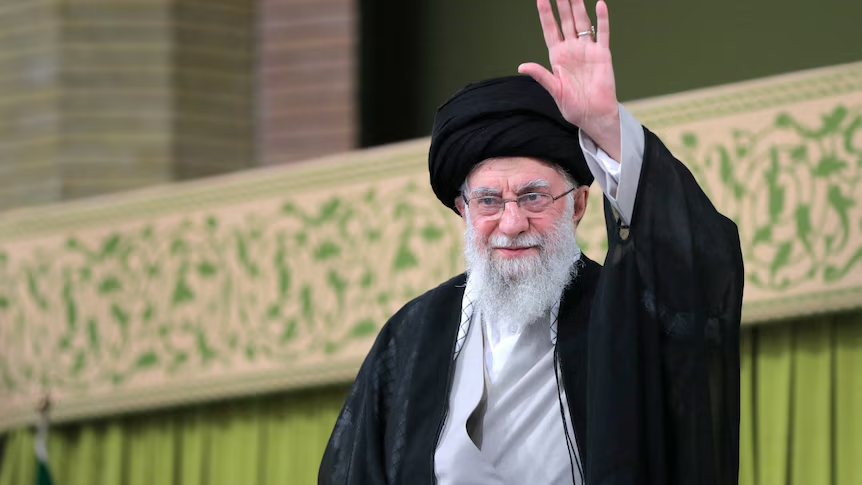
Ayatollah Ali Khamenei, the Supreme Leader of the Islamic Republic of Iran and one of the most powerful Islamic figures in Middle Eastern politics for more than three decades, has died at the age of 86. Iranian state media officially confirmed his death on Sunday, March 1, 2026.
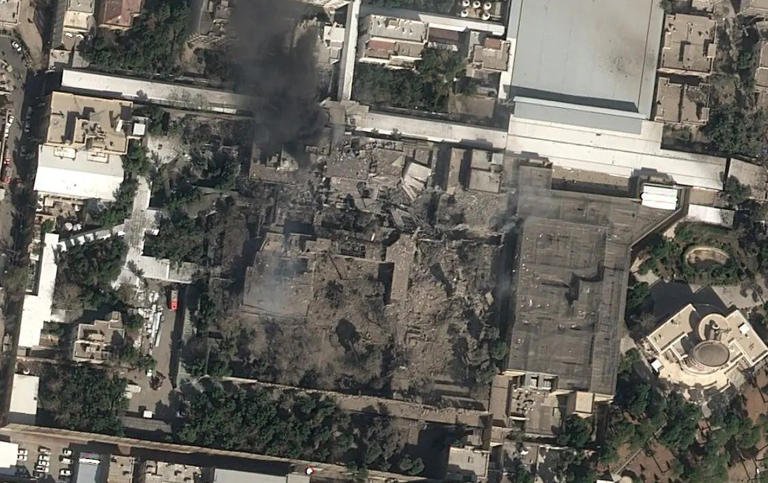
The US and Israeli militaries targeted Ayatollah Ali Khamenei and his close supporters, bombing the entire residence where he was staying and killing everyone inside
Confirmation of Death and Circumstances
Iranian state television announced that Supreme Leader Khamenei had passed away, triggering a 40-day period of national mourning across the country, with flags flying at half-mast and public observances planned. The broadcast described him as a leader who died while “performing his assigned duties.”
The announcement came amid large-scale military strikes on Iran by the United States and Israel, which began on Saturday, 28 February 2026. These coordinated air attacks targeted Iranian leadership sites, military infrastructure, and other strategic positions, marking a dramatic escalation in the long-standing conflict between Tehran and Western allies. Iranian state media and officials confirmed that Khamenei’s death occurred during these attacks.
National Reaction and Mourning
The Iranian government declared a 40-day national mourning period—a significant period of remembrance in Shia Islam—to honour Khamenei’s life and leadership. Public holidays were also announced to allow people to participate in official ceremonies and religious observances.
The Islamic Revolutionary Guard Corps (IRGC), a key pillar of Iran’s political and military system, vowed “severe punishment” for those it deemed responsible for Khamenei’s death, signalling a potential for retaliatory action. Iranian leaders characterised his death as martyrdom and called for unity in the face of external threats.
Khamenei’s Legacy
Ayatollah Ali Khamenei had served as Iran’s Supreme Leader since 1989, following the death of the founder of the Islamic Republic, Ayatollah Ruhollah Khomeini. As the highest authority in Iran’s political hierarchy, he controlled the military, judiciary, media, and key elements of foreign and domestic policy.
Throughout his leadership, Khamenei was a central figure in maintaining the theocratic political system, resisting Western influence, advancing Iran’s nuclear programme, and supporting allied groups across the Middle East. His tenure saw repeated internal unrest, including major protests over social restrictions and economic hardship, as well as prolonged tensions with the United States and its allies.
Regional and Global Impact
Khamenei’s death is one of the most significant geopolitical developments in the Middle East in decades. It creates a major leadership vacuum and raises urgent questions about Iran’s political future, the succession process, and the regional balance of power. The next Supreme Leader will be selected by the Assembly of Experts under Iran’s constitution. However, the role of the political and military establishment in that process is likely to be contentious.
For now, Tehran has vowed retaliation and warned of further conflict, while governments around the world are closely monitoring how events unfold in Iran and across the broader region.
The US and Israel are determined to complete the attacks they began last Saturday morning. Iran will be unable to protect its military hardware from both countries. The US and Israel seek a change of regime, and it appears that both powers will not stop until their military goal is achieved.
Iran has no power to stop attacks from the US and Israel. Instead of attacking its neighbours, Iran should focus on defending its own territory. However, Iran supports Islamic terrorists, and the only language they understand is force, which is what the US and Israel are giving them.
The days of the Iranian regime are numbered, and a transition to a democratic system is on its way to the people of Iran, who have suffered under this terrorist regime for over 40 years.