




While Heads of State (Presidents or Prime Ministers) have a cabinet of Ministers to ensure important initiatives are implemented on a timely basis, often times, without hands-on leadership by a President or Prime Minister, those initiatives stagnate, left as another aspiration that falls by the wayside. In Guyana, Bharrat Jagdeo and Irfaan Ali are examples of Presidents who lead from the front, who take personal interest and provide hands-on support and leadership. David Granger is an example of a President who prefers an aloof, stand-off and arms-length posture, leaving his cabinet to ensure success. It is not coincidental, therefore, that projects under Bharrat Jagdeo and Irfaan Ali met with or are meeting targets and were and are successful, while nothing was accomplished or finished under David Granger, other than “Durban Park” and the arches.
In Guyana’s case, for example, without hands-on leadership by President Bharrat Jagdeo, the Berbice Campus of the University of Guyana, the Berbice River Bridge, the LCDS, the Hope Canal, and other important projects would either not have been done or would have happened much later, at least a decade later, if not more. The expansion of the Cheddi Jagan International Airport, the construction of the Hope Canal and other vital infrastructure would not have happened had Bharrat Jagdeo not taken personal leadership. The LCDS, which was launched in 2008, might never have happened had he not dared to dream and then personally taken responsibility for its implementation.
We are seeing it today with President Irfaan Ali. One of the projects important for Guyana and critically important for Caricom is food security. From the start of his first term, President Irfaan Ali declared that by the end of his presidency, he would like to see Guyana contributing to Caricom’s food import bill reduction by 25 per cent. It started as a 25 X 25 initiative, and it is now a 25 X 30 initiative, ensuring a 25 per cent reduction in the food import bill by 2030.
The region’s food import bill exceeds US$6 billion annually. It is why the region is very vulnerable to food inflation. Take the present situation with the Iran war; inevitably, food prices will surge in Caricom. In fact, food prices in Caricom have already begun to surge. Imported food will cost more because shipping is more expensive and because production costs at the source, whether in Europe or in America, would have gone up. At the local level, food production cost will also rise because imported inputs like fertiliser cost will have risen. These are impacts we are very familiar with in Caricom. We saw it during COVID-19; we saw it because of the Russia–Ukraine war, and we saw it because of the Israel war.
Among the foods we import are onion, garlic and potato. Our colonial masters made us believe that these are food products that we cannot produce. Consequently, these products have always constituted a large part of our food import bill. It is estimated that we presently spend between US$75 and 100 million to import onions, garlic and potatoes into the region. But the region has the capacity to produce all the garlic, onion and potato Caricom needs. That in itself would reduce food imports into the region significantly.
In that regard, Guyana started on-the-ground experimental plots in 2012 for these products. While significant progress was made, the projects ground to a halt in 2015 when the David Granger Government came into place. In 2020, President Irfaan Ali took personal interest and provided support to Minister Zulfikar Mustapha and the Ministry of Agriculture. Today, Guyana is poised for large-scale production of onion, garlic and potato. Several other Caricom countries have begun production and meeting some of their needs. But Guyana has the potential to satisfy its own needs and meet the shortfalls that other countries would have. It means that Guyana’s farmers can have a market worth potentially between US$50 and US$100 million.
Watching President Ali personally visiting a farmer who started with just a small farm to now planning a 100-acre farm with onions is an example of President Ali not only speaking passionately about his vision for food security in Caricom by 2030 but also personally providing support and hands-on leadership. It is why Guyana is not only talking the talk but also walking the walk.
This year, Guyana will meet its requirement for soya and for corn, products we imported before 2022. We still import these products, but by the end of 2026-2027, Guyana will be self-sufficient for its soya and corn requirements, largely because President Ali is providing on-the-ground support. The corn and soya market in Caricom is more than US$150 million annually. This creates an opportunity for our farmers and entrepreneurs to develop a new market while creating jobs and developing wealth within the country. But local production of corn and soya will reduce the cost of stock feeds in our country. With lower-cost stock feeds, Guyana could expand its poultry industry, achieving lower production costs and, therefore, competing with out-of-the-region competitors for a poultry market worth more than US$200 million annually.
Wheat imports into the region are worth more than US$100 million annually. In 2012, we started experimental plots for wheat. That died in 2015. After 2020, under President Ali’s hands-on leadership, the wheat experimental plots have gained momentum. Guyana will soon start production of wheat. Not only will we have our own wheat, reducing our imports, but Guyana can also supply some of the Caricom countries with wheat.
Presidents and Prime Ministers are not just figureheads. Their leadership styles matter. President Ali is a visionary leader, providing ideas and dreams for his Government to pursue. But, like his mentor, Bharrat Jagdeo, he provides daily and hands-on support. It is why he succeeds.
Subscribe to Updates
Get the latest news from DemocracyGuyana.com
PRESIDENTIAL HANDS-ON LEADERSHIP IS KEY FOR INITIATIVES SUCH AS FOOD SECURITY
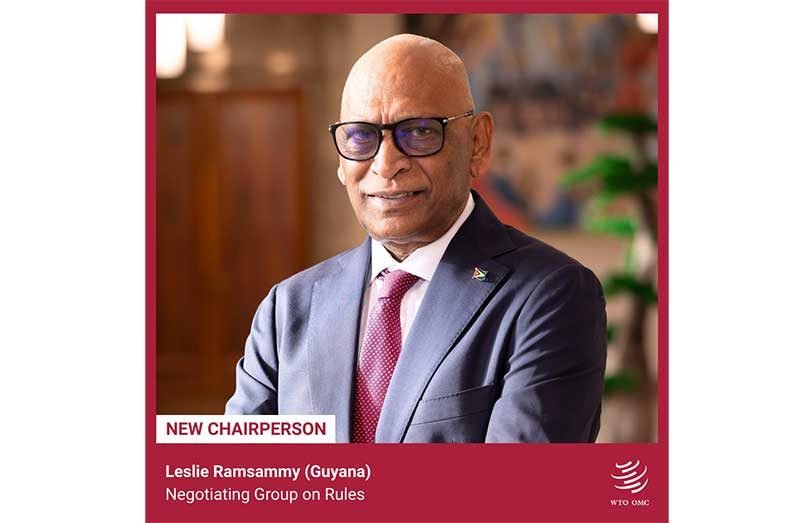
New chairperson, Dr. Leslie Ramsammy