





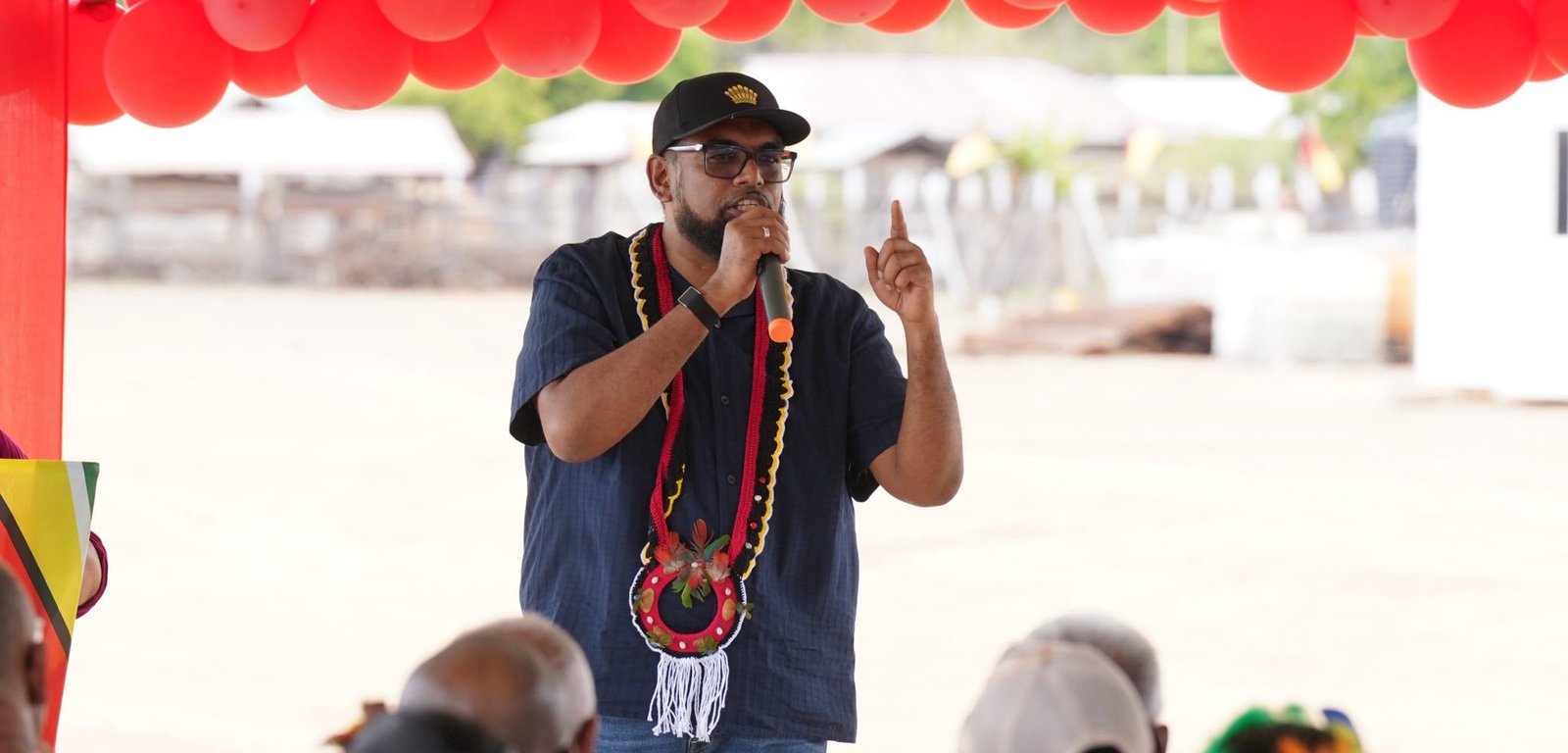
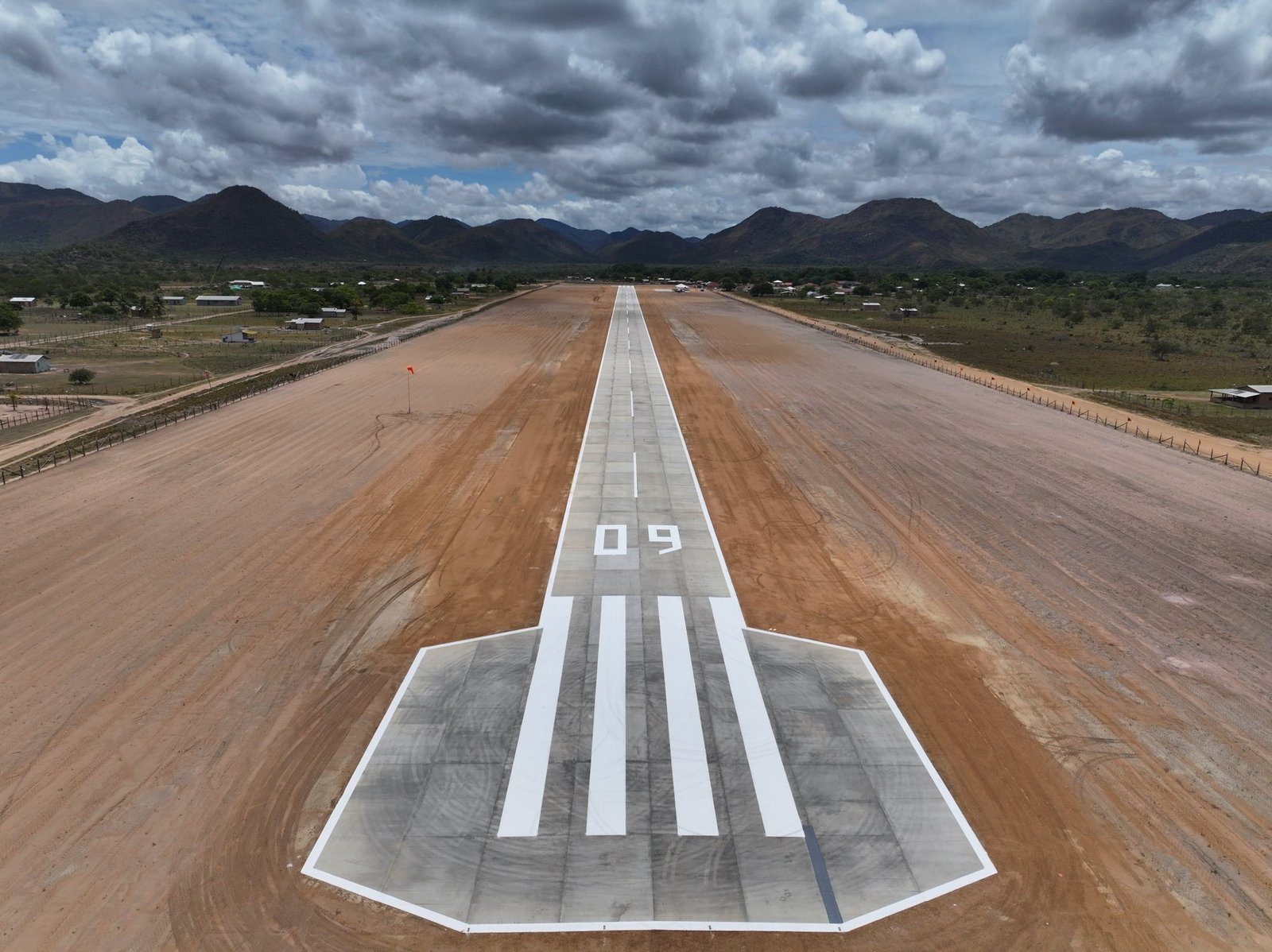
President Dr Irfaan Ali has formally inaugurated a new 3,000-foot concrete airstrip at Karasabai in Region Nine, marking a significant step forward in improving transportation, connectivity, and economic development in Guyana’s hinterland communities. The project, estimated at around $1.053 billion, aims to enhance access to vital services while creating new opportunities for business, agriculture, and tourism.
The newly constructed airstrip has two taxiways and a modern terminal designed to serve passengers and support efficient air operations. The facility is equipped with navigational lighting, allowing aircraft to land and take off safely both day and night. Capable of handling multiple flights and parking up to three aircraft at once, the airstrip significantly enhances the reliability of travel to and from the remote village.
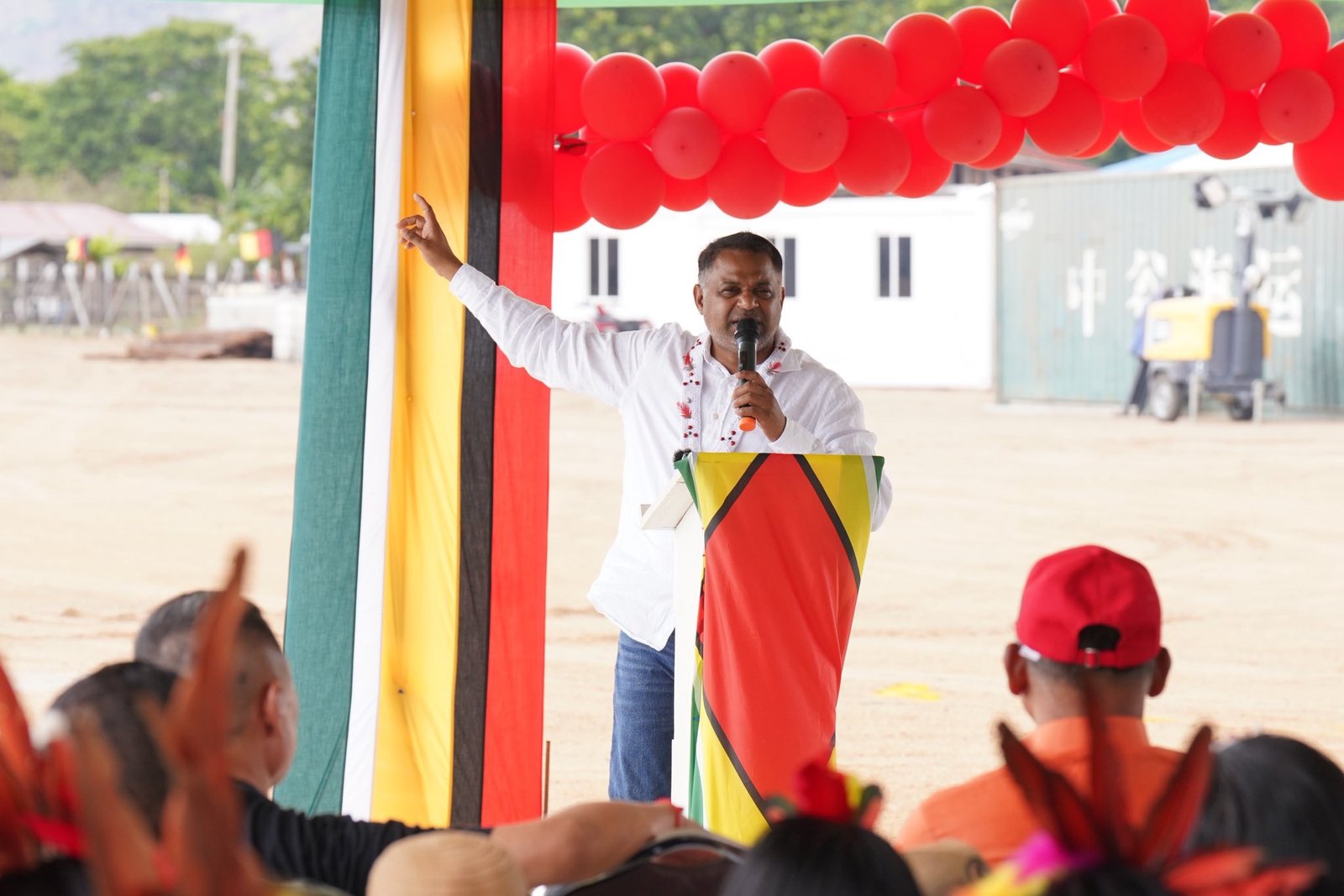
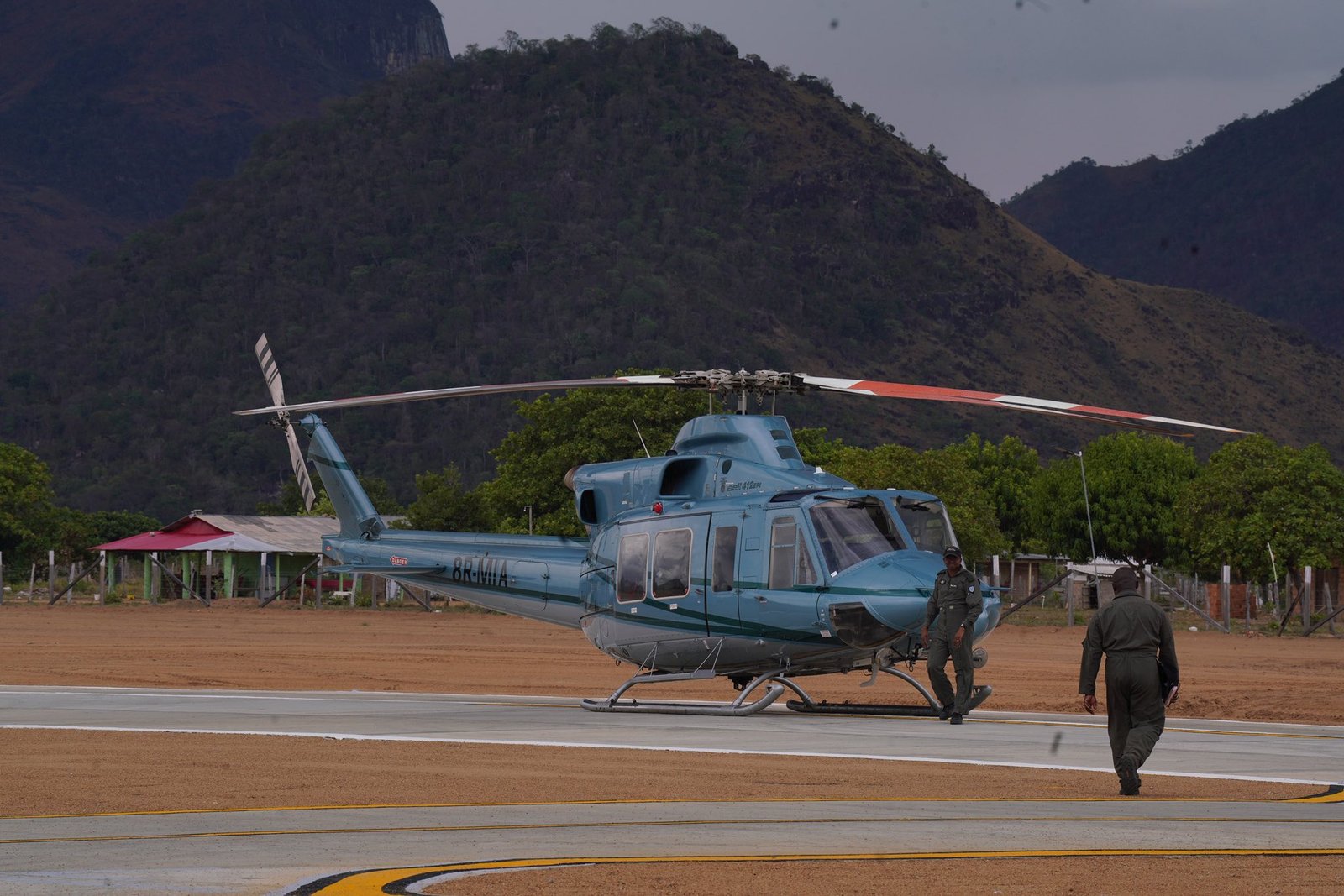
President Dr Ali emphasised that negotiations are already underway with airline operators to set up scheduled weekly flights to Karasabai. He mentioned that enhanced air connectivity will make transportation faster and safer, particularly during emergencies when swift medical evacuations are vital. In the past, residents often faced lengthy delays during the rainy season, as poor landing conditions made travel difficult and sometimes perilous. The new airstrip now enables emergency flights to operate at any time, ensuring quicker access to advanced medical facilities in Lethem and other parts of the country.
The President emphasised that the investment forms part of a wider national strategy to modernise infrastructure in remote areas and encourage balanced development across Guyana. He urged the private sector to capitalise on the improved infrastructure by investing in agriculture, tourism, and other commercial activities that can drive economic growth within communities.
Plans are already underway to support agricultural growth in the region. A 20-tonne blast freezer will be installed in Lethem in the coming months, allowing farmers to preserve and transport meat and other produce more efficiently to markets in Georgetown. President Ali also revealed that private investors have shown interest in collaborating with local farmers to develop large-scale production of crops such as peanuts, ginger, onions, and coffee, which have been identified as key commodities for the area.
In addition to promoting economic growth, the government is improving healthcare services in Karasabai. The community clinic is being upgraded to a comprehensive medical centre, and plans have been made to use drone technology for delivering emergency medical supplies, including blood and essential medicines, directly from Lethem to the village when necessary.
According to Public Utilities and Aviation Minister Deodat Indar, the newly commissioned Karasabai airstrip, designed with an expected lifespan of 30 years, is part of a broader national initiative to expand Guyana’s aviation infrastructure significantly. He stated that the government is pursuing an ambitious plan to improve air connectivity in remote and underserved areas, ensuring safer, quicker, and more dependable transportation for residents, businesses, and emergency services. The Karasabai facility, along with other recently completed airstrips, marks an important step towards creating a modern and resilient aviation network.
Minister Indar further revealed that the government plans to build around 35 new airstrips across the country, including several in Region Nine (Upper Takutu-Upper Essequibo) and Region Seven (Cuyuni-Mazaruni), as well as at least one in Region Six (East Berbice-Corentyne). He stated that the tendering process has already begun and that a financing model is being adopted, in which private bidders will fund the construction of these airstrips. The large-scale project is expected to cost over $33 billion. It aims to promote economic development, improve access to hinterland communities, and support the long-term growth of Guyana’s aviation sector.
Minister of Public Works Juan Edghill emphasised that the new airstrip and terminal building will open more opportunities for tourism and local businesses. He explained that the facility could accommodate up to 60 passengers and support single-day tourist visits, eco-tourism activities, and hospitality services operated by residents. The upgraded infrastructure is anticipated to encourage visitors to explore the region and to generate new income streams for the community.
The airstrip was built in just 70 days, with around 60 residents involved in the project. Officials emphasised that the site, which was once a simple grass field, has now been transformed into a sturdy concrete runway intended to serve the community for many years.
Government officials also confirmed that the Karasabai airstrip is part of a broader national aviation development plan that includes the construction of several additional airstrips across Guyana. These projects aim to improve transportation networks, enhance emergency response capabilities, and support long-term economic growth in hinterland regions.
The commissioning of the Karasabai airstrip marks a significant milestone in Guyana’s infrastructure development, offering better connectivity, enhanced public services, and new investment opportunities for one of the country’s most remote communities.