





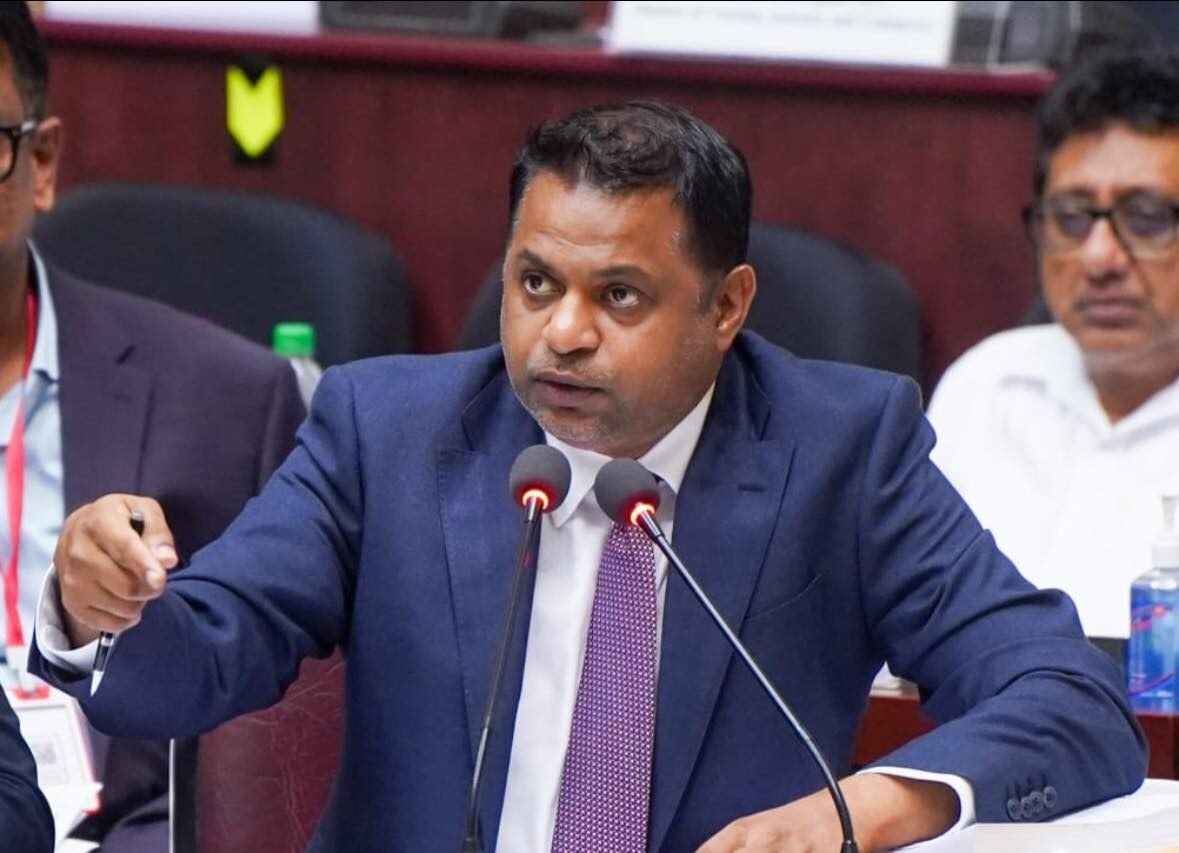
Opposition members in Parliament questioned how the $66.2 billion electricity plan for the country’s allocation fits with the additional $10 billion earmarked for transmission works under the Gas-to-Energy initiative, which is managed by the Office of the Prime Minister. They sought clarity on whether the two programmes overlap or duplicate each other.
Public Utilities and Aviation Minister Deodat Indar outlined the breakdown of the electricity expansion budget, noting that the aim is to modernise the power system, strengthen reliability, and support long-term economic growth. He explained that the electricity expansion programme complements the Gas-to-Energy project rather than replicating it, and that it forms part of a unified national grid strategy.
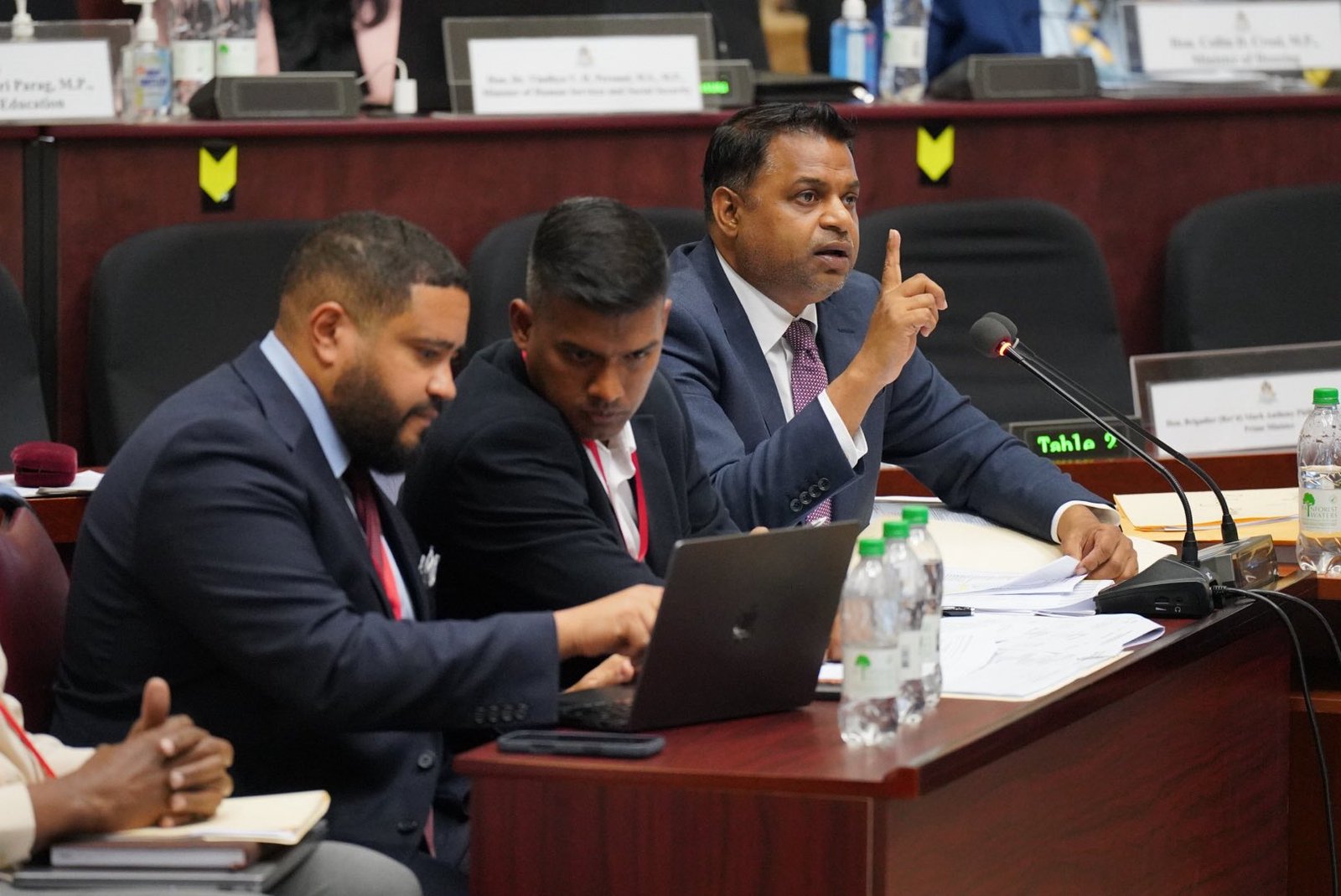
Minister Deodat Indar on Tuesday answered and justified the government’s proposed $66.2 billion electricity expansion plan during a detailed examination of the 2026 budget estimates in the Committee of Supply, as opposition parliamentarians raised concerns about the plan’s scale and structure.
The discussion focused heavily on the national power upgrade programme, which combines new electricity generation capacity with sweeping improvements to transmission and distribution infrastructure throughout Guyana.
A major component of the allocation is the construction of a new double-circuit transmission line on the 69 kV network, including a river crossing and an underground cable linking Vreed-en-Hoop and Kingston. The project carries a price tag of $2.8 billion.
According to Minister Indar, the existing line between these locations is outdated and can transmit only about 7 megawatts. The new configuration will establish a looped system capable of carrying 180-200 megawatts, significantly reducing the risk of outages.
To support this increased capacity, substations at both Vreed-en-Hoop and Georgetown will be expanded. Minister Indar stressed that these upgrades are essential to ensure the grid remains stable once power from the Gas-to-Energy project is introduced, preventing scenarios in which electricity becomes trapped on one side of the system if a single transmission path fails.
Significant funding is also directed towards strengthening the distribution network. This includes the construction of 193 kilometres of 13.8 kV feeder lines across 28 circuits nationwide, at a cost of $2.2 billion.
In addition, the programme provides for the purchase of two mobile 35 MVA, 69 kV substations. These units can be transported by truck and deployed rapidly to restore service when permanent substations are damaged, such as in vehicle accidents or severe infrastructure failures. The minister noted that similar mobile units already in use have proven effective in reducing downtime.
Further distribution works include installing 42 kilometres of 6-9 kV feeder lines across 17 feeders, with an estimated cost of $9.8 billion. Several step-down substations will also be upgraded from 69 kV to 13.8 kV to meet rising demand.
Grid modernisation is another key pillar of the programme. Minister Indar highlighted investments in advanced metering, system stability, and network integration. This includes installing 20,000 advanced metering infrastructure (AMI) meters to improve billing accuracy, consumption monitoring, and system management.
A battery energy storage system rated at approximately 30 MW / 60 MWh, budgeted at $3.3 billion, is also included. The minister explained that this system will help stabilise voltage levels by addressing fluctuations that often trigger grid shutdowns and faults, thereby improving overall reliability.
Project oversight and technical expertise are covered by $816 million allocated for consultancy and project management services. Additional funds will support the integration of substations and power plants into the Guyana National Control Centre and upgrades to protection, relay, and control systems.
Land acquisition associated with new transmission corridors has been budgeted at $194 million, recognising that new lines often cross private land and require compensation for landowners.
Other planned works include new 69 kV transmission lines to increase capacity in critical areas, upgrades to the Sophia network to align with the reconfigured grid, preparation for smart grid operations, and the modernisation of switchgear at Kingston and other substations and power plants.
Beyond technical improvements, the programme also aims to expand access to electricity. A total of $612 million is allocated to bring power to communities that remain underserved or lack a reliable supply. An additional $15 billion in the 2026 budget is reserved for electrification linked to industrial development, new housing projects, and land expansion schemes. Planned extensions include power lines from Linden to Garden of Eden and upgrades serving housing and commercial developments along the Essequibo corridor, including Leguaan, Wakenaam, Tuschen, Westminster, and surrounding areas.
One major project involves constructing a 60-kilometre transmission line from Supenaam to Charity, upgrading the voltage from 13.8 kV to 69 kV to reduce power losses over long distances.
Minister Indar also revealed that the government is engaging a financing institution to support electrification in fast-growing residential and industrial zones, where electricity demand is expected to rise sharply. In addition, Minister Indar reaffirmed that the electricity expansion programme and the Gas-to-Energy initiative are coordinated components of a single national energy plan—one focused on preparing the grid for cheaper power, greater capacity, and sustained economic transformation.
While opposition members continued to question the scale of the spending and the relationship between the various power projects, the committee ultimately approved the allocations for inclusion in the national budget.