




I was at the GPHC compound looking on as the helicopter landed to take Cheddi for a flight out of Guyana. He was on his way to the Walter Reed Hospital in America. As he was being taken from the Georgetown Hospital into the helicopter he waved, weakly, but reassuringly and he echoed Bob Marley’s famous words “Don’t worry, everything will be alright”. This past week, we not only observed his 29th death anniversary, we also celebrated his 108th birth anniversary.
Far from his memory waning, it seems as though he has a permanent presence among us. It is as if his words “Don’t worry, everything will be alright” keep ringing in our ears. But even as we were bidding him farewell, we knew that we were only letting go of his physical body. We somehow knew that his spirit and his inspiration will last forever. Maybe George Lamming, the Caribbean’s Noble Prize winner, had it right when in his tribute to Cheddi in 1997, he stated: “The name Cheddi Jagan has acquired, for more than one generation, the feel of permanence and awe which time confers on certain historical monuments, and there was something monumental in the consistence of purpose and the unique kind of dedication which he brought to the public life of the people of Guyana.” Lamming thinks that “there is no Caribbean leader who has been so frequently cheated of office, none who has been so grossly misrepresented and no one who, in spite of such adversity, was his equal in certainty of purpose and the capacity to go on and on until his time had come to take his leave from us…”
Almost 30 years after his death, Guyana and Guyanese feel that his words of reassurance as he left these shores for the last time were prophetic. He knew that if we stay honest and faithful to the vision his party articulated on its launching on January 1,1950, more than 76 years ago, that everything, indeed, will be alright.
In 1992, after 28 years of dictatorship, his resilience and determination in peacefully fighting for freedom, Cheddi Jagan was democratically elected to lead an independent Guyana. The country that he inherited was a highly indebted poor country (HIPC), one of the world’s most indebted countries in the world (debt to GDP ratio of more than 953%), one of the poorest countries on earth (GDP of about US$300 per capita), with a poverty rate of between 66% and 88% (depending on whose statistics you accept), a country with a negative growth rate for more than a decade, a country with virtually zero foreign direct investment.
In 2026, 29 years after his death, Guyana is now one of the world’s fastest growing economies (GDP of more than US$35,000 per capita and an annual growth rate of more than 43% in the last five years), a debt burden among the lowest in the world (about 24% debt to GDP) and foreign direct investments of more than US$2 billion annually. Instead of depending totally on sugar and bauxite for foreign currency earnings, Guyana has become finally the bread basket of the Caribbean, ensuring food security for our people and enabling Caricom to reduce its food import bill. Rice is a major foreign currency earner. But Guyana’s agriculture, mining industry and manufacturing industry have become diversified and expanding in their capacity for bringing in foreign currency.
Guyana is admired for its leadership in low-carbon development models for economic development. In this regard, Guyana is earning foreign currency by being the only country in the world with United Nations Framework Convention on Climate Change (UNFCCC)-certified carbon credits, some of which have earned Guyana more than a billion US dollars through sales to Hess Corporation, 19 airline companies, and global giants such as Apple and Google. While Guyana’s leadership in low-carbon development is now well-established, Guyana is also leading now in biodiversity preservation.
With oil due to reach more than a million barrels per year, and with gas-to-energy allowing the country to develop new economic platforms, including a vibrant manufacturing capacity, Cheddi’s party is leading Guyana forward on the trajectory of becoming a developed country by 2050. Not in our wildest dreams would we have imagined that our country would be on this path. The talk of being a developed country is no longer “wild” talk. In fact, for most of us, it is not if, it is when.
One of Cheddi’s lasting inspirations is that political parties must adjust to changing geopolitical circumstances and must adapt for changing economic and social welfare needs of the people. His party continues to demonstrate the capacity for adjustments and for being pragmatic. Cheddi’s party, the PPP, continues to get bigger and bigger, stronger and stronger, with an unending line of new visionary leaders. In contrast, Forbes Burnham’s party, the PNC, today is fighting for survival. There is no more Forbes Burnham, but his obstructionist policies live on in the PNC. Sixty years after Guyana’s Independence from the British, the PNC finds itself clumsily and cluelessly navigating to find relevance in Guyana, displaced by a new party without any plans, other than to avoid its leader being extradited to America for criminal charges.
Seventy-six years after the launching of the PPP, the party has remained faithful to its original mission. It has nurtured and incubated leaders for over seven decades. At the same time, it has changed and adapted to new circumstances. As the party leads Guyana for the next two decades at least, it has an opportunity to move Guyana to a Developed Country status before it celebrates its 100th anniversary. Cheddi knew what he was telling us: “Don’t worry, everything will be alright”.
Subscribe to Updates
Get the latest news from DemocracyGuyana.com
What's Hot
“Don’t worry, everything will be alright” – Cheddi’s last words to his people
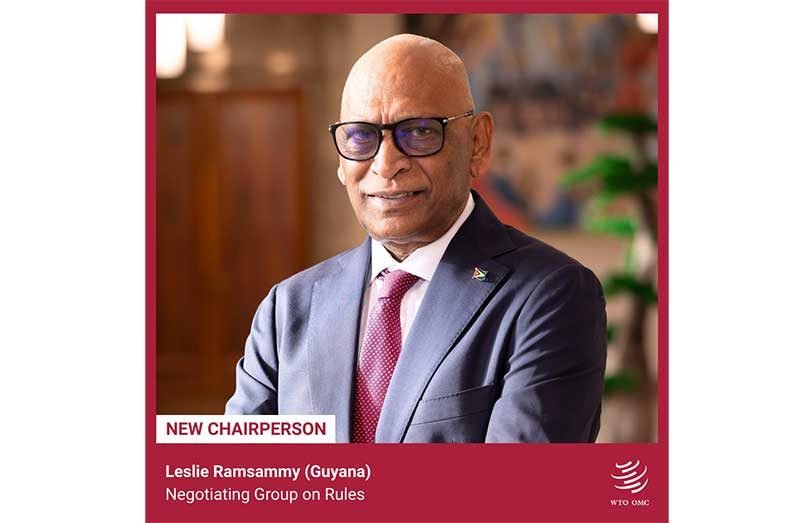
New chairperson, Dr. Leslie Ramsammy