





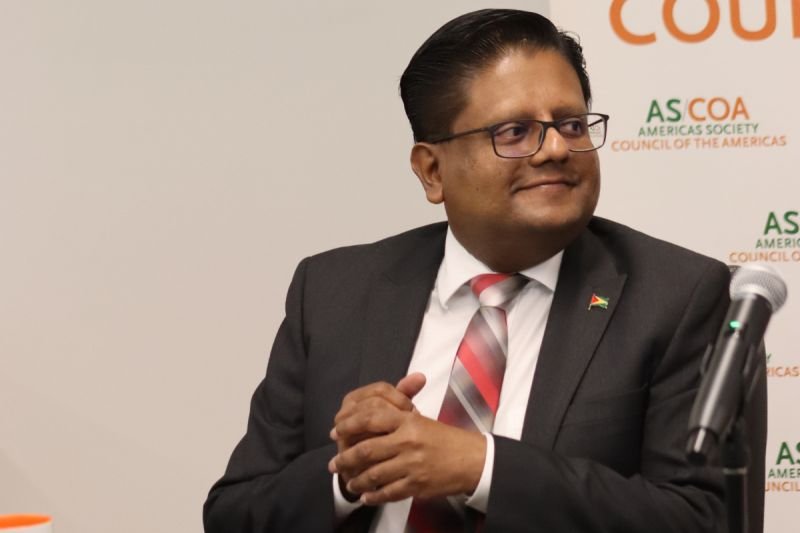
Guyana’s 2026 national budget will emphasize strengthening long-term development and enhancing the country’s economic infrastructure, according to Senior Minister in the Office of the President with Responsibility for Finance, Dr. Ashni Singh.
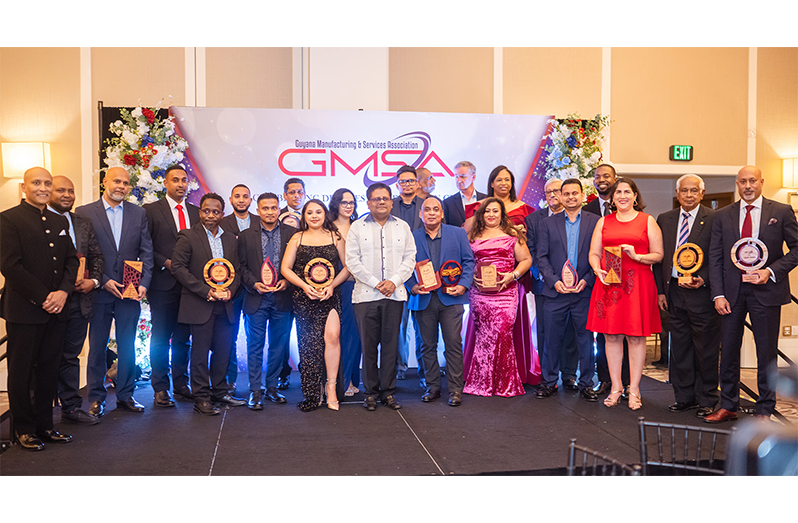
Speaking at the Guyana Manufacturing and Services Association (GMSA)’s 30th Anniversary Dinner and Awards at the Marriott Hotel on Wednesday, Dr. Singh stated that the government plans to shift its fiscal priorities toward investments that ensure future competitiveness.
“So, you will see in our fiscal priorities a major shift of the budget away from government spending and toward investment in essential economic infrastructure that boosts competitiveness,” he told the gathering.
He assured the private sector that President Dr. Irfaan Ali’s administration remains dedicated to responsible governance and long-term planning, especially given the volatility of the global economy. Dr. Singh highlighted the instability of commodity markets, referencing recent sharp fluctuations in oil and gold prices as reminders of the uncertainties Guyana must face.
Everybody has lived long enough to remember a time when oil was US$138 a barrel… we’ve also recently experienced a period when oil was as low as US$13 per barrel,” he said, noting that oil today trades at “maybe 60 something dollars – a third less than it was two and a half years ago.”
On gold, he added: “Gold is… an important contributor to our economy… today it is US$4,000 an ounce. I don’t know who will wager whether it will remain at US$4,000 an ounce.”
Dr. Singh also pointed out notable increases in freight costs over the past five years as another example of global unpredictability, stressing the necessity for stable and proactive policy.
He emphasized that the government must consider not only the present and the immediate future, but also “next year and the year after that… not only… this term of office but in the next term and the term after… and not only for this generation but the generation after.”
The minister also highlighted the importance of protecting Guyana’s democratic reputation and its position in the international community. He warned that neglecting these principles could jeopardize longstanding diplomatic and financial partnerships.
He emphasized that the country must also maintain macroeconomic stability, including by reinforcing institutional frameworks and prudent management of the Natural Resource Fund (NRF).
He noted that Guyana is now among the few countries with enough resources in its sovereign wealth fund to pay off its external debt while keeping a surplus.
He said that diversification remains essential for long-term economic resilience, which is why the government continues to support the growth and competitiveness of the non-oil sector. He emphasized that manufacturers, service providers, and producers all play a vital role in this transition.
Dr. Singh emphasized the shifts in public investment under the PPP/C government. In 2019, capital spending accounted for less than 25 percent of the national budget; by 2024, it surpassed 50 percent, reflecting a clear policy to prioritize long-term development over short-term expenditure.
“Because investing in the things that matter for the long term is not necessarily the most popular in the short term,” he said, adding that the Ali administration “will not sacrifice the long term at the altar of short-term or immediate-term expediency.”
He emphasized that responsible policymaking is essential as Guyana experiences rapid economic growth. “More so than any other time in our country’s history, that is what is needed, not sound bites. This is a serious time for our country. We need to be responsible, and we need to be strategic.”
Industry Leaders Embrace Technological Transformation
GMSA President Rafeek Khan highlighted the start of the Fourth Industrial Revolution, marked by advanced connectivity, automation, and the integration of digital and physical systems. He said that sectors like transportation, finance, communication, warehousing, and professional services will play vital roles in bridging manufacturing gaps.
Khan also announced plans for a new GMSA campus to help members adapt to technological and economic changes.
Former GMSA President Ramsay Ali launched the association’s new online marketplace, uncappedmarketplace.gy, which will enable consumers to buy products directly from member companies.
Strong Private Sector Credit Growth Under PPP/C
Government data shows a significant rise in private-sector lending since 2020.
- Credit to manufacturing increased by 103.7% to $43.3 billion by 2024.
- Total private-sector credit increased by 73.4% to $450.6 billion during that period.
- Credit to services rose by 80.3% to $157.9 billion, fueled by transportation, telecommunications, distribution, and professional services.
The government continues to collaborate with financial institutions to make financing more accessible for small and medium-sized businesses (SMEs).
Government’s Future Commitments
The PPP/C’s 2025 Manifesto highlights key initiatives to boost Guyana’s economy and establish the country as the region’s industrial center. Among these commitments are:
- Completion of the Gas-to-Energy (GtE) project and a 50% decrease in electricity costs.
- Establishment of a zero-interest SME development bank.
- Completion of the Wales industrial estate, with plans for a second estate in Region Six.
- Full occupancy of estates in Belvedere, Lethem, Onderneeming, and York.
- A new small-business development center in Georgetown aims to support SME growth and innovation.
The government intends to boost collaboration with private-sector groups like the GMSA as Guyana’s economy begins a new stage of growth and diversification.