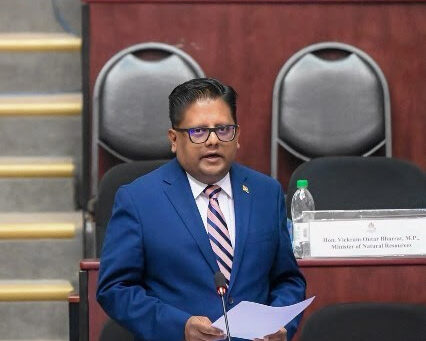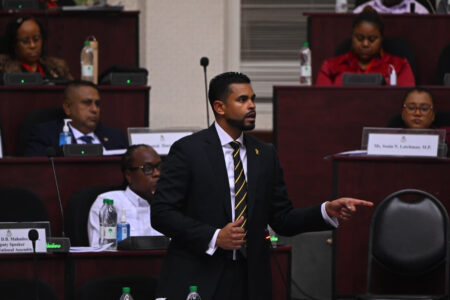









Georgetown, Guyana– Attorney General and Minister of Legal Affairs Mohabir Anil Nandlall, SC, has welcomed the High Court’s decision to dismiss a judicial review application challenging the refusal of bail to Opposition Leader Azruddin Mohamed.
The ruling was delivered on Wednesday by Justice Priscilla Chandra-Hanif, who rejected the application challenging Magistrate Abigail Gibbs’ decision to remand Mohamed.
Speaking to reporters after the ruling, Nandlall said the High Court had correctly applied established legal principles governing bail applications under Guyana’s Bail Act.
He maintained that the principles outlined in the judgment were not new, noting that the law governing bail decisions has been established for more than a century.
Previous Charges and Risk of Interference Considered
The Attorney General explained that courts are required to consider several factors when determining whether an accused person should be granted bail.
These include an individual’s previous charges and the possibility of interference with witnesses or evidence.
According to Nandlall, magistrates must assess the circumstances of each case and exercise their discretion in accordance with the relevant legal principles.
He argued that the High Court’s decision reinforces the importance of applying these established considerations when determining bail applications.
AG Says Opposition Leader’s Lawyers Used Wrong Legal Procedure
Nandlall also criticised the legal approach taken by Mohamed’s attorneys, arguing that they invoked the wrong jurisdiction under the Bail Act when challenging the magistrate’s decision.
He explained that the judicial review process limited the High Court’s role to examining what had taken place before the Magistrates’ Court.
As a result, the proceedings were not an opportunity to conduct an entirely new bail hearing or reconsider the matter as though it were an appeal.
The Attorney General said the legal procedure selected by the applicant restricted the court’s ability to revisit the original proceedings.
Ruling Could Influence Future Bail Challenges
The Attorney General said the judgment has broader implications for how future bail decisions and challenges to magistrates’ rulings are handled.
He emphasised that judicial review must be pursued through the appropriate legal procedures and within the limits established by law.
The High Court’s decision leaves Magistrate Gibbs’ refusal to grant bail in place, meaning Mohamed will remain on remand while the substantive proceedings continue.
The judicial review application was filed by Mohamed’s mother, Bonita Mohamed, challenging the magistrate’s decision to remand him.
Mohamed’s detention relates to a cybercrime charge involving allegations of unauthorised access to and disclosure of footage from the Guyana Police Force’s Safe Country surveillance system. The allegations remain subject to the ongoing legal process.