






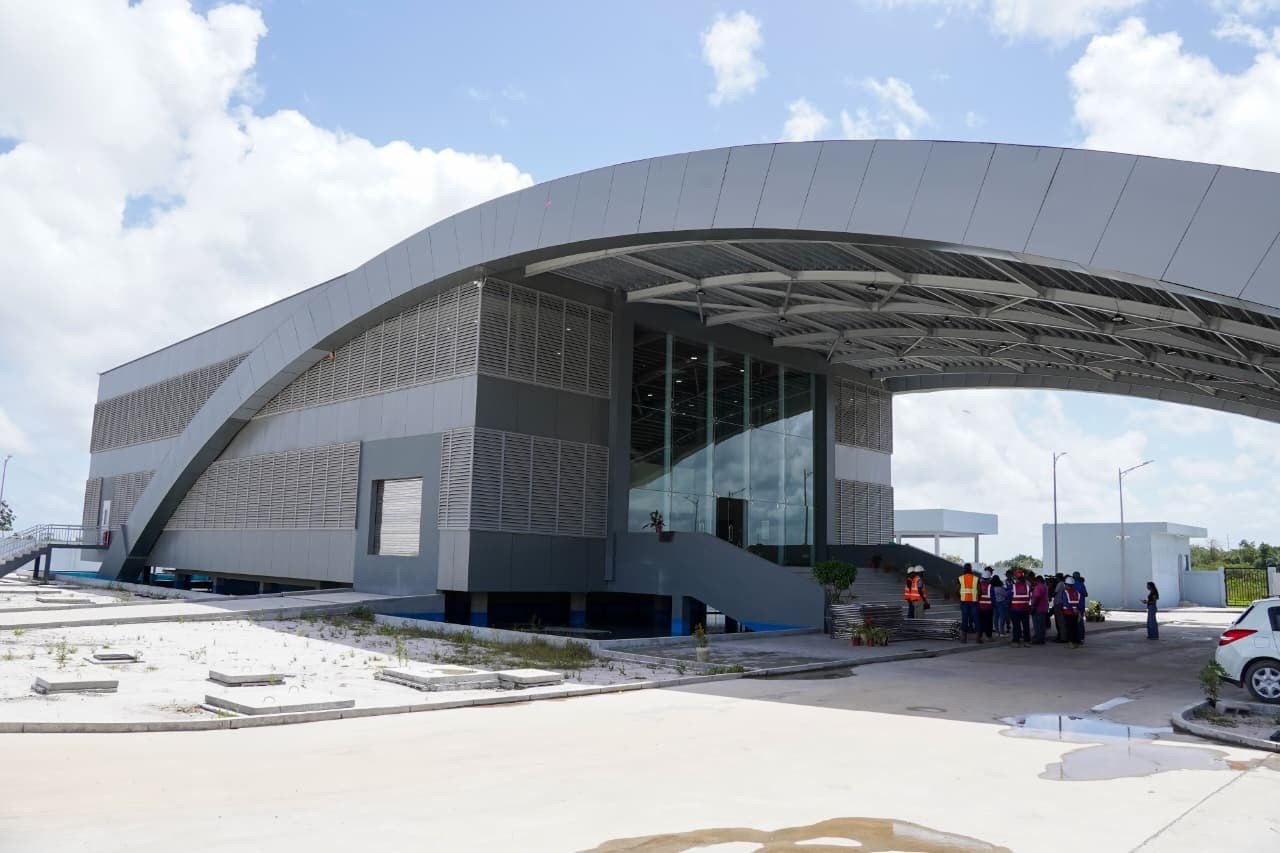
The government, through Guyana Power and Light Inc. (GPL), is establishing a National Control Centre to improve electricity reliability and reduce consumer disruptions.
The modern facility will allow GPL to monitor the country’s electricity network in real time and respond more quickly to faults and outages.

During a walkthrough of the facility last Friday, GPL Team Leader of the Executive Management Committee, Kesh Nandlall, said the centre will be equipped with Supervisory Control and Data Acquisition (SCADA) technology.
SCADA combines hardware and software to monitor, gather and process information while allowing operators to control systems in real time.
“So, if you get a power outage, we can see it instantaneously,” Nandlall explained, stating that, “If a feeder goes down anywhere or if a line goes down anywhere, we can see that instantaneously and we can fix it and it can be self-healing.”
He said automation will also allow sections of the network to be switched to alternative lines where possible, limiting the impact of faults on consumers.
“We can automatically switch over to another line or whatever we need to do so that we prevent outages for customers,” he said.

The system will monitor electricity at the transmission and distribution levels, giving GPL greater oversight of the power flow from generation facilities through substations and eventually to consumers.
The first phase will focus on monitoring the transmission network and substations.
Under the second phase, monitoring will be extended further into the distribution network, covering feeders, transformers and individual meters.
Nandlall said additional communication infrastructure will be installed across the network to support this expansion.
The wider objective is for the country to have a functionally smart electricity grid by 2030.
The National Control Centre, which costs approximately US$20 million, is being constructed at a secure location and will operate around the clock.
“It is our flagship property… the first of its kind in Guyana. It’s a smart building. Everything in there is controlled by a building management system,” Nandlall said. The building includes centralised temperature, cooling, heating and security controls.
It is also fitted with 160 kilowatts of photovoltaic capacity on its roof and three charging stations. Large control rooms will house GPL’s monitoring systems, including its Monarch system.
GPL currently operates from a temporary control location, but Nandlall said the utility expects to transition operations to the new facility by the end of 2026.
The centre is being designed for continuous, 24-hour operations, with staff working around the clock to monitor the electricity network. He added that the facility is also being equipped to allow essential personnel to remain on site for up to one month if circumstances prevent normal access.
He said the investment reflects the government’s focus on strengthening the resilience of the electricity system as the country expands and modernises its power infrastructure.
Once fully developed, it is expected to provide GPL with a centralised view of the electricity network, allowing faults to be identified faster, power to be rerouted where possible, and outages to consumers to be reduced.