






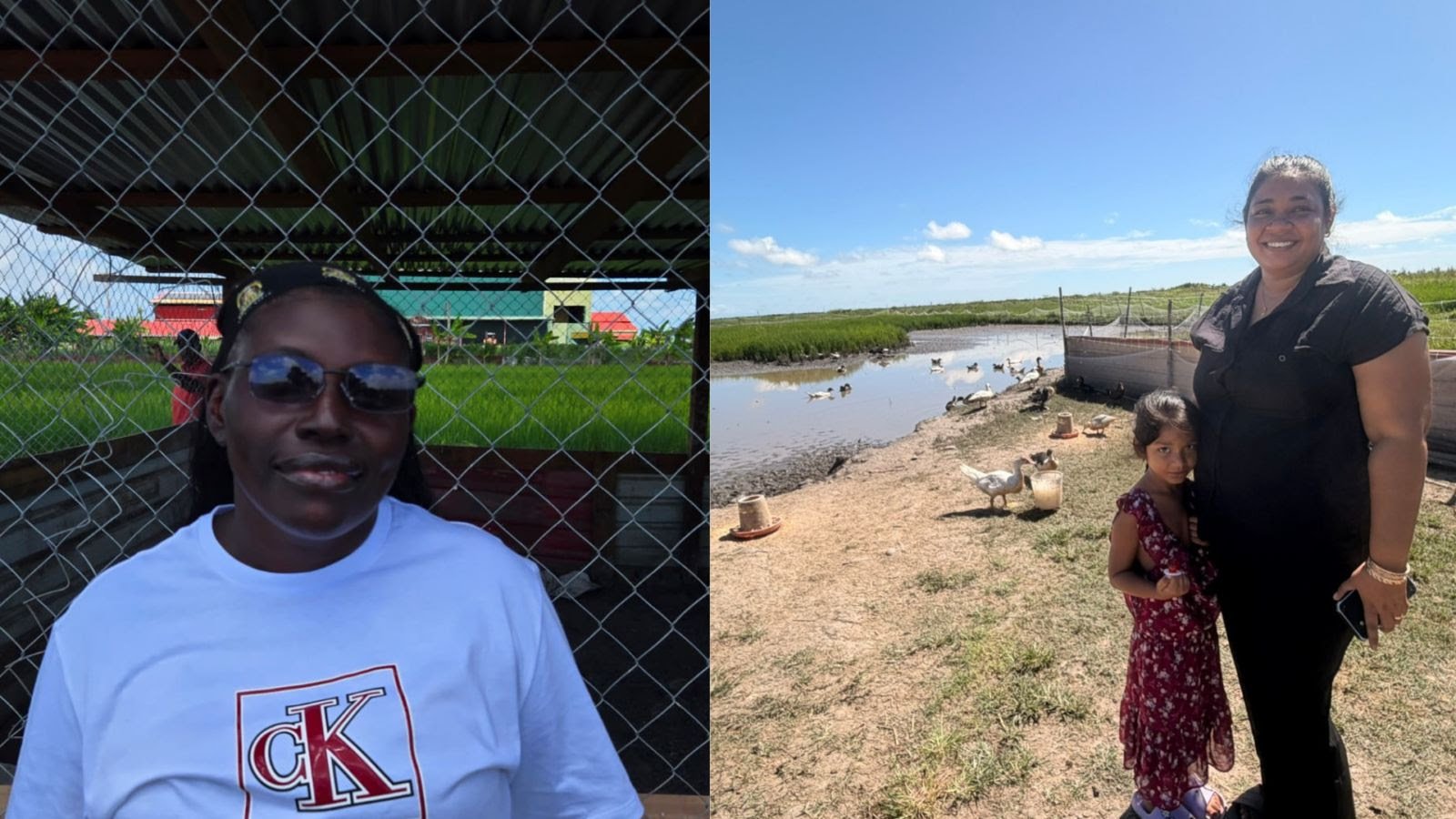
As the world observes the International Year of the Woman Farmer (IYWF) 2026, two Guyanese women are demonstrating that the future of agriculture is increasingly shaped by women who are embracing innovation to improve food production and strengthen their families’ livelihoods.

For rice farmer Dian Leitch-Hinds of Sandvoort Village, West Canje, Berbice, the Ministry of Agriculture’s Duck-Rice Integration Initiative has become much more than an agricultural experiment; it has become a profitable investment that is reducing production costs while improving the quality of her rice crop.
A rice farmer for nearly a decade, Leitch-Hinds joined the programme after being encouraged by an agricultural extension officer to attend a training conducted by the Guyana Rice Development Board (GRDB).
“I wanted to see for myself exactly what they were teaching. They told us I would spend less money while earning more, and once it’s a business that can make money, it definitely gets my attention,” she said.
After receiving 100 ducklings, feed, fencing materials and technical support through the programme, she quickly saw remarkable results.
The ducks naturally control weeds and insects as they move freely through the rice fields, eliminating the need for chemical weed control while enriching the soil with natural nutrients.

“I noticed the rice was doing great. I didn’t have a problem with grass because the ducks ate it. I didn’t have a problem with weeds because they cleaned them out. The rice grew beautifully, and it cost me less money,” she explained.
Leitch-Hinds said she has eliminated spending on herbicides since substantially reducing her use of chemical fertilisers such as urea, potash and triple superphosphate, inputs that traditionally account for a major share of rice production costs.
Beyond the rice field, she diversified her farm by planting coconut trees, soursop, peas, and vegetables, creating additional income opportunities while making better use of available land.
Although she encountered challenges with cannibalism among some ducks, she relied on advice received during training and conducted her own research to address the issue.
Today, she remains convinced that the programme is worth expanding. “I would continue to invest in this programme because it works. You save a lot, and you get more out of it,” Leitch-Hinds iterated.

Kammenie Mangal of Mibicuri North, Black Bush Polder in Region Six, explained that after her husband attended the training programme, the entire family became involved in implementing the Duck-Rice Integration Initiative on their farm.
“My husband attended the training in Georgetown, and when he came back, we worked together with the staff at Burma. We collected the ducklings and started from there,” she said.
Receiving 100 ducklings and starter feed through the programme, the family incorporated the ducks into their rice cultivation, with each family member taking responsibility for caring for the birds.
“It’s very simple for us because I grew up in farming. The children are part of it, my husband is part of it, everybody is involved. Every morning we release the ducks into the rice field, and the rice is much healthier,” Mangal explained.
She added, “Where the ducks are, we don’t have to spray or apply fertiliser because the ducks feed on the weeds and insects. Right next to it, where there are no ducks, we have to fertilise and spray. You can clearly see the difference.”

Despite losing a few ducks to predators, Mangal remains optimistic about the programme’s future and believes more farmers, especially women, should participate.
“It’s a very beautiful project. They should come and learn about it because they will enjoy doing it. I certainly enjoy doing it,” she said.
The Duck-Rice Integration Initiative forms part of the government’s broader efforts to promote climate-smart, environmentally sustainable agriculture while reducing farmers’ dependence on costly agricultural chemicals.
As Guyana joins the global observance of the International Year of the Woman Farmer 2026, the experiences of women like Leitch-Hinds and Mangal highlight the indispensable role women continue to play in strengthening national food security, driving agricultural innovation and advancing rural development, one rice field at a time.