




ExxonMobil has reaffirmed its long-term commitment to Guyana, describing the country as one of the company’s most important growth markets. Offshore production continues to deliver strong financial results, and new projects are nearing completion.
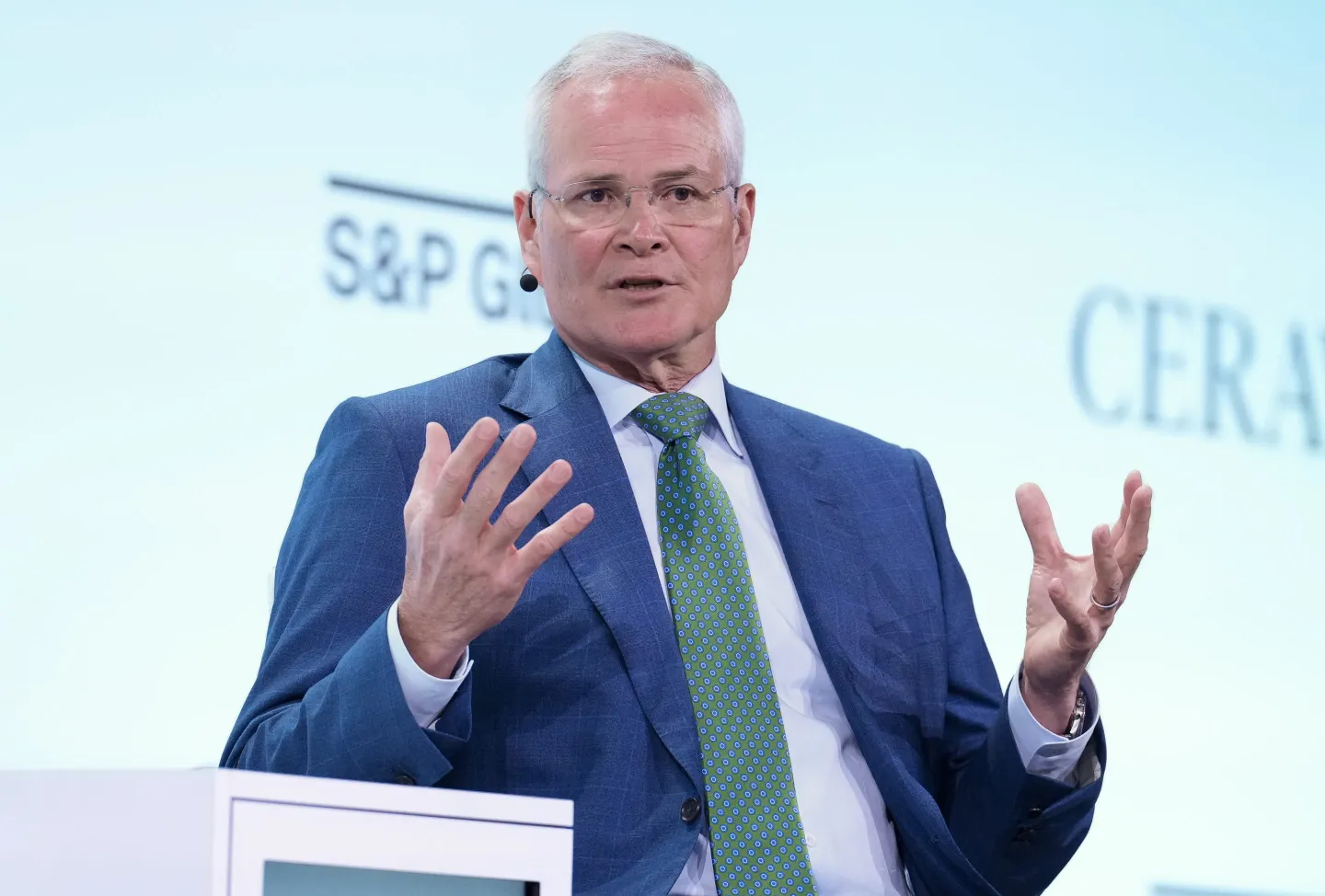
Speaking during ExxonMobil’s Second Quarter 2026 Earnings Call on Friday, Chairman and Chief Executive Officer Darren Woods said the company remains highly optimistic about its future in Guyana, emphasising that significant opportunities remain ahead.
“We believe there is much more to achieve in Guyana, and we see tremendous long-term potential,” Woods said.
The confidence comes after ExxonMobil reported second-quarter earnings of US$14.5 billion under Generally Accepted Accounting Principles (GAAP), with adjusted earnings of US$14.7 billion. The company’s upstream operations, which include oil and natural gas production, generated approximately US$7.9 billion, while adjusted upstream earnings were US$9.19 billion.
ExxonMobil credited record upstream production—its highest level in more than 20 years—to strong output from Guyana’s Stabroek Block and the Permian Basin in the United States, helping to offset disruptions caused by instability in the Middle East.
Offshore Guyana’s production averaged approximately 900,000 barrels of oil per day in the second quarter, further cementing the country’s position as one of ExxonMobil’s most valuable assets.
Mr Woods noted that the rapid development of Guyana’s offshore operations has exceeded the company’s expectations, with projects delivered ahead of schedule, at lower costs, and operating with exceptional reliability.
According to the CEO, the efficiency of these developments has enabled ExxonMobil to recover its investment nearly two years ahead of the original schedule.
The company currently operates four Floating Production, Storage and Offloading (FPSO) vessels in the Stabroek Block—Liza Destiny, Liza Unity, Prosperity, and One Guyana—which together support the country’s rapidly expanding oil output.
Attention is now turning to the Uaru Development, ExxonMobil’s fifth sanctioned project in Guyana. The Errea Wittu FPSO, which departed for Guyana earlier this year, remains on schedule to begin production before the end of 2026. Once operational, the vessel will add 250,000 barrels of oil per day to Guyana’s production capacity.
Beyond Uaru, ExxonMobil continues to advance other developments. Woods confirmed that the Longtail Project, expected to become the company’s eighth offshore development in Guyana, is progressing towards a final investment decision. The company is also evaluating plans for a ninth FPSO as exploration activities continue.
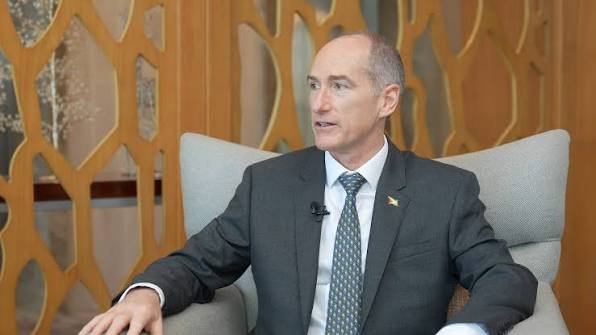
Earlier this year, ExxonMobil Guyana President Alistair Routledge revealed that the Haimara gas field, located in the southeastern part of the Stabroek Block, is expected to underpin the company’s ninth development project. The Guyana Government’s approval is expected to be sought in early 2027.
Despite its expanding production, ExxonMobil says exploration remains a major priority. Woods explained that some of the company’s offshore acreage remains under force majeure, pending the International Court of Justice’s (ICJ) final ruling on the Guyana-Venezuela border dispute.
Once the legal matter is resolved, ExxonMobil intends to resume seismic surveys in those areas to assess their resource potential.
The company is increasingly relying on artificial intelligence to accelerate exploration. ExxonMobil disclosed that AI models trained on Guyana’s extensive seismic data have identified nearly 90 per cent of the oil discoveries already made offshore and have highlighted several additional exploration targets previously unrecognised.
According to Woods, these technological advances are creating new opportunities across the Stabroek Block and reinforcing confidence that Guyana’s offshore basin still holds significant untapped resources.
He added that ExxonMobil remains committed to maximising the value of its acreage and believes Guyana will continue to play a central role in the company’s global growth strategy for years to come.