






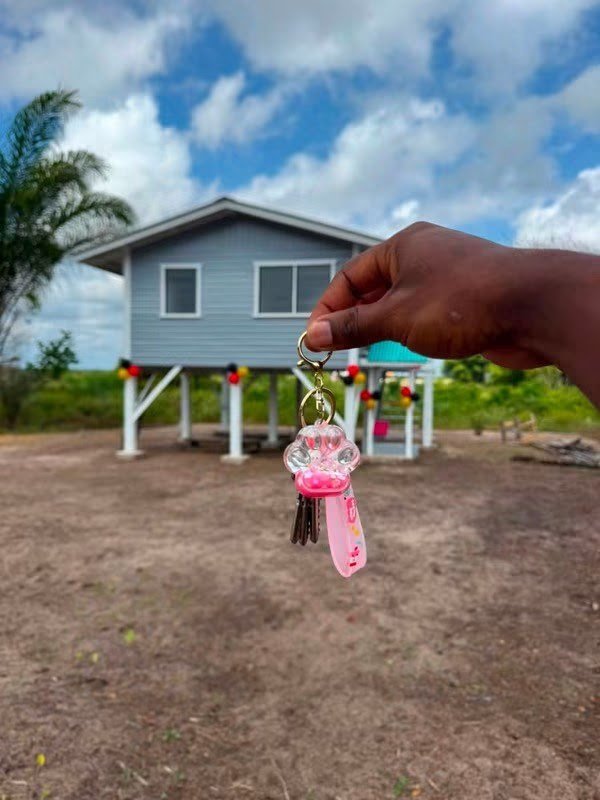
The dream of homeownership has become a reality for two vulnerable families in Orealla- Siparuta Village, Region Six, following the completion of their new homes under a government-supported housing initiative.

For single mothers Clarine Hendrix and Helouise Simon, the houses represent more than a roof over their heads.
They mark the beginning of a new chapter filled with security and renewed hope for their families.
During an interview with the Department of Public Information (DPI) on Tuesday, Hendrix struggled to put her emotions into words as she reflected on finally having a place to call her own.

“I feel excited. I feel glad. I’m proud. I’m grateful. I feel free because I get my own home,” she expressed.
Hendricks had previously been living with her mother. She now shares her new home with her son and grandchild, giving her family the privacy and stability they had long hoped for.
On the other hand, Helouise Simon, a single mother of five, also described the life-changing impact of receiving a home after years of depending on others for shelter.

“I am glad for this home, and I don’t have to depend on anyone. I am a single mother. I am glad and thankful for the support from the government and the village council,” she said.
The houses were constructed by the Orealla-Siparuta Village Council, with support from the Ministry of Amerindian Affairs (MOAA) as part of a government initiative announced at the 2025 National Toshaos Council (NTC) Conference to assist Indigenous communities in addressing urgent housing needs.
Toshao Laurence Vandenburgh said the council identified the two families as among the most deserving beneficiaries after assessing housing conditions within the village.

He explained that the village received $3 million under the initiative, which the council invested in the project, with additional resources mobilised to complete both houses at an estimated cost of approximately $1.9 million each.
“Being able to complete that with the help of the government, I feel really proud as a leader. The two families no longer have to worry about where they will stay, and their children now have a much safer, cleaner environment,” the toshao stated.
Construction began earlier this year but faced delays due to the high demand for lumber and the extended wait for dressing materials.
Despite those challenges, both homes were completed ahead of the 2026 National Toshaos Council Conference, fulfilling the government’s commitment to improve housing for vulnerable Indigenous families.


