






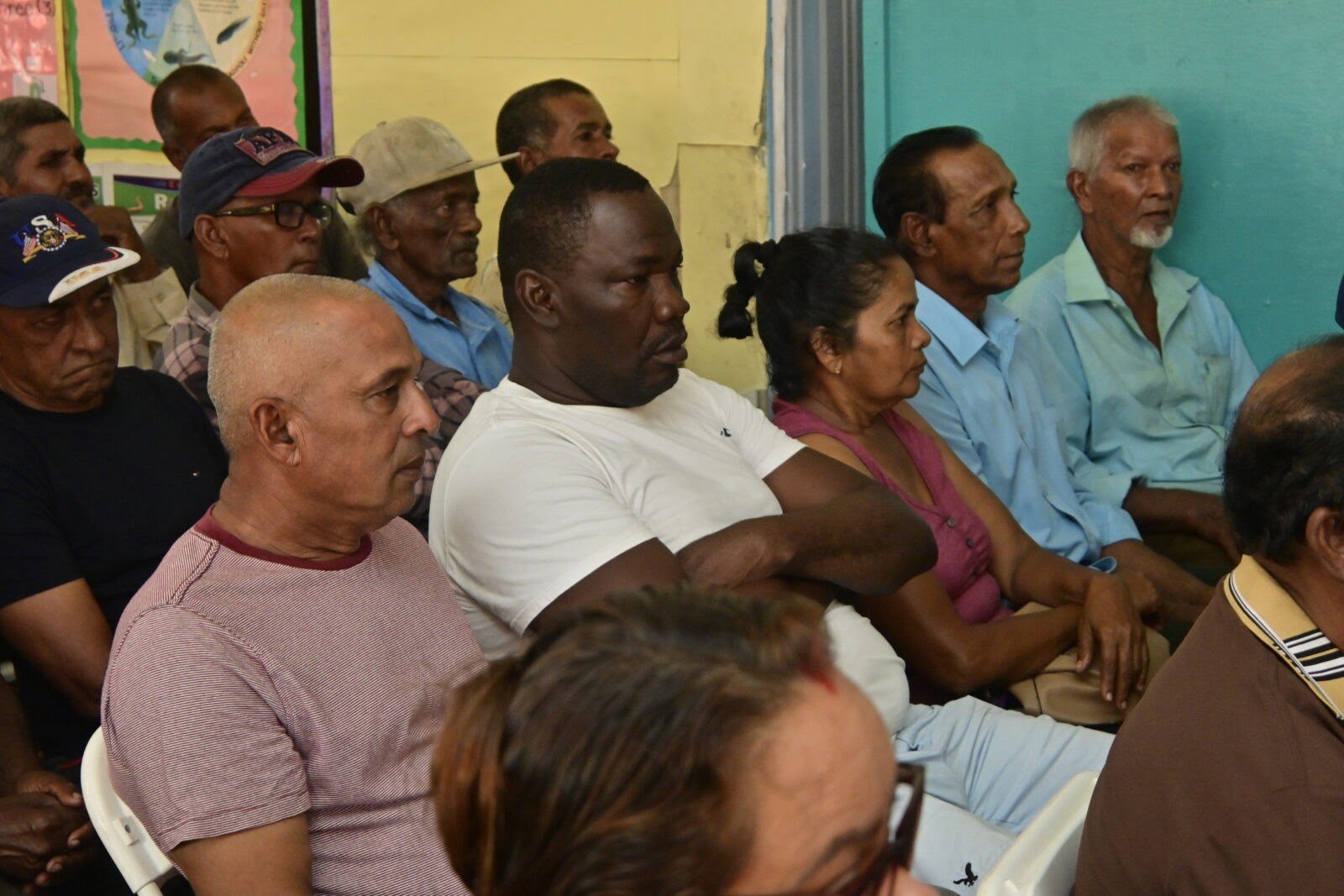
For many rice farmers in Region Four, the government’s cash grant means they can return to the fields with greater confidence as they prepare for the next crop.
374 rice farmers in Region Four received $113.14 million in government cash grants.
This initiative fulfils a commitment made by President Dr Mohamed Irfaan Ali to support rice farmers and cushion the effects of declining global paddy prices.
Among them is Satie Ramnawag of Cane Grove, who spoke to the Department of Public Information (DPI) on Tuesday and said her husband manages their three-acre rice farm after she underwent open-heart surgery and could no longer work in the fields.

Ramnawag said the assistance will help the family purchase fertiliser and chemicals needed for cultivation.
“I am thankful…for this little help. It will help us go back into a new rice crop and buy fertiliser and spray,” she said.
Farmers cultivating 50 acres or fewer received $15,000 per acre, while those with more than 50 acres received $10,000 per acre, helping them reinvest in production and reduce cultivation costs.
Another beneficiary, Bhubendra Lall of Strathavon, Cane Grove, described the grant as timely support for rice farmers facing high production costs.
He said the money will go directly towards purchasing fertiliser, pesticides and other essential inputs for his rice farm.

“It will go back into the next crop, so I welcome this cash grant for the rice industry,” Lall said.
Seventy-six-year-old Frederick Seraf, who has been farming since childhood, said he intends to invest the funds to improve his rice fields after experiencing a poor crop.
“I plan to use the cheque to improve the rice field. I got a very low crop, so this money will help me improve the field for the next crop,” Seraf explained.

The government has rolled out billions of dollars in cash transfers and paddy subsidies to help farmers offset production costs.
Additionally, over the years, farmers have received fertilisers and farming equipment.
Also, the government has made an $81.9 billion investment in drainage and irrigation systems, expanding canals, sluices, and pumping stations nationwide to reduce crop losses from flooding.