






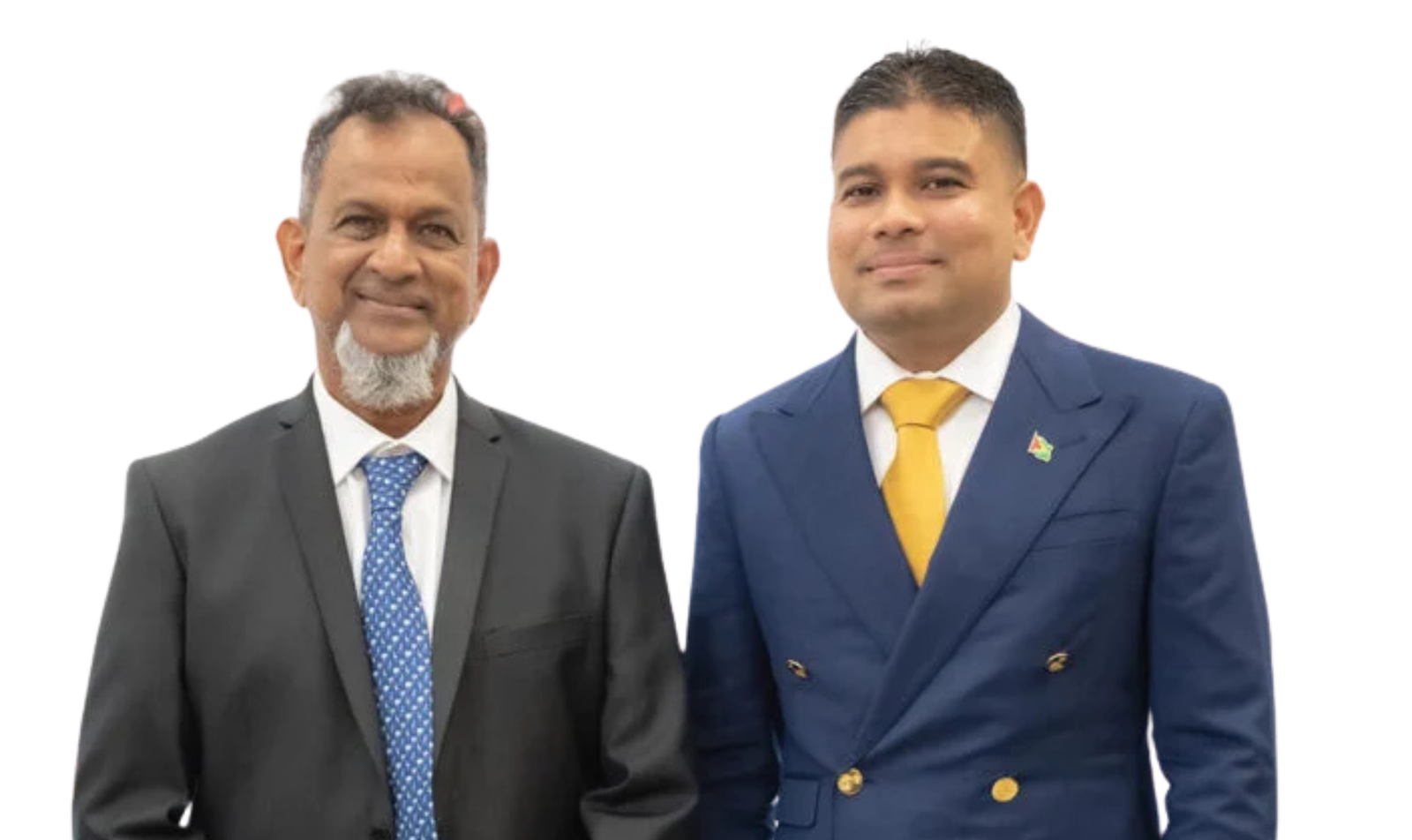
In every healthy democracy, criticism of the government is both necessary and protected. Public officials should be held accountable, and citizens have every right to question those in positions of authority. However, accountability is a principle that applies equally to all. When individuals facing serious legal allegations become some of the loudest critics of others, many people naturally question their credibility and motives.
This issue has become a major topic of discussion in Guyana following legal challenges brought against businessman Azruddin Mohamed and his father, Nazar Mohamed. U.S. authorities have accused the father and son of serious financial crimes, including money laundering, gold smuggling, customs fraud, and invoice fraud.
According to publicly reported information, a federal grand jury in Miami returned an indictment against them. These are criminal allegations that remain before the courts, and, like all defendants, they are presumed innocent unless and until proven guilty. However, the Attorney General and the Secretary of State, Mr Marco Rubio, in the USA, have issued extradition papers requiring Nazar and Azruddin Mohamed to appear in court there.
Despite these serious legal proceedings, Azruddin Mohamed has continued to make strong public attacks on the Government of Guyana and President Dr Irfaan Ali. He has repeatedly criticised the administration and even suggested that President Ali should step down. Reports have also noted calls for Vice President Bharrat Jagdeo to intervene against the President. No one will listen to two criminals awaiting extradition to Miami, USA.
Many political observers find these demands difficult to reconcile with Mohamed’s legal position. They argue that a person facing serious allegations in another jurisdiction should address those allegations before seeking to position himself as a moral authority on governance and public accountability.
The timing of Mohamed’s political statements has also attracted attention. Critics believe that his increasingly aggressive criticism of the Government coincides with mounting international scrutiny of the allegations against him and his father. In their view, these political attacks may be an attempt to divert public attention from legal issues by creating new political controversies that dominate social media.
Another issue that has sparked public debate concerns Mohamed’s political campaign and its electoral backing. Some commentators argue that his movement targeted traditional People’s National Congress (PNC) supporters, a party with a long-established grassroots base across Guyana.
According to these critics, financial resources played a significant role in attracting support during the election campaign. They claim that some Afro-Guyanese voters, as well as members of certain sections of the Muslim community, supported Mohamed’s party, thereby contributing to its electoral performance. Money talks in some communities. Azruddin Mohamed allegedly tried to buy off Indo-Guyanese voters, especially the Hindus, who are the majority among them. They told him to get lost, saying their votes were not for sale.
Questions have also been raised about the source of the Mohamed family’s wealth. Given the allegations by U.S. authorities regarding gold trading and financial transactions, many Guyanese believe there should be greater transparency about how the family’s business empire was built.
Critics argue that the public deserves clear answers on the origin of these financial resources, whether all applicable taxes were paid, and whether all business activities complied with the laws of Guyana and other jurisdictions. They maintain that transparency should be demanded not only of elected officials but also of anyone seeking to influence national politics.
The growing role of social media has become another important part of this discussion. Political commentators have expressed concern that online platforms can rapidly spread unverified claims, misinformation, and emotionally charged narratives that often overshadow factual reporting. Rather than encouraging informed, evidence-based debate, social media often rewards sensational content that attracts attention regardless of accuracy. Many believe this trend has made it increasingly difficult for citizens to distinguish between verified facts, political opinion, and deliberate attempts to influence public perception.
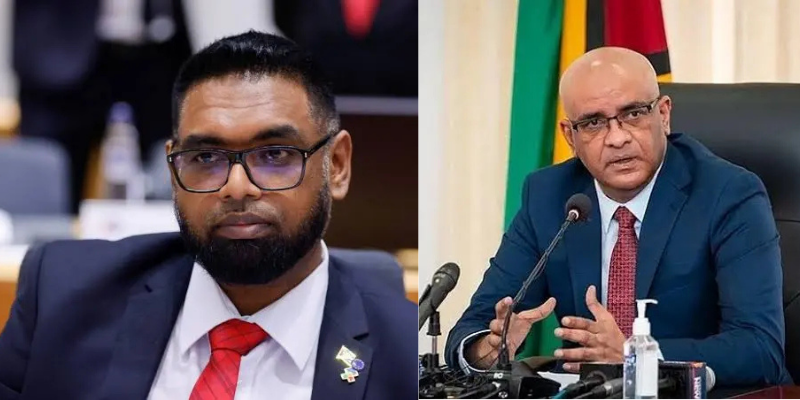
Supporters of the People’s Progressive Party/Civic (PPP/C) argue that the Government’s primary responsibility remains Guyana’s development. They cite ongoing investments in infrastructure, housing, healthcare, education, energy, and economic diversification as evidence that the administration is focused on improving Guyanese lives rather than on political distractions. They contend that the country’s future should be determined by policies, performance, and measurable results—not by personal attacks or social media campaigns.
Many observers also question the wisdom of pressuring Vice President Bharrat Jagdeo to act against President Irfaan Ali. They argue that decisions affecting the country’s leadership should be made through constitutional processes and democratic institutions, not by demands from individuals facing serious legal and criminal allegations overseas. In their view, the Government’s leadership should remain accountable to the people of Guyana and to the rule of law, not to external pressure or politically motivated campaigns.
Azruddin Mohamed is not a particularly astute opposition political leader. His main objective, shared with his father, is to create a rift between the President and the Vice-President. All political pundits know that Dr Bharrat Jagdeo, as Secretary General of the PPP, is no fool. He knows the political game Azruddin Mohamed plays. His father, Nazar Mohamed, is allegedly telling those he meets that they want to destroy Dr Irfaan Ali’s career.
An old proverb remains relevant in situations like this: “The pot calling the kettle black.” The saying describes a person criticising others for faults they themselves are accused of, to divert attention from themselves. Critics believe this phrase captures the current political debate, arguing that before accusing others of corruption, dishonesty, or poor leadership, individuals should first answer serious questions about their own criminal conduct. It is vital for Nazar and Azruddin Mohamed to clean their own house before accusing others.
Ultimately, Guyana’s future will not be decided by social media arguments, personal accusations, or political theatrics. It will be decided by the Guyanese people through democratic elections and informed public debate. Voters deserve leaders who demonstrate integrity, transparency, and accountability, and who respect the rule of law and the country’s democratic institutions.
The voters of Guyana have given the PPP/Civic Party a landslide mandate to govern until 2031. Both the President, Dr Ali, and the Vice-President and Secretary-General of the PPP, Dr Jagdeo, must focus on the country’s economic progress, look after the people of Guyana, and not waste their time on two criminals wanted in Miami, USA.
As the legal proceedings involving Azruddin Mohamed and Nazar Mohamed continue in the United States, the courts—not public opinion—will determine the outcome of those cases. Until then, many Guyanese believe that those seeking to lead or influence public opinion should hold themselves to the same standards of accountability they demand of others.
In a democracy, credibility is earned through honesty, transparency, and respect for the law—not simply through criticism of a political opponent, Azruddin Mohamed, facing extradition and criminal cases in Miami, USA.