




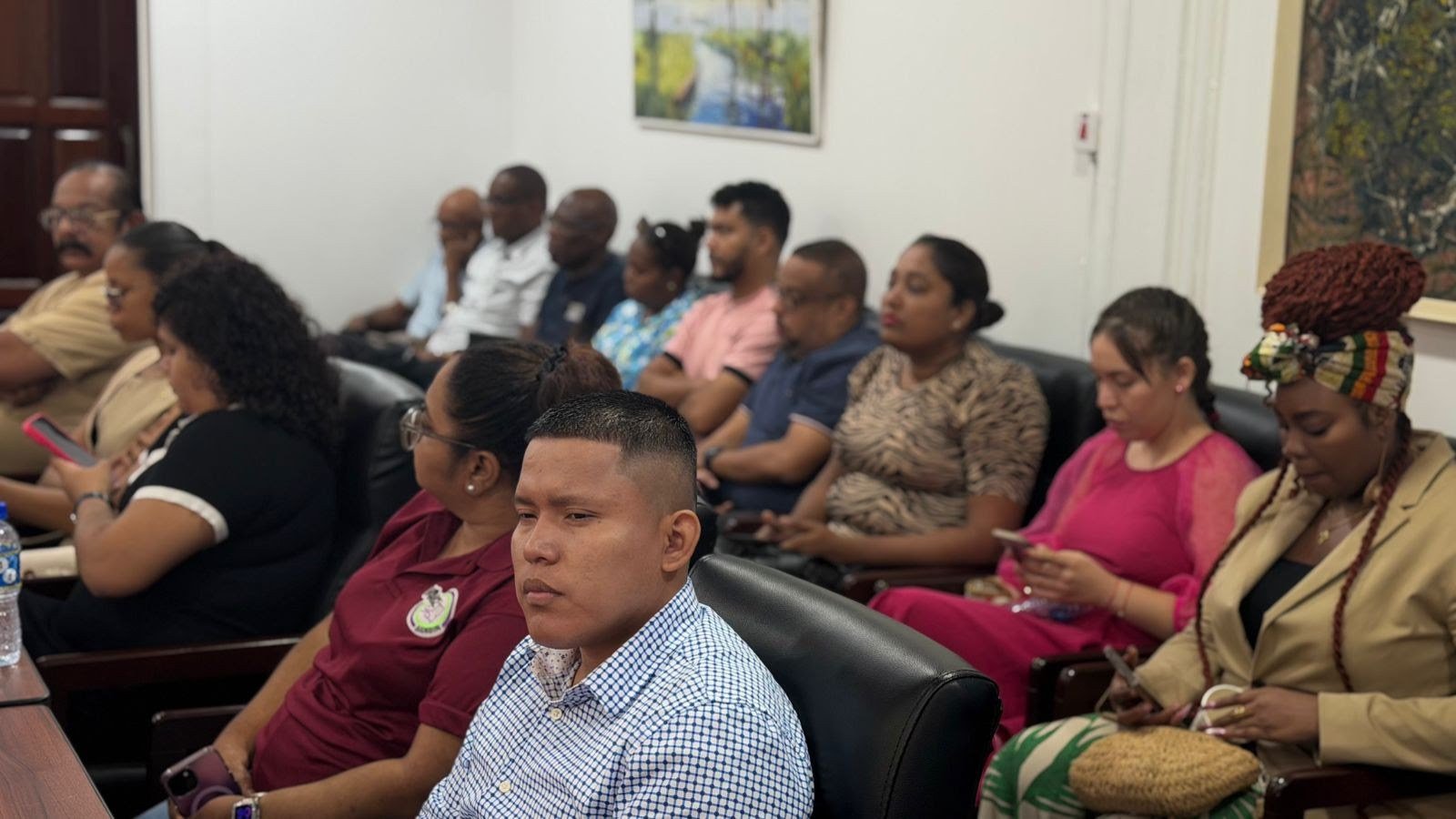
The Department of Information and Public Affairs on Saturday hosted a stakeholder engagement with media practitioners at the Office of the Prime Minister, as part of the ongoing National Consultation on Social Media and its Consequential Effects on Children.
The engagement was led by Minister within the Office of the Prime Minister with Responsibility for Public Affairs, Kwame McCoy.
It provided a platform for representatives from the media sector to share views, experiences and recommendations on addressing the impact of social media and digital technologies on children.

The consultation forms part of a wider national process coordinated by the Ministry of Parliamentary Affairs and Governance, aimed at gathering feedback from stakeholders on child online safety, responsible social media use, digital literacy, platform accountability and the broader social effects of digital technologies.
During the session, several key areas were presented for discussion, including a proposed minimum social media age, mandatory age verification, child-safe platform design, digital literacy education, parental empowerment and the possible establishment of a Child Online Protection Authority.

Minister McCoy told media representatives that the proposals being discussed are not final decisions, but remain open for feedback from stakeholders and citizens.
“We want to be able to have the opportunity of hearing from our citizens how they believe we can handle this matter, and everything that we have proposed thus far is just what they are, proposals, and there is nothing that is fixed,” Minister McCoy said.
The minister noted that while social media and digital technologies provide opportunities for learning, creativity, innovation and access to information, they also present challenges, particularly for children.
He highlighted concerns including cyberbullying, harassment, harmful content, online exploitation, misinformation and the impact of certain platform designs on children’s wellbeing.
“First and foremost, our approach as government is to protect our children, while preserving the opportunity of utilising technology for creativity, education, arts, culture, responsible expression and innovation,” he stated.
Meanwhile, Director of Public Affairs, Gordon French, noted that the consultation is intended to gather evidence, document experiences and identify practical recommendations from stakeholders who create, manage, distribute and analyse public information.
“This is not intended to promote any determined position. We are coming into the consultation very open to receive feedback from the public,” French explained.
During discussions, media practitioners emphasised the importance of maintaining responsible journalism practices, protecting children’s privacy and ensuring any future framework balances child protection with freedom of expression.
The need for media organisations and content creators to strengthen child-safe practices within their own platforms, including responsible reporting involving minors and careful consideration of content shared online, was also highlighted.
The engagement also explored the changing media landscape, with discussions on how social media has expanded the space for information sharing and public communication, while creating challenges around misinformation, online influence and content accountability.
Media representatives from several organisations participated in the consultation, including the Department of Public Information (DPI), Guyana Press Association (GPA), National Communications Network (NCN), MTV, 96.4 FM, the Ministry of Education’s education broadcasting units and other media stakeholders.
Each stakeholder will be provided with feedback templates to submit additional recommendations as part of the consultation process, which will contribute to the wider national discussion on developing a child online safety framework.