






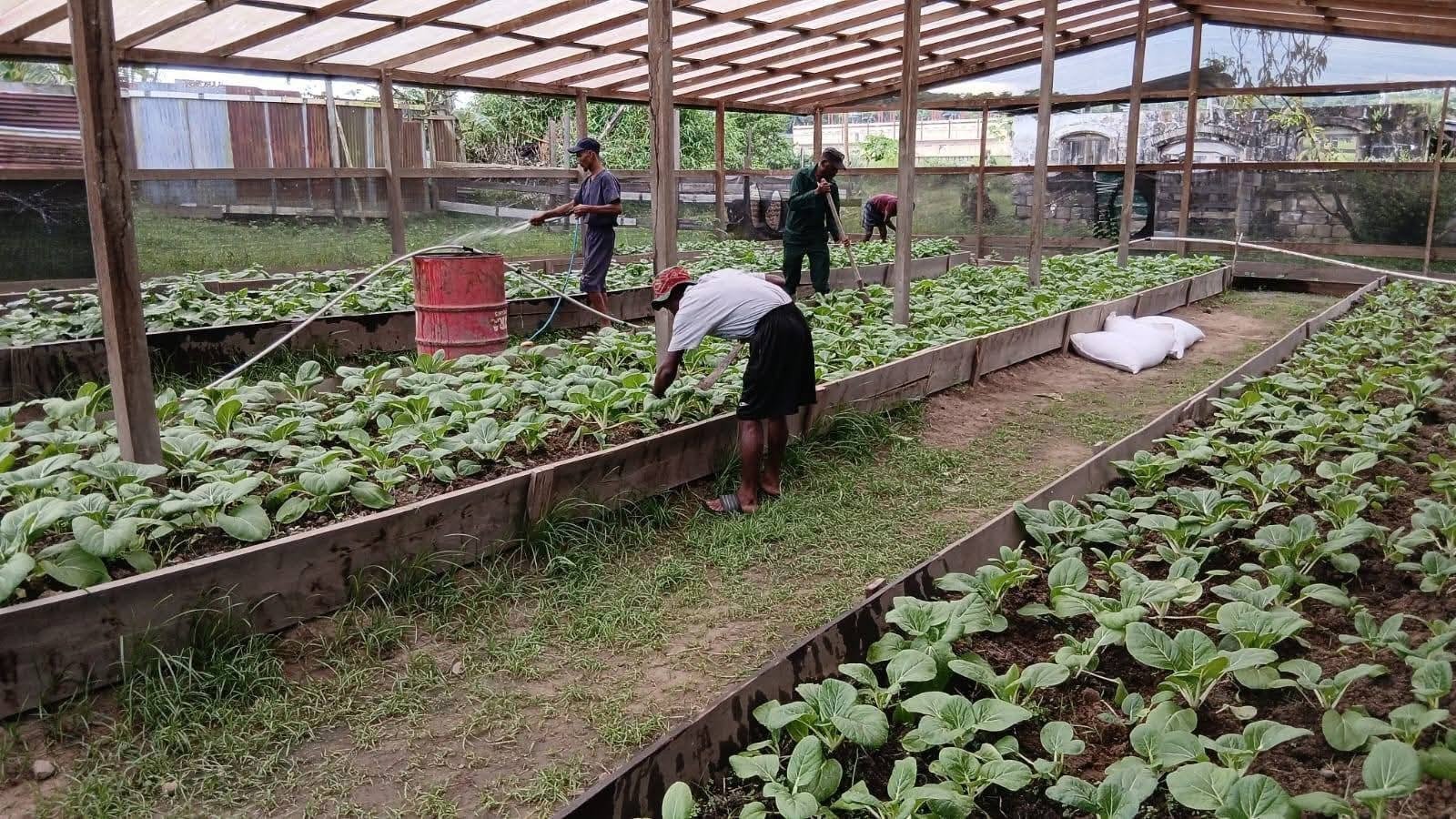
The Guyana Prison Service (GPS) agricultural programme is making significant progress in boosting food production, promoting self-sustainability and equipping prisoners with skills to help them rebuild their lives after release.
The large-scale initiative forms part of the prison service’s wider rehabilitation strategy, aimed at empowering inmates through practical training while helping to reduce recidivism rates.

The programme is being implemented at the Mazaruni, Lusignan, New Amsterdam and Timehri prison facilities, where inmates are actively involved in various agricultural activities.
According to a report from the Ministry of Home Affairs, Mazaruni Prison stands out as a leading example of the initiative.
The facility is home to the country’s largest prison farm and supports a wide range of agricultural operations.
These include crop cultivation, livestock rearing, aquaculture and beekeeping, all of which contribute to food production within the prison system while encouraging self-reliance and agricultural development.

One inmate there, whose identity is being withheld, said agriculture had been part of his life before incarceration and that he was grateful for the opportunity to continue working in the field.
“Before I came into prison, this was my occupation on the outside. This was my job, but I do it because I love doing it,” he said before stating, “I am glad that the prison service gave me a chance to continue. I thank the officers involved with the farm, and I hope it continues to grow because it is a very good thing.”
The inmate also highlighted the programme’s potential to help others gain valuable skills.
“We can teach other prisoners who come here and don’t know anything about farming. We can show them these things so that when they leave prison, they can do something better with their lives,” he added.
The GPS remains committed to the rehabilitation and reintegration of inmates through vocational training, educational opportunities and agricultural programmes.
Inmates participating in these initiatives are equipped with practical skills that promote self-sufficiency, responsibility and personal development.